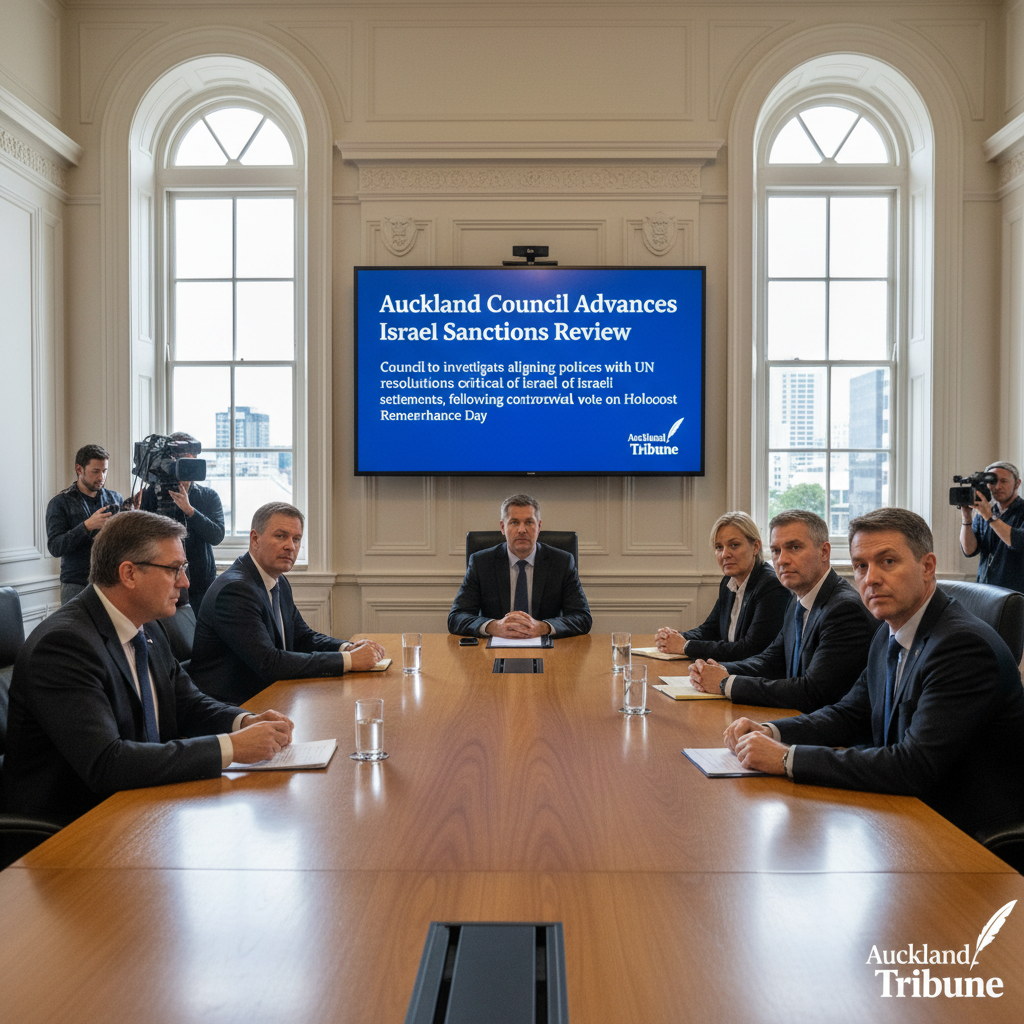
Auckland Council has voted to formally review its policies and practices concerning Israel, following a contentious vote that coincided with Yom HaShoah, Israel's national memorial day for victims of the Holocaust.
The council's Policy, Planning and Development Committee passed a resolution 14-2 on Tuesday, requesting a staff report on the city's alignment with two United Nations resolutions concerning Israeli settlements. The report, due by July, will examine any potential facilitation of trade with UN-identified entities involved in settlement activities and advise on how its policies could be strengthened.
The move has drawn sharp criticism from members of the Jewish community, who have condemned the timing and substance of the vote, citing it as evidence of rising antisemitic sentiment in New Zealand.
United Nations resolutions explained
The council's resolution specifically references United Nations Security Council (UNSC) Resolution 2334, which was passed in 2016. Resolution 2334 states that the establishment of Israeli settlements in Palestinian territory occupied since 1967, including East Jerusalem, has "no legal validity and constitutes a flagrant violation under international law".
The text demands that Israel "immediately and completely cease all settlement activities in the occupied Palestinian territory, including East Jerusalem". It calls on all states to distinguish, in their relevant dealings, between the territory of the State of Israel and the territories occupied since 1967.
The second directive mentioned is United Nations Human Rights Council (UNHRC) Resolution 31/36, also from 2016. This resolution urges nations to ensure they are not taking actions that "recognize or assist the expansion of settlements or the construction of the wall in the Occupied Palestinian Territory".
While Auckland Council cannot set national foreign policy, the requested report could lead to changes in its own procurement, investment, and partnership decisions, potentially impacting companies that operate in or trade with the specified territories. Similar issues have surfaced in New Zealand, where New Zealand prepares for fuel shortages as Hormuz crisis continues. The review underscores a growing trend of municipal bodies engaging with international political issues through their administrative and financial policies.
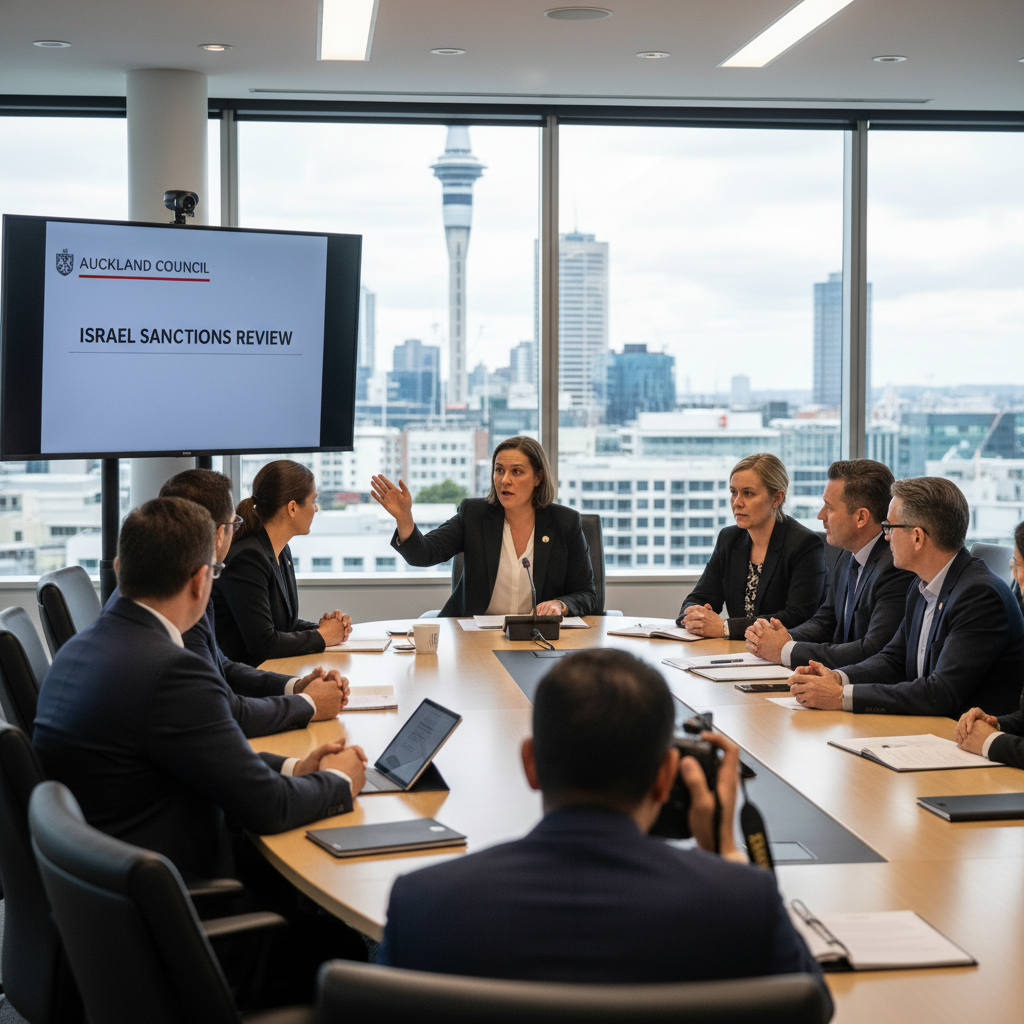
Vote timing draws condemnation
The decision to hold the vote on Holocaust Remembrance Day has been a major point of contention. Yifat Goddard, spokesperson for the pro-Israel advocacy group, the Israel New Zealand Network, described the timing as deeply painful and reflective of a worrying trend.
These moments are not disconnected; they reflect a growing need for awareness, education, and truth.
Ms Goddard took to social media to express her distress, noting she had received "deeply disturbing antisemitic responses" to a post she made about the memorial day. "Yesterday was Holocaust Remembrance Day. At the same time, the Auckland City Council made the decision to sanction Israel," she wrote. She added that the events were not disconnected but part of a broader need for education against hatred.
A history of contentious governance
The intense debate surrounding this foreign policy motion is not unfamiliar territory for Auckland Council, which has faced criticism over its governance structure for more than a decade. The 'supercity', formed in 2010 by merging seven district councils into a single unitary authority, was intended to streamline services and improve regional coordination. However, the model remains a source of friction.
Many residents in outlying areas feel their local needs are sidelined in favour of projects in the central business district. Former Franklin District mayor, Mark Ball, has previously stated that his community feels like a "cash cow for the big smoke" and has had a "gutsful of a one-size-fits-all approach". This sentiment highlights a persistent tension between central planning and local priorities, a dynamic that can influence a range of council decisions, from infrastructure spending to politically charged motions like the one passed this week.
This latest controversy places the council's internal politics on a global stage, turning a local government meeting into a flashpoint for international diplomacy and activism. It also touches on broader issues of council spending and priorities, which were a key theme of the recent Auckland City Deal aimed at managing the city's growth.
The staff report due in July will now become a key document, outlining the practical steps the council could take to align with the UN resolutions. It will likely detail which of the council's contracts and investments could be affected, setting the stage for another significant debate among councillors and the Auckland public later this year. For more insights on how local issues are being managed, see how local business developments are unfolding in other regions.