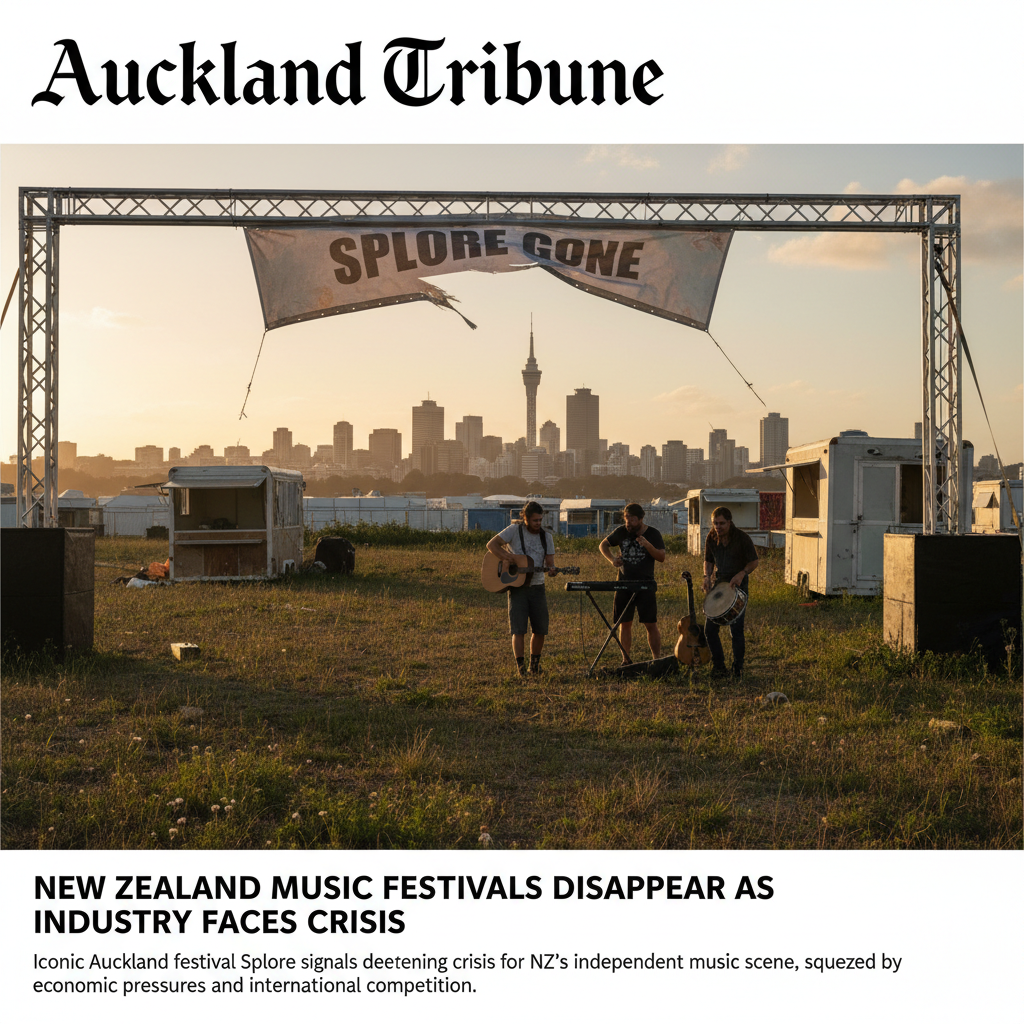
New Zealand's vibrant summer festival scene is facing a crisis, with the recent closure of the iconic Splore festival sending shockwaves through the local music community. After nearly three decades, the beloved Auckland event held its final gathering in February, becoming the latest casualty in a wave of cancellations that threatens the future of independent music and live events in the country.
In the past two years, dozens of festivals have either shut down permanently, been cancelled, or postponed indefinitely. Events like The Others Way, JuicyFest, and One Love have vanished from the calendar, while mainstays such as Womad and Bay Dreams are on hiatus. Local music magazine Newzician bleakly estimates that up to half of the 70 music festivals held over the 2023-2024 summer season did not return.
The string of closures has sparked alarm among artists and promoters, who warn that the ecosystem for nurturing local talent is collapsing under a perfect storm of harsh economic realities, dwindling public spending, and the growing dominance of large-scale international promoters.
A cultural launchpad silenced
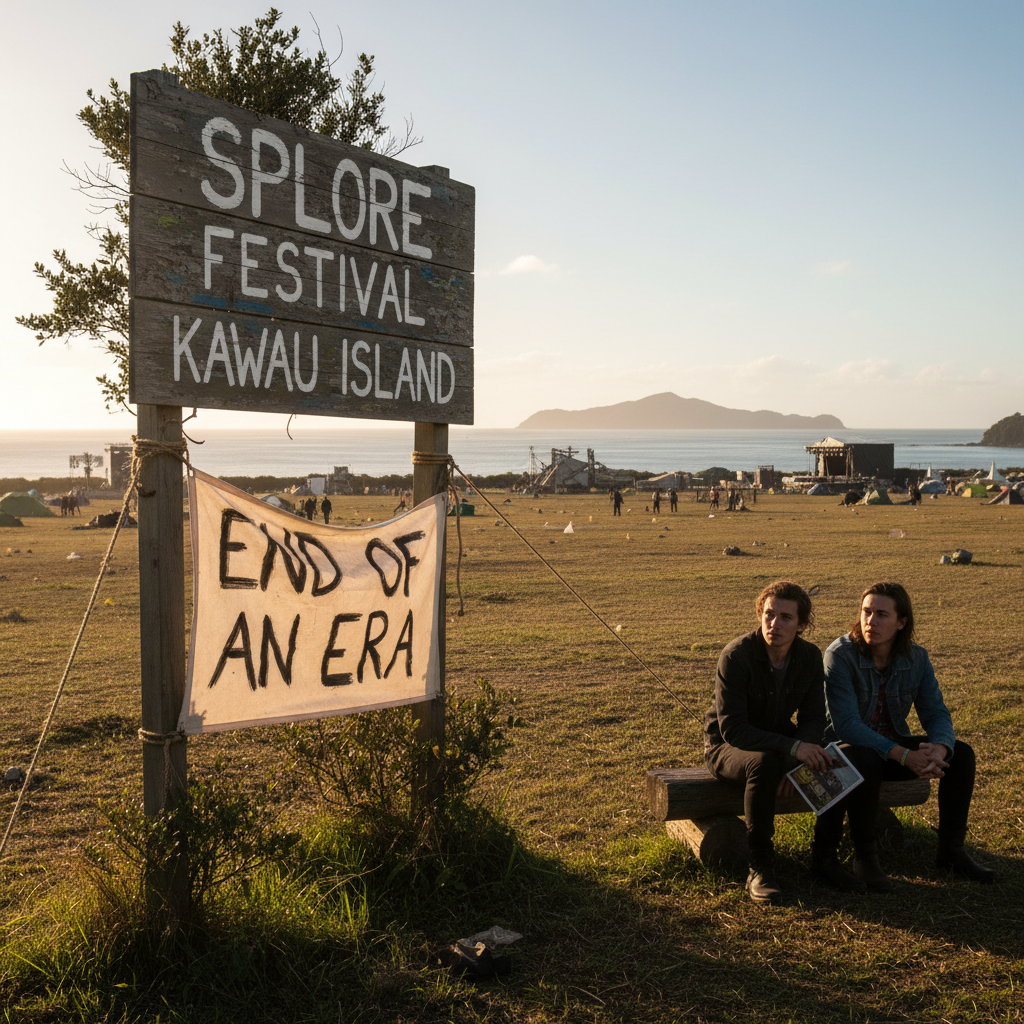
Splore began on New Year's Eve in 1998 as a small, wild dance party on a clifftop overlooking Karioitahi beach, south of Auckland. Inspired by outdoor raves in Goa, India, its first iteration was a lo-fi gathering of a few hundred people enjoying dance music amid stilt walkers and fire performers. The name itself, a Scottish word for merrymaking, perfectly captured its spirit.
Over 28 years, it evolved into a cultural institution and a vital launchpad for New Zealand artists. Acclaimed Kiwi group Fat Freddy’s Drop played their first ever festival show at Splore, a performance that helped propel them to worldwide recognition and a favourite on the European festival circuit. It created a unique pathway for local musicians, offering them the chance to graduate from playing in small clubs to performing on a main stage in front of thousands.
For many Kiwis, it was more than just a music event; it was a cultural rite of passage. Attendees who had come for years eventually brought their own children, who in turn brought their friends, creating a multi-generational community. Its closure leaves a significant void in Auckland's cultural landscape.
The breaking point
The decision to end Splore was a painful one for John Minty, 74, who has managed the festival since 2006. The financial pressures became untenable. In 2024, for the first time under his leadership, the festival lost a significant amount of money, approximately $320,000.
Hoping for a rebound, Mr Minty placed the festival on a one-year hiatus in 2025. However, when tickets for the planned 2026 event went on sale for $385, the response was crushing. “It was crickets,” he says. “Tickets just didn’t move at all.” The cost of living crisis appeared to have finally hit discretionary spending, forcing potential festival-goers to reconsider their budgets.
The final Splore in February 2026 did eventually sell out its 8,000 tickets, with hundreds of first-time attendees drawn by the news that it would be the last. According to Mr Minty, they were blown away by the experience, asking him why he would stop something so special.
Local struggles and global giants
While local festivals fight for survival, international promoters are thriving. Concert giants Live Nation and its subsidiary Ticketmaster, along with Ticketek, have established a strong foothold in the New Zealand market. The annual Laneway festival, which partnered with Ticketek in 2021, drew a record 35,000 people to its Auckland event this year.
David Benge, who has recently returned to focus on Laneway's Auckland leg, says the booking philosophy is not about numbers but identity. “We’re not trying to hit a number,” he says, “we’re trying to hit an identity.” He acknowledges Laneway's significant advantage, with six dates across Australia and New Zealand giving it the buying power to secure top-tier international acts that smaller, local festivals cannot compete with. Even so, he notes the festival would be “more profitable” if the New Zealand leg was dropped, highlighting the unique challenges of the local market.
The expansion of these multinational companies has been controversial. Live Nation has faced a verdict in the US and accusations of anti-competitive behaviour in Australia, with concerns growing in New Zealand that they are systematically pushing smaller promoters out of business.
‘Killing the local music community’
Ben Howe, a festival founder and co-owner of the iconic record label Flying Nun, is shocked by the speed at which local events are folding. He stresses the vital role these festivals play in the nation's cultural fabric, noting the success of global stars like Lorde and Aldous Harding was boosted by their early-career festival appearances. Mr Howe argues that the dominance of large-scale promoters creates a flooded market that stifles local creativity and opportunity. This is a sentiment shared by many in the industry, who believe the focus on big-ticket international tours leaves little room for homegrown talent to grow, impacting everything from live arts events to the broader music scene, and reflecting a wider crisis in local news funding.
“Those big multinational companies are not really interested in furthering local music,” Mr Howe says. “They can afford to pump through lots of artists, which sort of floods the market to some degree and makes it difficult for local events to compete. It’s not really helping the local music community, and in fact, its kind of killing it.”
A funding failure?
John Minty is more pointed in his criticism, specifically targeting the government's NZ$10 million Event Boost Fund announced in 2024. He claims the fund, intended as a lifeline, was misdirected. “It went to big multinationals, big international artists,” he says. “The bulk of that money went directly overseas.”
Mr Minty’s own application for $240,000 to support Splore, representing less than 10 per cent of its annual budget, was rejected. However, official records of the funded events show a mix of local and international acts across various genres and venue sizes, suggesting the distribution was not as one-sided as perceived by some rejected applicants.
As the dust settles on Splore's final chapter, the New Zealand music scene is left to ponder a difficult future. Without these vital platforms, the next generation of Kiwi artists faces a much harder path to the main stage, and a cherished part of the nation's cultural identity is at risk of disappearing for good.