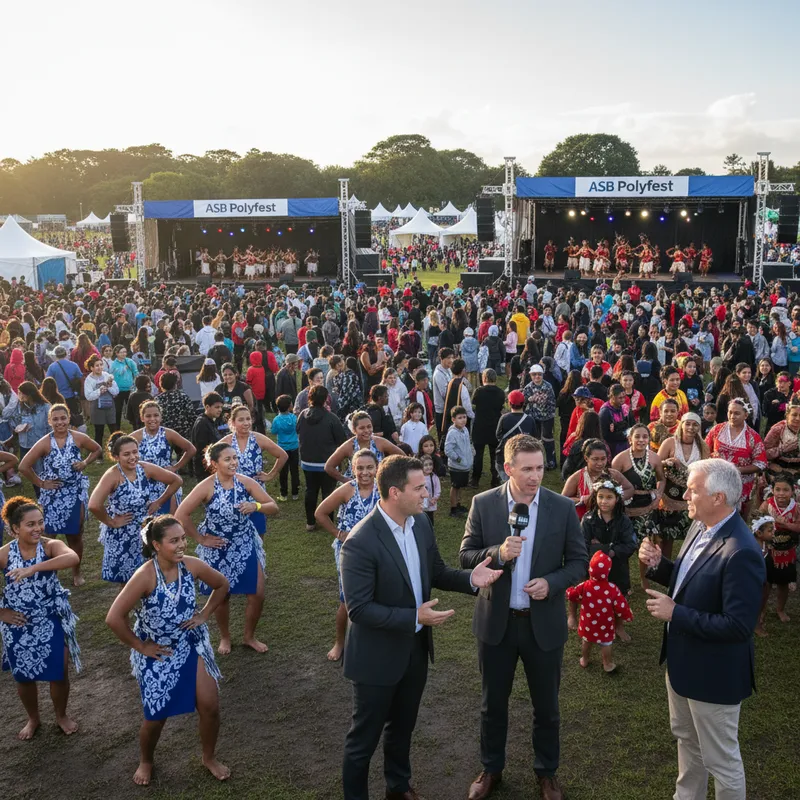
ASB Polyfest is drawing about 10,000 student performers this week. Organisers say they still fight for funding every year.
The festival has reached its 51st year and remains one of New Zealand’s largest cultural events for secondary school students. This year, 73 schools and 263 groups are participating across the week-long programme.
Festival director Seiuli Terri Leo-Mauu says the scale of Polyfest goes beyond what the audience sees on stage. More than 400 volunteers and support staff keep the event running across multiple venues.
Why polyfest organisers say funding is still insecure
Polyfest receives about $350,000 from Auckland Council each year. The Aotearoa New Zealand Festival of the Arts Trust must apply for this grant annually, with no guarantee of renewal.
Chief executive Silao Vega Seiuli says the annual cycle creates planning problems. Sponsorship negotiations cannot begin until Council funding is confirmed, which often comes late in the financial year.
“It is frustrating to have to justify every year why we exist and why we should happen,” Seiuli said.
The total event budget sits around $1.5 million. ASB is the naming sponsor and has backed the festival for more than 20 years. Other sponsors cover stages, transport, and catering.
Seiuli says a multi-year funding commitment would let organisers plan two to three years ahead, lock in better supplier contracts, and invest in infrastructure.
It is frustrating to have to justify every year why we exist and why we should happen.
“We’re more than a four-day event,” she said.
Rehearsals begin in Term 1 each year. Teachers, cultural tutors, and parent volunteers spend months preparing students before the festival opens.
What the manukau sports bowl site means for costs
Polyfest moved to Manukau Sports Bowl in 2019. The venue offers permanent facilities that reduce setup costs compared with earlier sites at Western Springs and Trusts Arena.
The bowl has fixed stages, power supply, and vehicle access. Seiuli says this saves the trust about $200,000 per year on temporary infrastructure.
However, the site’s location in South Auckland means transport costs for schools in the North Shore, West Auckland, and Rodney districts have increased. Some schools now spend more on buses than on costumes and props.
Auckland Transport provides additional bus services during Polyfest week. This year, three extra routes will run between Britomart, Manukau, and the venue gate.
How auckland council and government support works
Auckland Council’s funding comes through its regional grants programme. The Ministry of Education does not fund Polyfest directly but supports schools through operational grants that some principals redirect toward festival costs.
The Ministry for Pacific Peoples has provided one-off grants in previous years. In 2024, it gave $100,000 toward the festival’s 50th anniversary celebrations.
Seiuli says the trust has approached the Ministry of Education about direct funding. No commitment has been made.
Creative New Zealand funded a documentary project linked to Polyfest in 2023. The trust has not received regular Creative NZ funding for the festival itself.
The Ministry for Pacific Peoples says it recognises Polyfest’s value but cannot commit to multi-year event funding under current budget settings.
National MP Paulo Garcia, whose electorate covers Manukau, has called for a cross-party approach to cultural event funding. No bill or motion has been introduced.
How families and schools carry the festival year-round
For many South Auckland families, Polyfest is the highlight of the school calendar. Parents sew costumes, fundraise for transport, and attend every rehearsal.
Aorere College in Papatoetoe enters six cultural groups each year. Deputy principal Mele Taufa says the school spends about $15,000 annually on Polyfest preparation.
That figure covers fabric, accessories, venue hire for rehearsals, and food for practice weekends. Most of it comes from parent fundraising and community donations.
Taufa says the academic benefits are measurable. Students in cultural groups have higher attendance rates and stronger engagement in other subjects during Terms 1 and 2.
At De La Salle College in Mangere, Polyfest coordinator Brother Patrick Lynch says the festival builds discipline and teamwork that carries into the classroom.
What’s on in auckland while polyfest runs
Polyfest 2026 runs from Monday 16 March to Saturday 21 March at Manukau Sports Bowl. Entry is free on school days and $10 for adults on Saturday.
Alongside the performances, more than 80 food and market stalls will operate on the festival grounds. A dedicated area for primary school students has been added this year.
The Auckland Arts Festival overlaps with Polyfest this week. Events include outdoor concerts at Silo Park, theatre at the Civic, and free exhibitions at Auckland Art Gallery.
Tickets and schedules for both events are available through the Auckland Live website. Polyfest results are posted live on the festival’s official app throughout each day.