Polyfest starts long before the first drumbeat, in kitchens and carparks before dawn.
Pacific families say decades of unpaid work still props up ASB Polyfest, even as funding debates sharpen and ticket prices climb.
How families keep ASB polyfest running behind the scenes
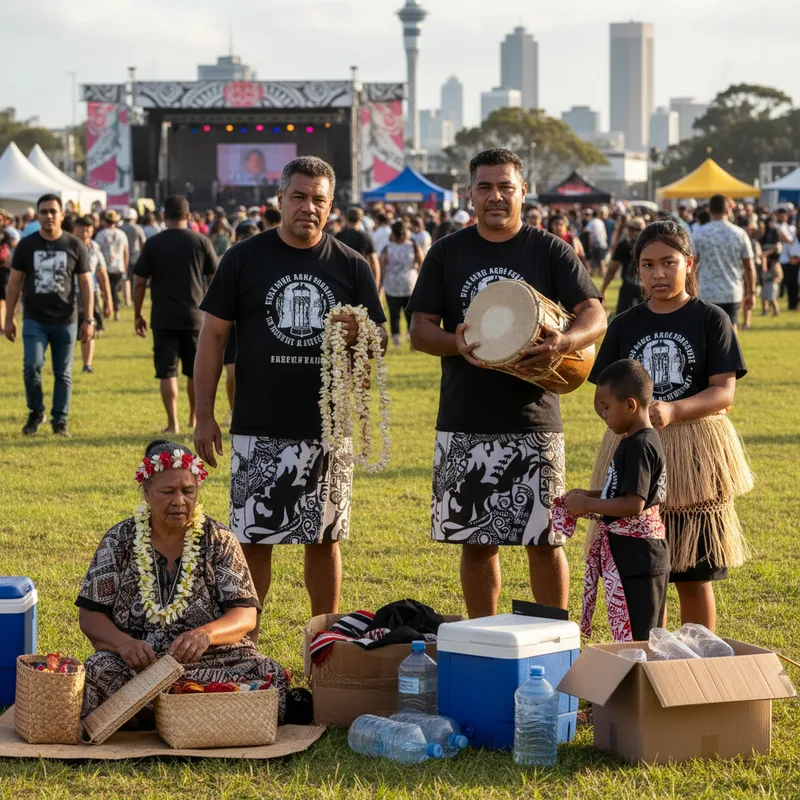
At this year’s festival in Tāmaki Makaurau, three generations of the Lakatani family stood side by side. Grandmother Toane Lakatani watched her granddaughter Aundreah prepare to perform, while her son Malakamu helped run the Niue stage.
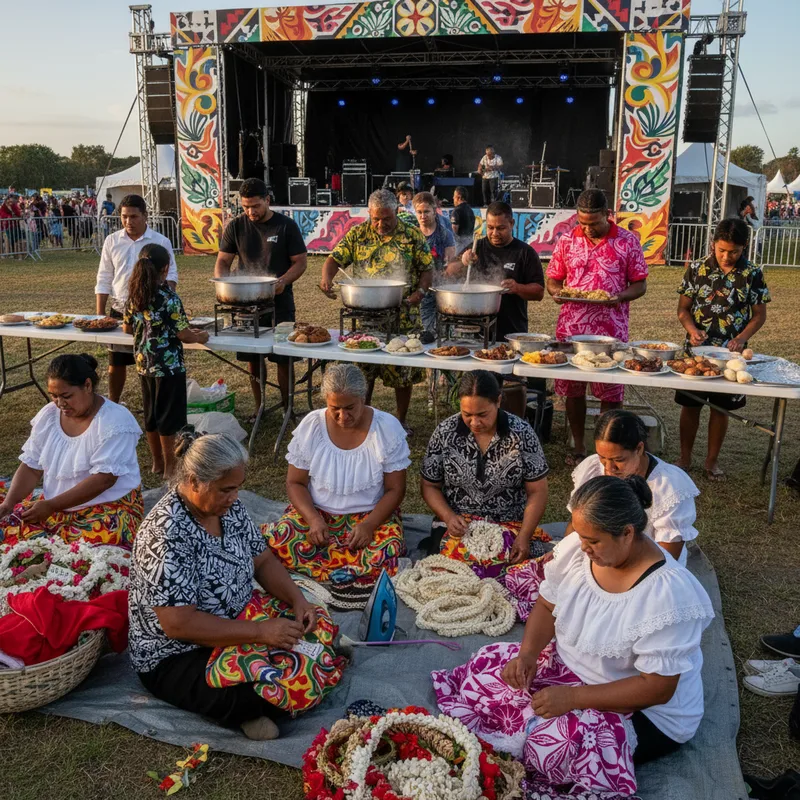
Toane said the work that gets young performers on stage often happens out of sight. “In our days we did it ourselves… we have to prepare some food, make sure we bring drinks… all of us help out with the food for the kids,” she said.
She said parents and caregivers spend hours keeping teams moving and fed. “We sit behind the kids and help them… make sure the uniforms are done… make sure the kids got fed,” Toane said.
What polyfest means for language, faith and culture
Toane said her family’s involvement began decades ago, when her children first performed. “We started off when they were small… and now they carry on what their dad’s been doing,” she said.
This year marked a new milestone for her whānau. “This is the first time my granddaughter is performing… and Malakamu is a tutor now,” Toane said.
For Toane, Polyfest is a practical way to keep identity intact. “It keeps the language going… it keeps the culture going,” she said.
Why “invisible labour” is central to polyfest funding talks
Malakamu, a coordinator for the Niue stage, said the festival’s public face hides the work that holds it together. “That labour there, that’s a family and a community… not anything to do with the front,” he said.
He said his mother’s contribution is typical of what he calls “invisible labour”. “They didn’t see lots of my mum’s story. They didn’t see anything,” Malakamu said.
He wants funders and decision-makers to account for the cost of that effort. “They should acknowledge that, but they don’t think about that… our politics don’t look at that… they look at the surface level stuff,” Malakamu said.
Malakamu said the pressure peaks at extreme hours. “My mum’s there at three in the morning… getting everyone’s uniforms ready before they go on stage,” he said.
They should acknowledge that, but they don’t think about that… our politics don’t look at that… they look at the surface level stuff.
The strain, he said, is not just physical. “There’s an actual burnout that’s happening… it’s consuming,” Malakamu says.
How much does polyfest cost to attend in auckland?
As the festival has grown, so have operating costs for basics like power, toilets, and staging. Entry this year cost $15 at the gate, or $10 online.
Malakamu said charging for entry clashes with how he sees the event’s purpose. “It’s sad that it’s got a price tag on it… our culture is from God… it should be free for all,” he said.
He said he also understands the practical reality of running a major event. “We need money for things like power… toilets… stage and sound… so I understand that,” Malakamu said.
ASB Polyfest is one of Auckland’s largest Māori and Pacific youth festivals, drawing schools and communities from across the region. The scale of the event makes it increasingly reliant on stable funding streams, alongside sponsorship and volunteer labour.
What auckland councillors are considering for polyfest funding
Manukau ward councillor Alf Filipaina said elected members are now looking at how the festival is funded. “What I’m going to do, along with Lotu Fuli and the rest of our colleagues, is have a look. We’re going to look at the possibility of multi-year funding,” Filipaina said.
Fellow Manukau ward councillor Lotu Fuli has also recognised the role of unpaid work by families, tutors, and volunteers in keeping events like Polyfest running.
The debate lands as Auckland Council consults on spending priorities across the region. Residents can also weigh in through the council’s annual plan process, with feedback open via Auckland Annual Plan feedback.
Polyfest’s pressures sit alongside other major community events competing for support, including ASB Polyfest funding calls and a calendar of large Auckland festivals such as EcoFest and World of Cultures.
Malakamu said communities are also carrying multiple cultural commitments each year. He pointed to the second-year Hologa festival, and said sponsorship has tightened as costs rise.
He said the Niue stage has had to improvise without major backing. “We don’t have a stage sponsor… we’ve had to find a way to make it work,” Malakamu said.
Nationally, government arts funding is administered through agencies including Creative New Zealand, which outlines support pathways for festivals and arts organisations.
For Toane, the point of the work is simple, even when it is exhausting. “It keeps the language going… it keeps the culture going,” she said.
Councillors said they will look at the possibility of multi-year funding in the coming months.