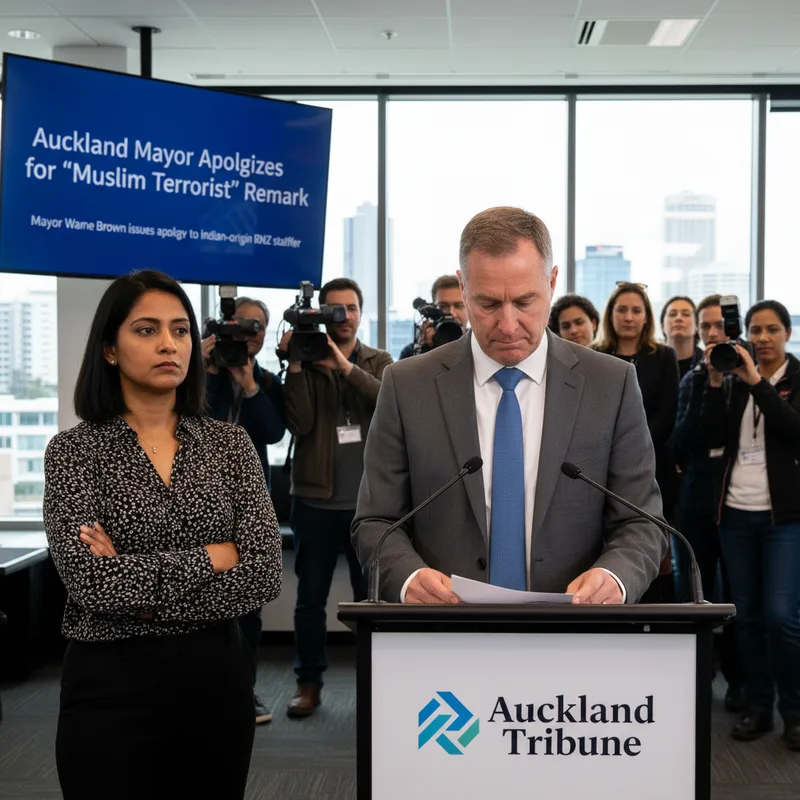
Auckland Mayor Wayne Brown has apologised for what he called a “fumbled attempt at humour” after referring to an Indian-origin Radio New Zealand (RNZ) staff member as a “Muslim terrorist”. The incident has sparked widespread condemnation from community leaders, who have labelled the remark as racist and deeply concerning.
The exchange occurred on Monday as Mr Brown arrived at RNZ’s Auckland offices to appear on its Afternoons programme. According to a statement from the broadcaster, a staff member greeted the mayor and apologised for a security-related delay. "The Mayor responded with a comment along the lines of ‘security can’t be very tight if we’re being escorted by a Muslim terrorist’," an RNZ spokesperson said. The staff member, who has not been named, also reported that Mr Brown commented on his beard.
The employee said he was left shocked and hurt by the interaction, highlighting “the danger of racial and religious stereotyping, especially by those in positions of leadership”.
RNZ chief people officer Sarah Neilson confirmed the broadcaster’s stance, calling the comments unacceptable. “Our immediate concern is for our colleague who was understandably hurt,” Ms Neilson said. “At our workplace we want people to be treated with respect, including by our guests.”
Mayor’s apology mishandled
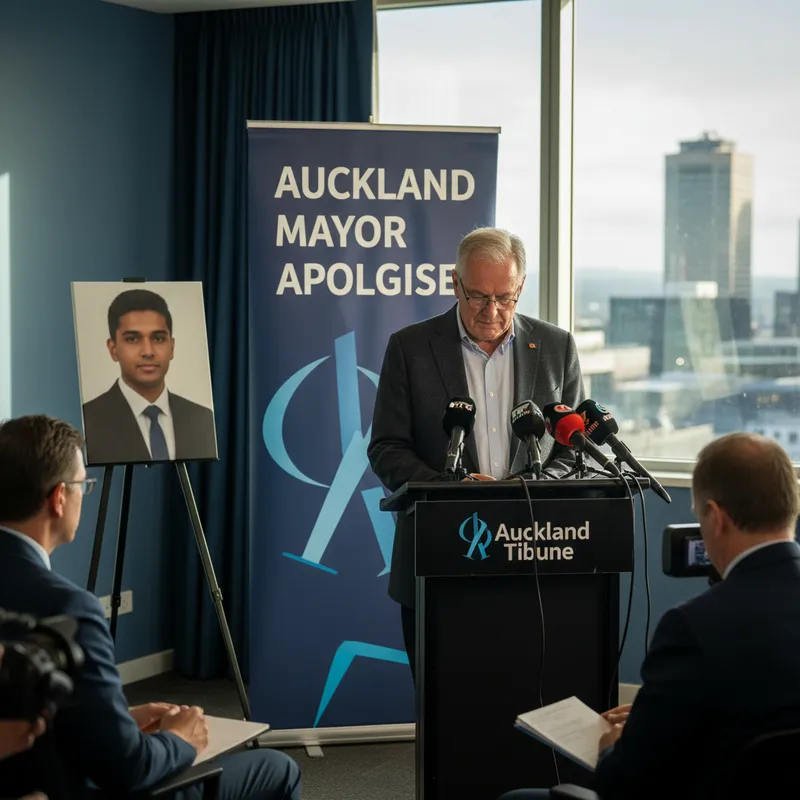
In an emailed apology, Mr Brown accepted full responsibility for the remark. “I understand that my words were disrespectful, and I regret the harm they caused,” he wrote. However, the controversy was exacerbated when the mayor’s apology incorrectly referenced respect for the Sikh community, despite the staff member involved not being Sikh. Mr Brown later claimed he had been wrongly briefed by his staff on the matter.
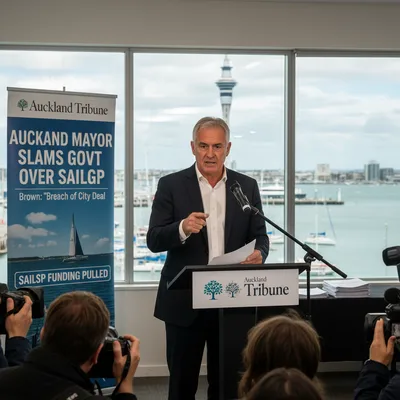
In a subsequent statement, the mayor acknowledged his frequent use of humour in public life but conceded that he “got this one wrong”. He reiterated his commitment to representing all Aucklanders, a pledge that has been called into question by community advocates following the incident. This is not the first time the mayor's office has been under scrutiny, with Mr Brown recently accusing the Government of breaching a city deal. Auckland’s demographic landscape makes the mayor’s comments particularly sensitive. According to 2018 Census data from Stats NZ, nearly 40 per cent of Aucklanders were born overseas, and the city is home to over 200 different ethnic groups, including a large and vibrant Indian community. New Zealand’s trade with India has seen significant growth in recent years.
Community leaders voice alarm
Leaders within New Zealand’s Indian community have been swift to condemn the mayor’s words, framing them within a broader context of rising anti-Indian sentiment. Pancha Narayan, president of Multicultural New Zealand, described the remark as unequivocally "racist" and said it exposed critical weaknesses in how the country addresses hate speech.
In the environment when there's lack of legislation that defines what hate speech is and what racism is, people who pass comments and then apologise can continue to operate within that blurred area. It cannot be a joke. You can't say it and then retract it as a joke.
Mr Narayan rejected the notion that the comment could be passed off as humour. “It was odd for the Mayor to joke about this when one in three Aucklanders are born overseas,” he said, pointing out that many are second or third-generation New Zealanders.
Daljit Singh, president of the Supreme Sikh Society, called the mayor’s comment “unbelievable”. He expressed that recent events had left the community unsettled. “The New Zealand I know is a place where people from different parts of the world and culture live together and I can't believe what is happening now,” Mr Singh said.
Fears of normalising harmful language
The incident has intensified concerns that such rhetoric from public figures can normalise prejudice. Jaspreet Kandhari said the comment was "very unfortunate", particularly given Mr Brown has previously enjoyed popularity within the community. For a state like Victoria in Australia, which is promoting multiculturalism and hosting major global events, such instances serve as a cautionary tale on the importance of inclusive leadership. Melbourne is set to host major global technology summits in 2026, an effort that relies on a welcoming international image.
Community advocate Himanshu Parmar warned against dismissing the seriousness of the language used. He argued that allowing such comments to be brushed aside as jokes risks making them socially acceptable. “The tone matters,” he said, emphasising that intent does not negate the impact of harmful stereotypes.
The backlash serves as a stark reminder of the responsibilities that come with public office. As the mayor of a superdiverse city, Mr Brown’s words are held to a high standard. The incident has raised questions about his ability to represent all constituents effectively and has prompted a broader conversation about racism, leadership, and the legal frameworks surrounding hate speech in New Zealand.
Moving forward, community leaders are calling for more than just apologies, urging a systemic approach to combat racism and a clearer definition of hate speech to prevent individuals in power from evading accountability.