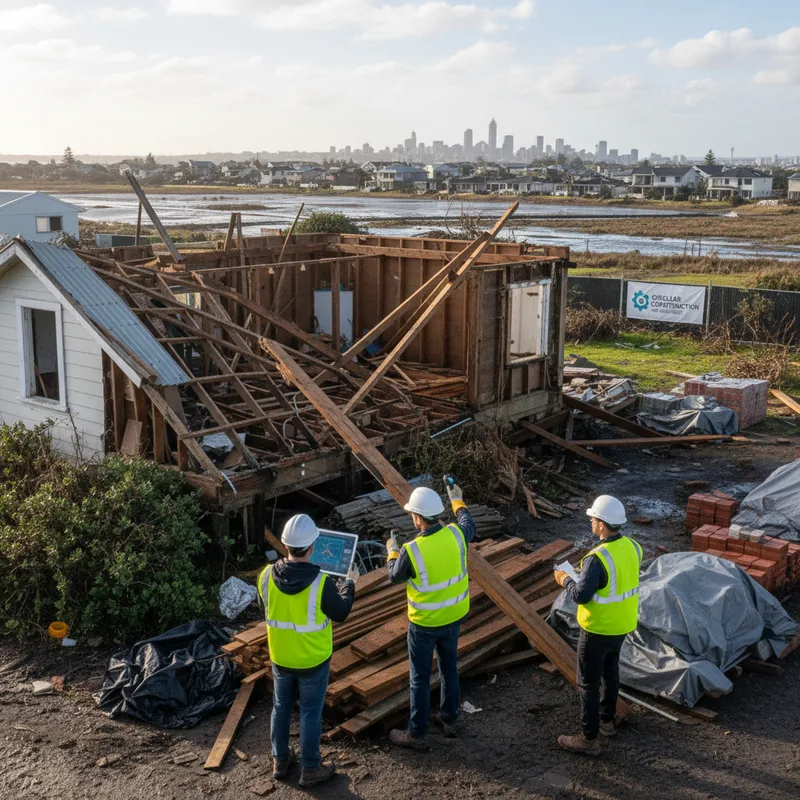
The University of Auckland has launched a research project to salvage building materials from 1200 Auckland homes destroyed by recent extreme weather. Associate Professor of Architecture Mike Davis is leading the initiative to treat red-stickered houses as an "urban mine" rather than waste. The project focuses on dwellings damaged during Cyclone Gabrielle and the 2023 floods. Davis says dumping these materials in landfills would deepen the tragedy of the lost homes. Instead, the research aims to feed salvaged timber and fixtures back into a circular economy. Researchers are currently mapping what materials have already left red-stickered sites and where they have been sent. This data will help predict what can be recovered from future storm-damaged properties. The team is using drones and hand-held devices to create 3D scans of common New Zealand housing types.
Mapping the urban mine
The scans cover a wide range of Auckland housing, from ubiquitous Keith Hay and Universal homes to heritage villas, bungalows, and state houses. By categorising these builds, the team can estimate the specific quantities of materials available in each structure. Davis says this knowledge bank will assist the construction industry in planning for material reuse. The findings come at a time of increased focus on environmental management across the region. Local groups are already active in similar efforts, such as volunteers sought for predator control and other conservation projects. This research adds a structural layer to those existing environmental goals. The study also identifies hazardous or non-recyclable materials used in modern construction. Polystyrene is a primary concern for the researchers. Because it does not break down, it presents a massive disposal problem when a house is demolished after 50 years.
Age determines reuse value
Older houses are proving to be the most valuable sources for the project. These structures often contain high-quality native timbers like kauri, matai, and rimu. Davis found that more than 50 percent of timbers can often be reclaimed from earlier buildings. Modern homes present more of a challenge for recyclers. Houses built since the 2000s often rely on adhesives rather than traditional fixings. "It’s much harder to reuse something that’s been glued," Davis says. This shift in building techniques has made deconstruction significantly more difficult for recent builds. This push for sustainability aligns with broader regional initiatives. Many local organisations are currently seeking help for various programmes, including volunteers sought for major autumn events that highlight environmental and cultural heritage. Training the industry to value old timber is part of a similar shift in perspective.
Changing the building mentality
About 600 red-stickered houses in the region have already been relocated or taken apart. Davis wants to move the industry away from what he describes as a "rip, strip and bury" mentality. He believes New Zealand should adopt the resourcefulness common in Pacific Island nations. "New Zealand is also two islands and when you live on an island, what you’ve got is what you’ve got, so you make it last," Davis says. He has spent 15 years focusing on recycled materials in his own projects. He notes that salvaged kauri has cultural heritage value as well as economic worth. The research will also look at how relocated houses can be made more affordable and fit for purpose. By developing design principles for disassembly, the university hopes to future-proof new housing. This would make future repairs easier and reduce the environmental impact of the building sector. The project is being run through MÄPIHI, the Maori and Pacific Housing Research Centre, and the Future Cities Research Centre. More information on local planning can be found via the Auckland Council website. Results from the study are expected to be released later this year.