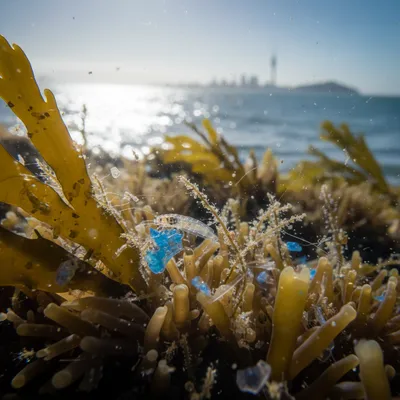
Auckland's Long Bay-Okura Marine Reserve will transform into an outdoor classroom next month as marine scientists and families explore the protected rocky shores during a free biodiversity event at the Sir Peter Blake Marine Education and Recreation Centre.
The event on Sunday 17 May marks the culmination of Seaweek's year-long ocean literacy series and coincides with autumn biodiversity surveys that track seasonal changes in marine life along Auckland's eastern coastline.
Participants will investigate intertidal zones within the marine reserve, contributing to ongoing citizen science projects while learning to identify various algae species and marine animals that call these protected waters home.
Hands-on marine science activities planned
The three-hour event begins at 12:30pm with guided exploration of the rocky shore ecosystem, where families can observe firsthand how marine reserves protect intertidal reef habitats. Organisers have partnered with the New Zealand National Commission for UNESCO to provide expert-led activities and educational displays.
Marine scientists will guide participants in using the iNaturalist app to document their findings, adding to seasonal biodiversity datasets that help researchers track changes in marine populations throughout the year. The citizen science approach mirrors successful community engagement models used in other Auckland research initiatives.
Following the shore exploration, attendees will gather at the marine education centre for afternoon tea and interactive displays showcasing results from previous seasonal surveys. Scientists will present findings about New Zealand's unique marine biodiversity, focusing on species found within the Long Bay-Okura Marine Reserve.
The ocean supports a great diversity of life and ecosystems
Event caps year-long ocean education series
The biodiversity day represents the final event in Seaweek's Ngā Kōrero III Series, which launched in June 2025 to explore all seven Ocean Literacy Principles. The series has combined live events with online sessions to reach broader audiences across Auckland and beyond.

Organisers chose the May date to align with the International Day for Biological Diversity on 22 May, while also coinciding with autumn marine surveys that capture seasonal variations in species distribution and abundance. The timing allows participants to observe different marine life compared to summer surveys, providing valuable comparative data.
The Sir Peter Blake Marine Education and Recreation Centre, located at 1045 Beach Road in Long Bay, serves as a hub for marine education programmes throughout the year. The centre's proximity to the marine reserve makes it an ideal location for combining classroom learning with field observation.
Community involvement strengthens conservation efforts
Local conservation groups have welcomed the event as an opportunity to engage more Aucklanders in marine protection efforts. The Long Bay-Okura Marine Reserve, established to protect diverse marine habitats, benefits from regular monitoring by both scientists and trained volunteers.
Similar community-driven initiatives across Auckland have demonstrated the value of volunteer participation in maintaining environmental and cultural programmes. The biodiversity day continues this tradition by empowering citizens to contribute meaningful scientific data.
Participants need only basic equipment: sturdy shoes for wet rocks, weather-appropriate clothing, and a smartphone with the free iNaturalist app installed. Cameras are also welcome for those preferring traditional documentation methods.
The event welcomes all ages and requires no prior marine biology knowledge, making it accessible for families seeking educational outdoor activities during the autumn school holidays. Registration is free through the Seaweek website, with organisers encouraging early sign-ups to assist with planning.
Marine reserves show measurable benefits
Research from New Zealand's marine reserves consistently demonstrates increased biodiversity and larger fish populations within protected areas compared to adjacent unprotected waters. The Long Bay-Okura Marine Reserve, spanning 980 hectares, protects various habitats including rocky reefs, sandy beaches, and deeper soft-sediment areas.
According to the Department of Conservation, marine reserves act as underwater laboratories where scientists can study marine ecosystems in their natural state without fishing pressure. This research helps inform broader marine management strategies across New Zealand waters.
The upcoming biodiversity day offers Aucklanders a chance to see these conservation benefits firsthand while contributing to ongoing monitoring efforts. As climate change and other pressures affect marine ecosystems globally, local data collection becomes increasingly valuable for tracking environmental changes.
Future Seaweek events are already being planned for 2027, with organisers aiming to expand the ocean literacy programme to reach more communities across the Auckland region. The success of citizen science initiatives at Long Bay provides a model for similar programmes at other marine reserves around New Zealand.