
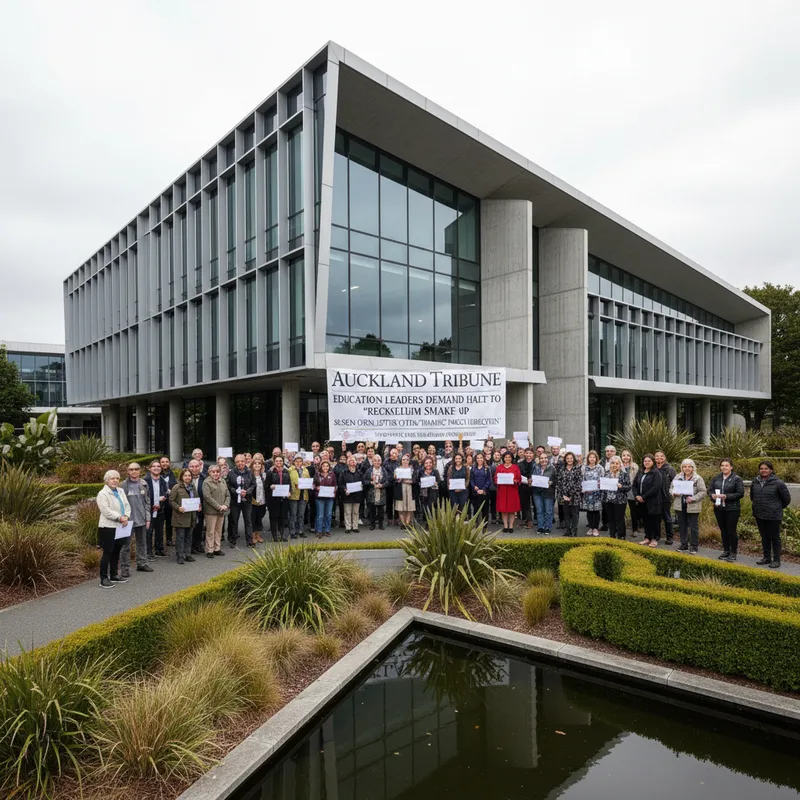
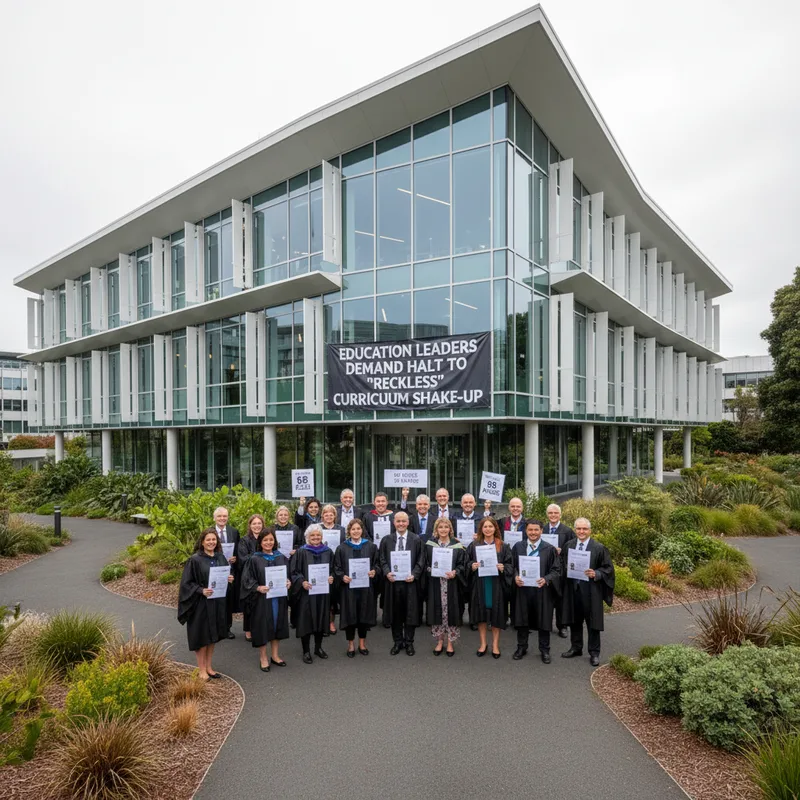
Dozens of New Zealand’s top education leaders have issued a stunning rebuke of the Government’s sweeping curriculum overhaul, warning in an open letter that the changes are being pushed at a "breakneck pace" and risk failing both students and teachers.
In the letter published this morning and addressed to Education Minister Erica Stanford, 88 heads of unions, sector federations and professional associations have called for an immediate pause to the reforms. They condemn what they call a "departure from evidence-based learning" and argue the changes are being "driven by the narrow, ideological interests of a small group".
The public backlash targets draft updates to the New Zealand Curriculum and Te Marautanga o Aotearoa, which are currently open for public feedback. The Government is simultaneously planning a significant overhaul of the secondary school qualification system, set to replace NCEA from 2028.
"As they stand, [the current draft curriculum documents] and framework are not fit for purpose and do not meet the Ministry of Education’s own stated standards,” the letter states.
A sector 'reeling' from pace of change
The joint statement warns that the frantic pace and flawed direction of the reforms, combined with a lack of genuine consultation, are setting the sector up for failure. Leaders say teachers have not been given the time or resources to prepare for such a fundamental shift in the education system.
New Zealand Educational Institute (NZEI) Te Riu Roa president Ripeka Lessels described the process as "reckless" and a "recipe for failure".
If the minister truly cares about improving the educational outcomes for our tamariki, she will pause these changes and bring the profession into the room to design a curriculum that actually works.
These sentiments were echoed by New Zealand Principals’ Federation president Jason Miles, who said the minister’s enthusiasm for the reforms was "misplaced". He urged her to listen to the concerns of a "reeling" sector instead of focusing on speed.
Ministry defends consultation process
Despite the sector’s unified call for a pause, the Ministry of Education is defending its process. Pauline Cleaver, the ministry's Deputy Secretary for the curriculum centre, said that all feedback from the consultation period would be "carefully considered" and that adjustments could be made to ensure "clarity and workability".
Ms Cleaver told the Herald that everyone involved shares the same objective of creating "a high-quality, inclusive curriculum that supports teachers and enables all tamariki to thrive". She confirmed the changes would be staged to give schools time to adapt and that the ministry has been "actively engaged with the profession" throughout the consultation.
However, Ms Cleaver did not directly respond when asked if the ministry would consider pausing the rollout. The Government’s official page on the curriculum and assessment changes remains open for public feedback until late April.
Minister 'genuinely surprised' by backlash
Responding to the letter, Education Minister Erica Stanford said she was "genuinely surprised" by the claims of inadequate resourcing and consultation. She reiterated her focus on lifting student achievement through an "ambitious reform programme".
"We are focused on meaningful and timely change, and we are already seeing early improvements in literacy and maths," Ms Stanford said. "If I had paused every reform the unions have asked me to stop over the past two and a half years, we simply would not have delivered any progress for our young people.”
The minister countered claims of under-resourcing by pointing to significant recent investments, including $70 million for structured literacy, $20 million for primary classroom maths resources, a $750 million boost to learning support, and funding for professional development for tens of thousands of teachers. She highlighted that NZEI primary principals recently negotiated a curriculum change allowance of $15,000 over 30 months, alongside other payments, to help lead the implementation.
"The NZEI negotiated these payments for principals to help lead this work and are now calling for the work to be paused,” she said. While stating her door has always been open, Ms Stanford said she would continue to work with groups focused on "practical solutions and constructive feedback".
Sweeping NCEA changes add to pressure
Adding to the pressure on educators is the concurrent overhaul of the NCEA system. The Government has confirmed it is replacing the three levels of NCEA with two new qualifications for Year 12 and 13 students, moving to subject-based assessments instead of the current credit accumulation model.
From 2028, NCEA Level 1 will be removed and replaced with a "Foundational Award" for Year 11 students, with a focus on literacy and numeracy. The changes will make English and mathematics compulsory for all Year 11 students. The first cohort to experience the new system will be students currently in Year 9, ensuring a staggered implementation.
This dual-stream of major reform places significant strain on a profession already tasked with addressing student achievement gaps and wellbeing, even as some are being recognised for their incredible work, like a Papatoetoe teacher recently honoured for empowering students. Similar issues have surfaced in Los Angeles, where schools approved classroom screen time limits.
Education reform a constant battleground
Debates over curriculum content and assessment are a long-standing feature of the New Zealand education landscape. Activist groups like QPEC, which includes long-time activist and former teacher John Minto, have historically challenged government policy, advocating for what they define as quality public education. The current open letter can be seen as the latest chapter in this ongoing dialogue between policymakers and the teaching profession.
The letter’s emphasis on "evidence-based learning" also highlights the work of academics at institutions like the University of Auckland, where researchers specialise in educational leadership and policy effectiveness. These experts often advise on the very policies now under scrutiny, examining how to best implement change for a diverse student population. While local debates continue, similar challenges are faced globally, with school districts in other major cities also grappling with policy changes, such as the recent decision where Los Angeles schools approved classroom screen time limits.
The key challenge for the Government will be to maintain its reform momentum without losing the support of the teachers and principals required to implement it. For now, the sector anxiously awaits the minister's next move. Ms Stanford says she will reveal more about the rollout of the updated curriculum soon.


