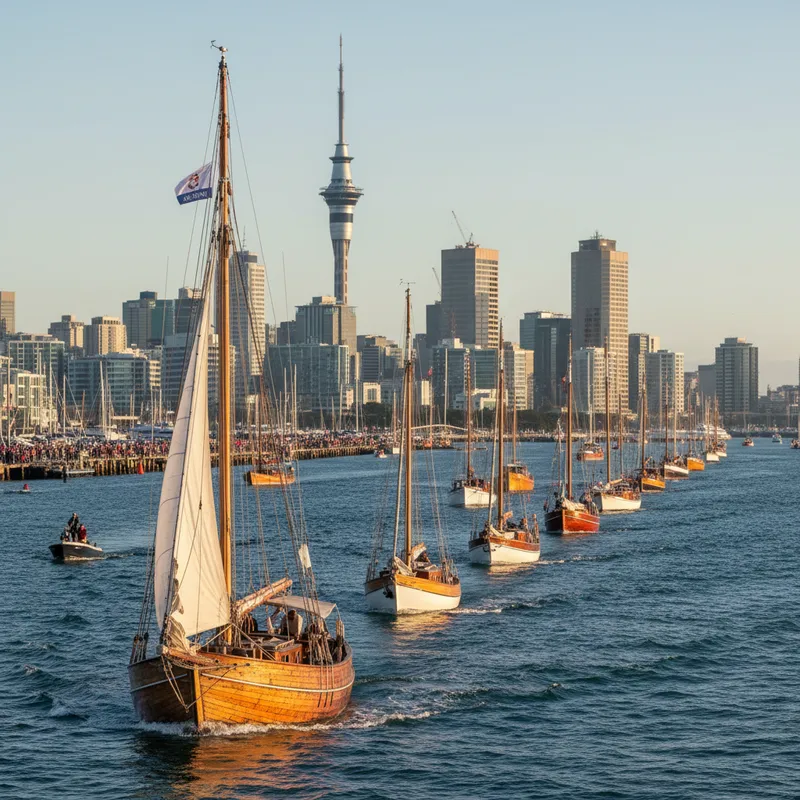
The historic 34-foot sailing vessel Ngataki, a cornerstone of New Zealand’s maritime heritage, has been named the official ambassador for the upcoming Auckland Wooden Boat Festival. Scheduled to take place from March 13 to 15, the festival is a primary fixture of Moana Auckland, the city's expansive ocean celebration. The vessel’s participation serves as a bridge between the city’s depression-era ingenuity and its modern status as a global boating hub, highlighting the enduring appeal of traditional craftsmanship in an era of composite materials. Built 94 years ago in a suburban Auckland garden by the legendary Johnny Wray, Ngataki has long been celebrated as a symbol of the Kiwi 'can-do' attitude. Wray’s exploits, famously chronicled in his book 'The South Sea Vagabonds,' detail how he constructed the boat using salvaged materials, including kauri logs and repurposed rigging found throughout the Hauraki Gulf. Today, the vessel is meticulously maintained by the Tino Rawa Trust, ensuring that Wray’s legacy and the architectural history of early 20th-century New Zealand yachting remain accessible to the public.
A living monument of the hauraki gulf
The Auckland Wooden Boat Festival returns for its second year, aiming to consolidate the region’s diverse maritime communities. Organizers have positioned Ngataki as the "poster child" for the event because she embodies the spirit of accessible adventure. Unlike the sleek, multi-million dollar racing yachts often associated with the Auckland waterfront, Ngataki represents a more egalitarian history where passion and resourcefulness outweighed financial backing. The boat’s name, which translates to 'abode of the elite,' was originally chosen by Wray with a characteristic sense of irony. Despite her modest origins and what some critics of the era described as 'questionable aesthetics,' the boat proved her mettle through extensive offshore voyages. Her presence at the festival is intended to inspire a new generation of boaties to appreciate the longevity and soul of timber vessels. The Tino Rawa Trust has worked tirelessly to preserve her original character while ensuring she remains seaworthy for public demonstrations. Expert conservators note that wooden boats like Ngataki require specialized knowledge that is becoming increasingly rare. By showcasing such vessels, the festival provides a platform for traditional shipwrights and apprentices to demonstrate their skills. This educational aspect is a core component of the Moana Auckland initiative, which seeks to connect the city’s residents with their environment and maritime history. Information regarding regional maritime heritage and environmental stewardship can be found through the Heritage New Zealand archives.
Regional impact and maritime culture
The festival’s influence extends beyond the immediate Auckland region, resonating with wooden boat enthusiasts across the South Pacific. Similar community-driven events often see cross-pollination of ideas and participants. For instance, while Auckland celebrates its timber fleet, other regions prioritize youth engagement in maritime activities, such as how Margaret River utilizes community programming to foster interest in local recreational assets. These efforts collectively aim to keep maritime traditions alive among the younger demographic. Economic analysts suggest that festivals like these are vital for the local marine industry. They bring foot traffic to the Viaduct Harbour and Jellicoe Harbour, benefiting local hospitality and retail sectors. Moreover, they highlight the specific niche of wooden boat restoration—a sector that contributes significantly to the skilled labor market in New Zealand. The preservation of a vessel like Ngataki is not merely a hobby but a commitment to an industry that defines the nation’s craft identity. The festival will feature a wide array of activities, from static displays of classic launches to on-water parades. Attendees will have the opportunity to see Ngataki under sail, a sight that evokes the golden age of Auckland yachting. The event also coincides with a period of significant investment in public infrastructure, ensuring the city remains a welcoming port for international and domestic visitors alike.This focus on local heritage mirrors the community engagement seen in other regional centers, such as how Mandurah schools emphasize practical skills and local history in their specialized curricula.
The legacy of the south sea vagabonds
Johnny Wray’s narrative has inspired countless New Zealanders to take to the sea. His story of building a boat in his backyard during the Great Depression—at a time when jobs were scarce and resources fewer—remains a powerful allegory for resilience. Ngataki was not just a means of transport but a vehicle for freedom, carrying Wray and his friends to the islands of the South Pacific and back. The book documenting these travels remains a bestseller in the maritime genre, lauded for its self-effacing humor and adventurous spirit. The Tino Rawa Trust, which now oversees the vessel, emphasizes that Ngataki is a "working boat." She is not a museum piece tucked away from the elements; rather, she is regularly sailed, maintaining the tradition of the 'vagabonds' who first stepped onto her decks. This philosophy of active preservation is central to the upcoming festival, which encourages owners of wooden boats of all sizes—from small dinghies to grand schooners—to participate and share their stories. Community interest in the festival is expected to be high, following the success of the inaugural event. By placing a vessel with such a rich local backstory at the forefront, organizers hope to draw in those who may not typically consider themselves 'boating enthusiasts' but who share a love for New Zealand history and storytelling. The inclusion of Ngataki provides a tangible link to a past where the Hauraki Gulf was the primary playground for Auckland’s residents.
Looking toward march 2026
As the festival dates approach, the city is preparing for a surge in maritime tourism. The event is part of a broader calendar of summer activities that celebrate Auckland’s relationship with the sea. This celebratory atmosphere is reflected in other regions too, where events like the Busselton Jetty Swim demonstrate the community's passion for the water and regional pride. Auckland's wooden boat showcase aims to capture that same energy, focusing on the unique timber craftsmanship that is a hallmark of New Zealand boat building. For those visiting Auckland for the first time, the festival offers a unique lens through which to view the city. It is an opportunity to move beyond the commercial skyline and understand the craftsmanship that built the nation's reputation on the water. The festival organizers, in partnership with Tātaki Auckland Unlimited, have designed the event to be family-friendly, featuring workshops, food stalls, and historical exhibitions. Ultimately, the story of Ngataki and the Auckland Wooden Boat Festival is one of continuity. It celebrates the fact that despite nearly a century passing since Johnny Wray first laid her keel, his "little boat" is still capable of inspiring an entire city. Whether you are a lifelong sailor or a curious landlubber, the festival promises a deep dive into the heart of New Zealand’s maritime soul, anchored by the humble yet heroic presence of a kauri boat built in a backyard nearly 100 years ago.