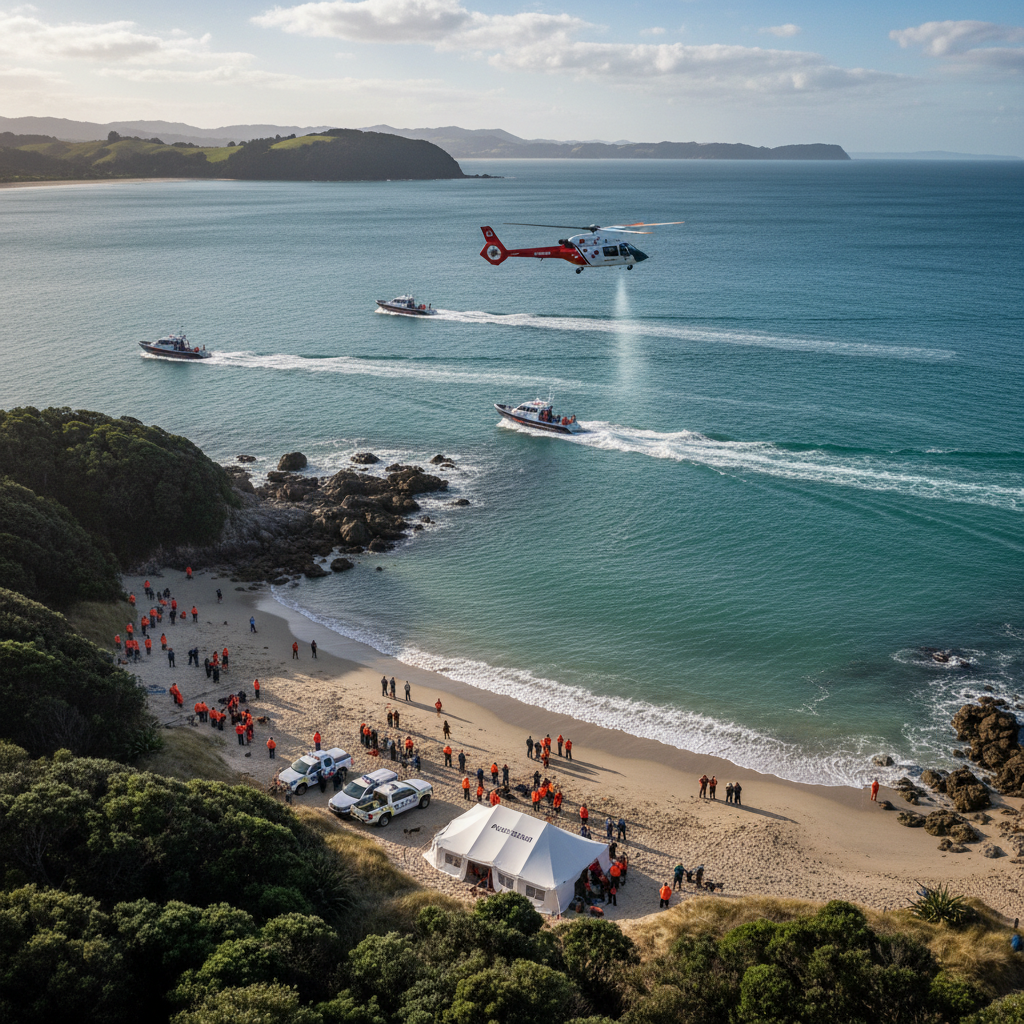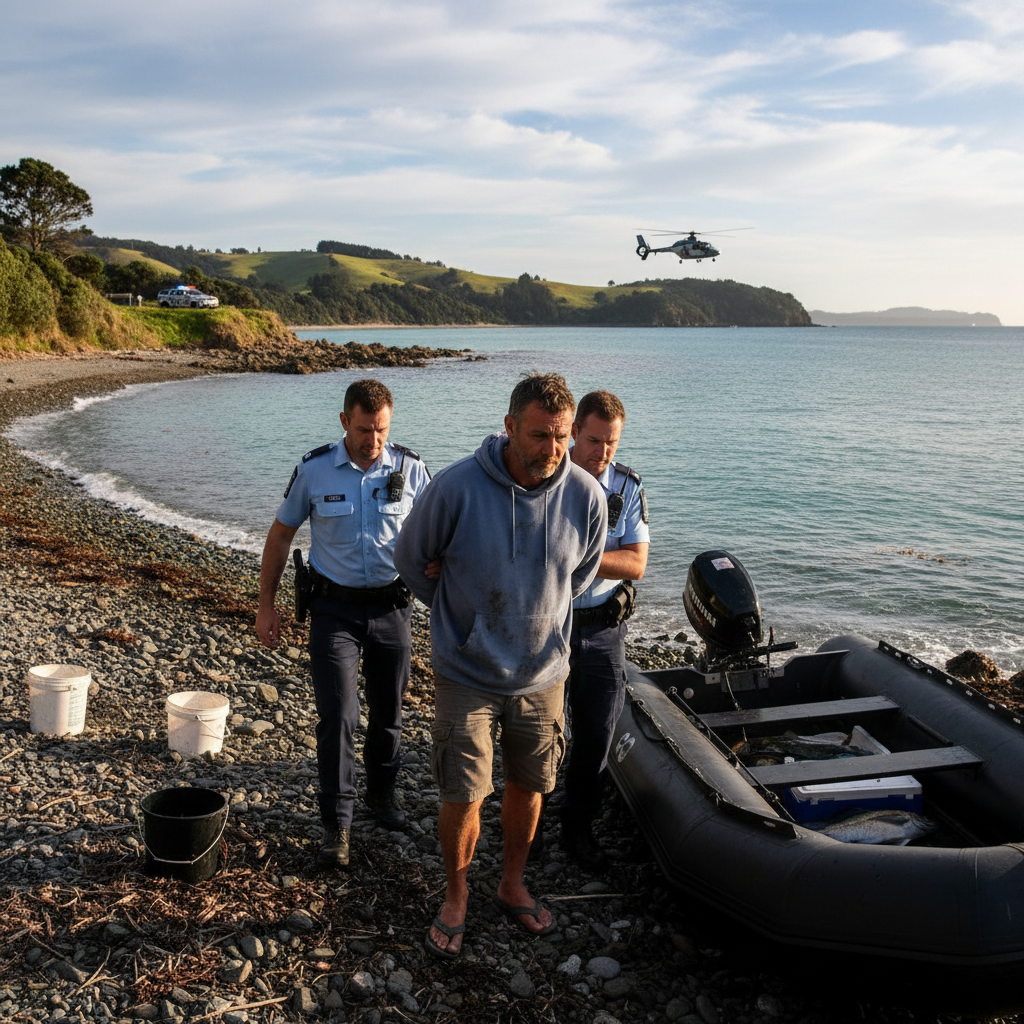
A man will appear in court this month after a sophisticated police operation involving a helicopter and ground units caught him allegedly fishing illegally in a protected North Shore marine reserve in the dead of night.
The 32-year-old man was arrested in the early hours of Wednesday morning at the Long Bay-Okura Marine Reserve, a 980-hectare ‘no-take’ sanctuary. Police say the man had been accessing the area by driving through private property to circumvent the reserve’s locked gates.
The arrest followed reports to the Police Maritime Unit about late-night fishing activity in the area. According to police, CCTV footage showed the man had visited the reserve to fish on three separate occasions in the past week before being apprehended.
The operation culminated at around 12:40 am Wednesday, when the Police Eagle helicopter observed a man fishing from the shore. Ground units were dispatched to his location, where he was arrested. Police confirmed that fishing equipment and a number of freshly caught fish were found in his possession.
Coordinated police effort
Inspector Vaughn Graham praised the joint effort that led to the arrest, highlighting the seamless collaboration between different police departments.
At around 12.40am this morning, the Police Eagle helicopter observed a man illegally fishing at Long Bay-Okura Marine Reserve. Ground units were dispatched and swiftly located the man,” Inspector Graham says. “This was a great collaboration between the Police Maritime Unit, the Police Eagle Helicopter and units on the ground to catch an offender who decided marine protection laws didn’t apply to him.
A subsequent search of the man’s vehicle uncovered a quantity of drugs and related paraphernalia. He has since been charged with two counts of unlawfully being in an enclosed area, and police have indicated that further charges relating to both the illegal fishing and the drug discovery are being considered.
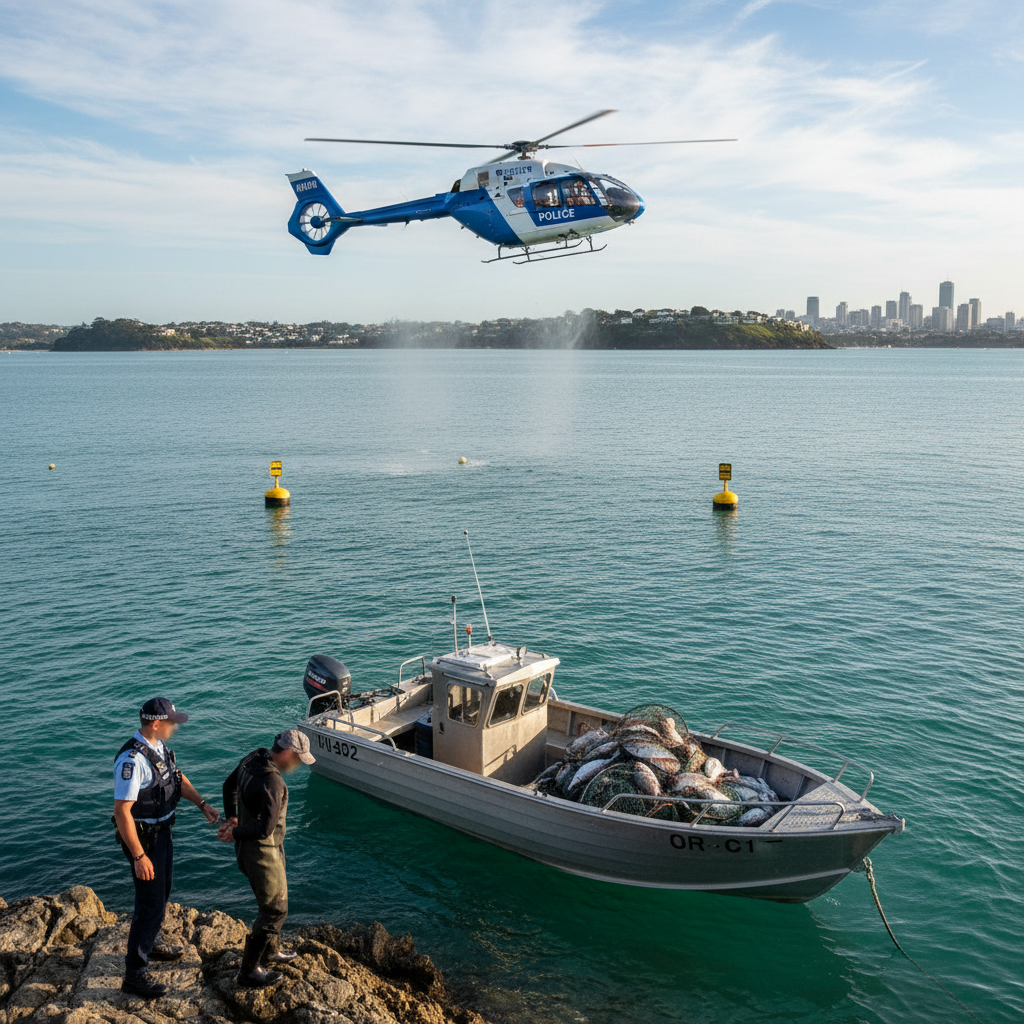
The man is scheduled to appear in the North Shore District Court on 24 April.
Protecting our precious marine environments
The Long Bay-Okura Marine Reserve is one of several protected zones in the Hauraki Gulf, where all forms of fishing and marine life disturbance are strictly prohibited. These regulations are in place to allow marine ecosystems to regenerate, promoting biodiversity and healthier fish stocks that benefit the entire region.
The Department of Conservation (DOC), which has been monitoring the situation, stressed the importance of these no-take zones. Kirsty Prior, DOC Operations Manager for Marine, said such reserves are vital for the health of New Zealand’s oceans. "At Long Bay-Okura Marine Reserve, fishing, shellfish gathering, and any other disturbance of marine life is strictly prohibited," she said. "We’re thankful to the NZ Police for their support in stopping people taking from these vitally important reserves."
New Zealand’s ecosystems are notoriously fragile, having been permanently altered by the introduction of invasive species over the last century. Historically, individuals have deliberately introduced foreign species into waterways, causing irreversible damage to native habitats. This history underscores the critical importance of the strict regulations enforced today by DOC and Fisheries New Zealand.
A crime of greed, not need
While some may view illegal fishing as a minor infraction, authorities treat it as a serious crime driven by personal gain. The consequences can be severe, reflecting the significant impact of poaching on sustainable fisheries. Similar issues have surfaced in the recent Big Bass Tournament, where authorities weigh in on the growing concerns of illegal fishing. Last year, the former director of a fishing company, Glen Owen Wright, was jailed for 16 months for his role in illegally catching and landing nearly 15 tonnes of snapper. At the time, Fisheries New Zealand director of compliance Steve Ham called the act theft motivated by "greed and profit."
The recent arrest comes as police continue a wider crackdown on illegal activities across Auckland. Several high-profile operations have recently targeted organised crime, including major drug supply chains. In a separate case, Operation Laver resulted in the arrests of a man and woman in North Auckland for allegedly selling over $1.2 million in drugs, including methamphetamine and cocaine, on the dark web. That investigation saw authorities seize $55,000 in cash from a rural property.
These operations, from environmental enforcement at a local reserve to dismantling complex online drug markets, show a broad commitment by police to tackling crime across the community. The city is also grappling with other major challenges, including ongoing safety disputes at construction sites like the Seascape tower and significant infrastructure projects like the eastern busway, which require constant oversight and resources.
For now, the focus remains on the individual case at Long Bay, with the upcoming court date set to determine the legal consequences for flouting the laws designed to protect one of Auckland’s most valuable natural assets.