An apartment owner in a large Newmarket complex has successfully challenged how her body corporate allocated the multimillion-dollar cost of removing and replacing flammable aluminium cladding similar to that which fuelled London's deadly Grenfell Tower fire.
Jennifer Tham, a unit owner in the sprawling apartment and retail development above Newmarket train station, took her case to the Tenancy Tribunal against Body Corporate 384983. The tribunal found the body corporate had acted unlawfully in its method of charging owners for the extensive recladding project.
The adjudicator, R Kee, ruled that the levy resolutions passed at the body corporate's 2023 annual meeting were 'ultra vires', or beyond its legal power, and could have no effect. The decision invalidates the charges imposed on hundreds of apartment owners and forces the body corporate to reassess how it funds the critical safety work.
A shadow of the Grenfell tragedy
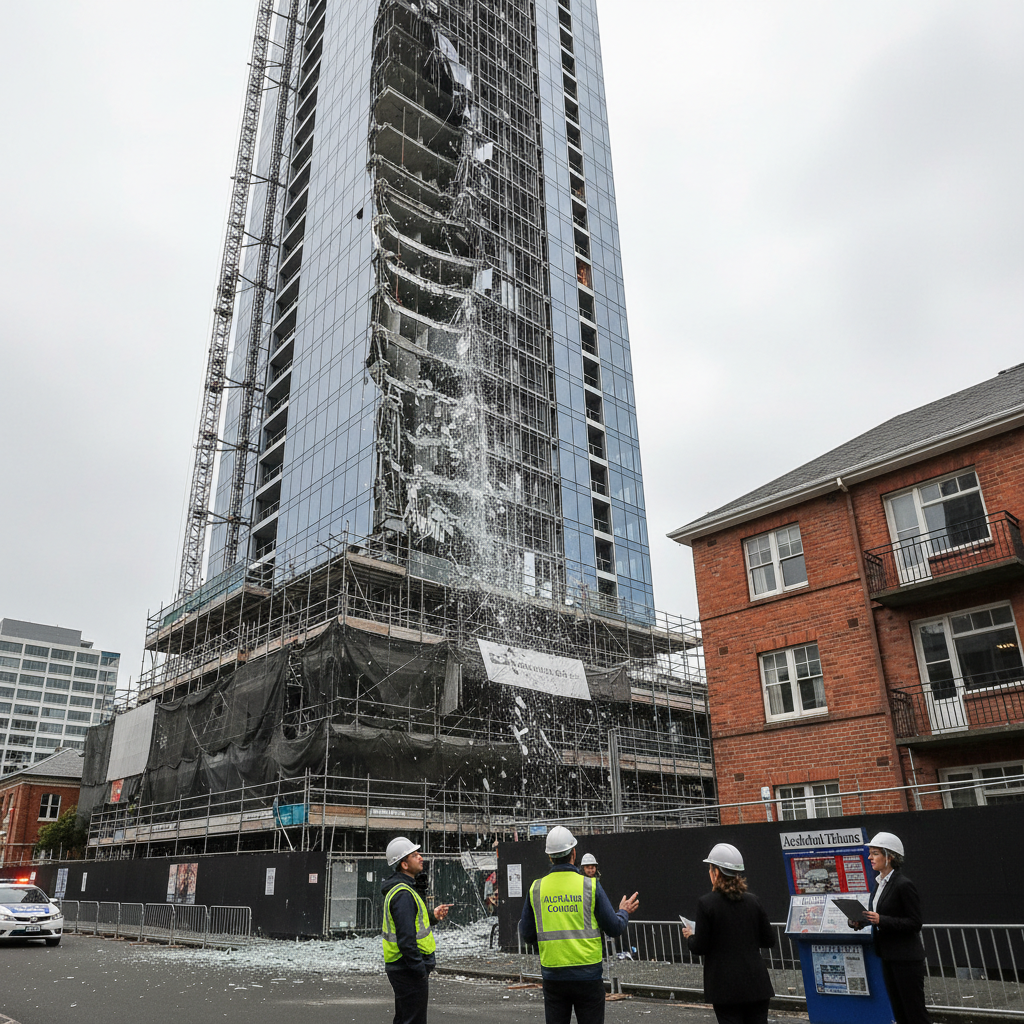
The dispute centres on the replacement of aluminium composite panels (ACP) with a flammable polyethylene core. This type of cladding has come under intense global scrutiny since 2017, when it was identified as a primary reason for the rapid spread of a fire that tragically killed 72 people at Grenfell Tower in London.
In 2018, Auckland Council identified 25 buildings in the city that were constructed with similar ACP cores. At the time, the council stressed that the presence of the cladding did not automatically mean the buildings were dangerous, as most had other fire safety systems in place, such as sprinklers and alarms. The Ministry of Business, Innovation and Employment has since provided extensive guidance for buildings requiring cladding remediation across New Zealand.
For the Newmarket complex, which was developed by the multi-national group L & Y Holdings, the push to replace the cladding began around 2022, leading to the contentious levy plan to fund what it called the 'long-term maintenance fund'.
Disproportionate costs spark legal challenge
The body corporate's plan divided the costs between the complex's five distinct precincts: Queens Lodge residential, Kings Square residential, commercial units, retail units, and the carpark. However, the allocation was far from even.
The proposed budget for the recladding work was to be sourced primarily from residential owners. The plan allocated 64 per cent of the cost to the Queens Lodge precinct and 23 per cent to the Kings Square precinct. The retail precinct was to cover 8 per cent and the carpark 5 per cent, while the commercial precinct was allocated no cost at all.

Ms Tham challenged this approach, arguing that the benefits of the recladding project extended to every owner in the complex, not just those in the residential towers. The tribunal decision noted her argument that the entire complex would benefit from improved fire safety and from removing the reputational stigma associated with the Grenfell disaster. By removing the cladding, the value and insurability of all units, including commercial and retail spaces, would be protected.
The tribunal agreed, finding that the body corporate's 'hybrid approach' of assigning different costs to each precinct and then using utility interests to calculate individual levies within those precincts did not comply with the Unit Titles Act.
A complex structure and a long dispute
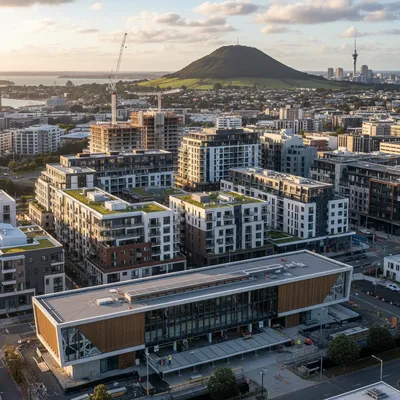
The Newmarket development, situated at the prominent corner of Broadway and Remuera Road, is one of Auckland’s largest mixed-use complexes. It contains over 500 principal units spread across eight levels, including hundreds of apartments, ground-level shops, commercial offices, and a large basement carpark.
The legal battle has been protracted. Ms Tham first received a favourable ruling from the tribunal in July last year. The body corporate, which is managed by a company associated with the developer, appealed to the District Court. The court then remitted the case back to the tribunal for a full re-hearing with more detailed evidence, which led to the definitive ruling made on March 3. Such high-stakes property disputes are not uncommon in Auckland's heated market. The complexity of large-scale projects can lead to significant conflicts, an issue seen in other major property decisions, such as the debate over whether Auckland Council should buy the Avondale Racecourse, and in the recent news that Cumberland council venue hosts event.
The insurance budget for the complex further illustrates the varied financial interests at play. The 2023-2024 insurance premium of $837,070 was also split unevenly, with the Queens Lodge precinct paying 56 per cent, Kings Square 28 per cent, the carpark 11 per cent, retail 3 per cent, and commercial 2 per cent.
What happens now
The tribunal's decision renders the body corporate's passed levy resolutions null and void, meaning it cannot collect the funds based on its current illegal structure. It must now formulate a new, compliant method to fund the essential recladding project, which will almost certainly require another vote from all unit owners.
This case serves as a significant precedent for other multi-unit developments across Auckland and New Zealand facing similar costly remediation projects. As Auckland continues to grow and intensify, with large developments adding thousands of new homes, the governance of these complexes is becoming increasingly critical. Managing diverse interests, from individual homeowners to commercial tenants, requires careful and legally sound administration, a challenge also faced by communities planning for growth, such as those near the proposed 4000-home development in Auckland.
The focus on building community and shared amenities is a key part of modern developments, with public interest extending from major infrastructure to local events and festivals that bring people together, like a new food festival in Far North Queensland that aims to showcase a taste of the tropics.
For the owners at the Newmarket complex, the immediate future involves waiting for the body corporate to present a revised, lawful plan to ensure their homes are made safe without imposing an unfair financial burden on a select few.