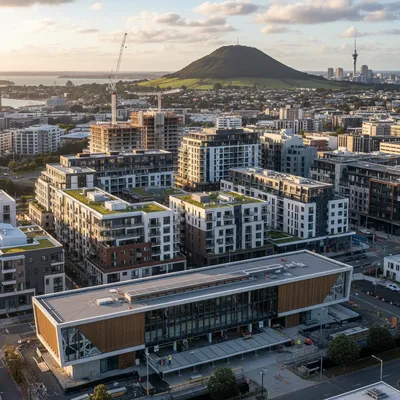
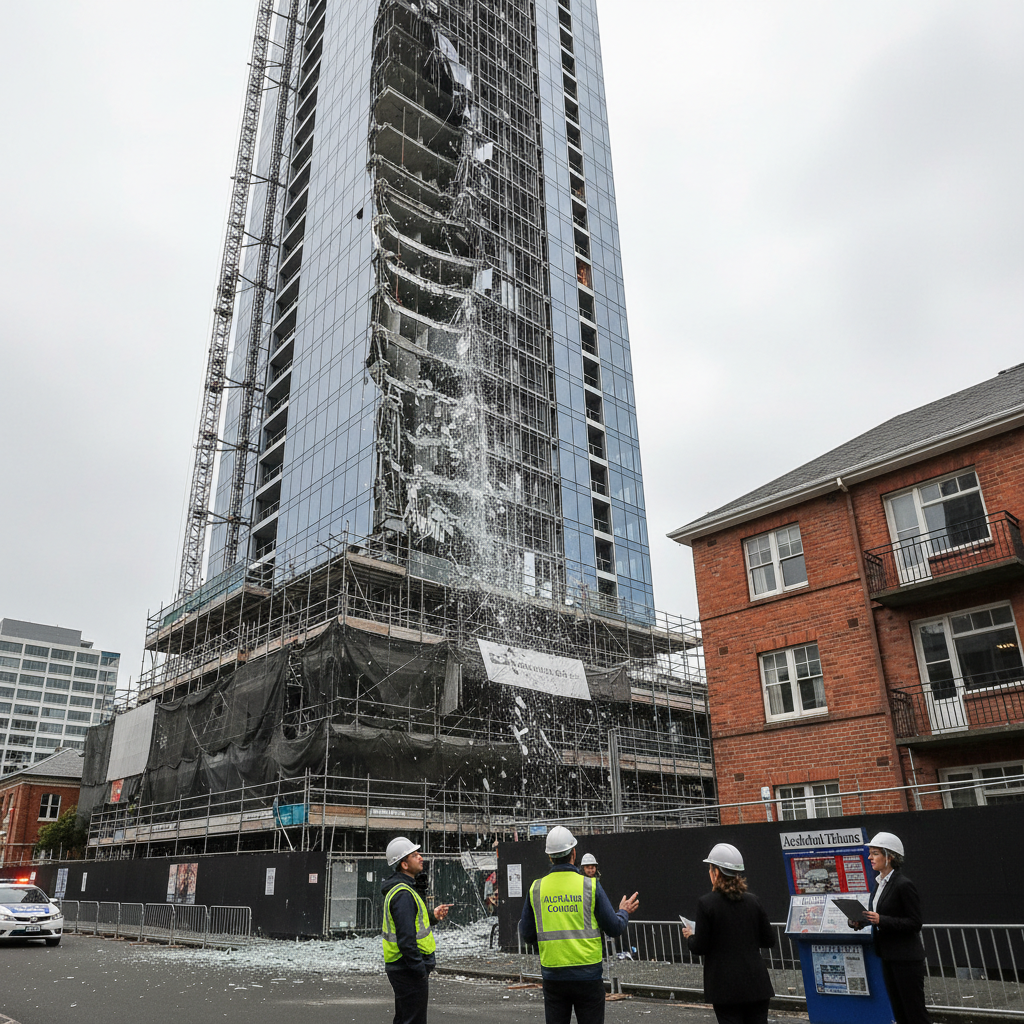
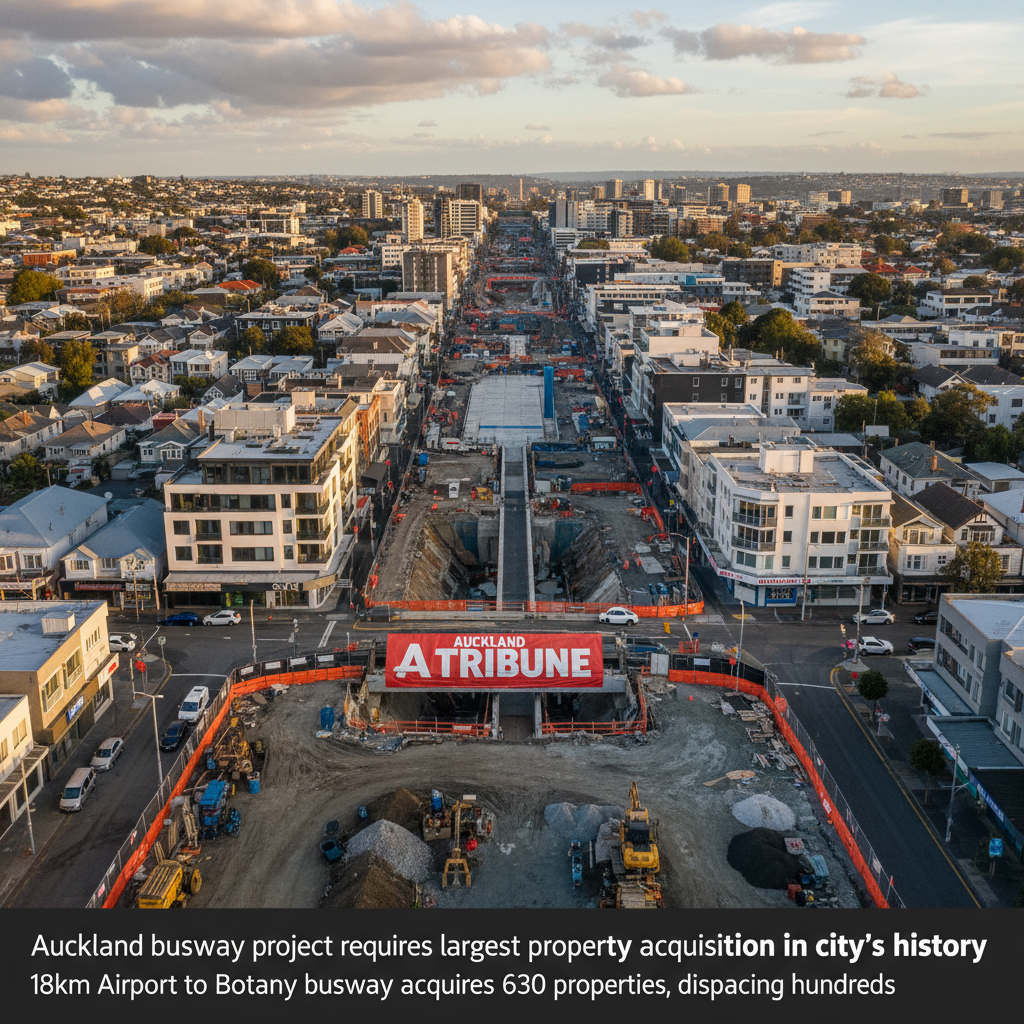
Auckland’s city centre is in the midst of a dramatic and complex transformation, with a skyline punctuated by both soaring cranes and silent, empty lots. While some multi-billion dollar projects are pushing ahead with renewed vigour, others have stalled or been drastically scaled back, creating a landscape of both immense promise and lingering uncertainty for the future of the CBD.
This mixture of progress and paralysis defines the city's current development chapter. As Auckland prepares to embrace the benefits of the massive $5.5 billion City Rail Link, the fate of numerous key sites hangs in the balance, representing what some might celebrate as urban renewal, and others might lament as missed opportunities. These projects, from gleaming office towers to repurposed vacant blocks, are shaping the future of how Aucklanders will work, live and interact with their city.
Among the successes are recently completed hubs like the bustling Commercial Bay, with its premium offices and retail spaces, and the ever-popular Britomart precinct. The long-awaited New Zealand International Convention Centre has also finally opened its doors, adding another landmark to the city's fabric. However, the narrative of other major sites is far more complicated.
Projects pushing ahead
Leading the charge is Mansons TCLM’s $650 million office development at 35 Graham Street. Now rising from the site of former Auckland Council buildings, it is set to be New Zealand's largest single commercial office project currently under construction. The development features an 11-level, twin-block design connected by a central atrium, offering over 24,000 square metres of indoor floor space.
The project is strategically positioned to attract major tenants, particularly large trading banks and corporations currently housed in older, less efficient buildings. In an era where corporate environmental responsibility is paramount, the new Graham Street offices will offer high green-star ratings that many older buildings lack, meeting modern commitments to sustainability that are increasingly non-negotiable for top-tier companies.
Perhaps the most audacious vision for the CBD is Precinct Properties’ proposed Pūmanawa o Tāmaki. This landmark project aims to redevelop the Downtown Carpark site into a dynamic, mixed-use precinct featuring soaring twin towers of 55 and 45 levels. The development is planned to include hundreds of apartments, a hotel, modern office spaces and new public laneways designed to enhance connectivity in the waterfront area. This type of integrated development is crucial for creating a vibrant, '24/7' city centre where people can live, work, and socialise, a goal that aligns with modern urban planning philosophies for major international cities.
Despite the challenging economic climate, the company's chief executive has expressed firm commitment to the project. Procurement discussions with contractors are reportedly underway, and the company has refiled for fast-track consent to expedite the process, signalling a strong intent to break ground this year.
We vow to start this year on the twin-tower 55-level and 45-level Downtown Carpark redevelopment, Pūmanawa o Tāmaki. {"type":"in_body_image","url":"https://ffqbmbvywrypmfjybtyu.supabase.co/storage/v1/object/public/article-images/auckland-skyline-transforms-amid-major-cbd-developments-2.webp","alt":"Auckland’s changing city centre skyline with numerous construction cranes and buildings in various stages of development.","caption":"Major CBD developments are reshaping Auckland's skyline, reflecting progress and uncertainty in the city."}
Stalls, setbacks and scaled-back ambitions
However, for every ambitious project moving forward, there is another shrouded in silence. Plans for the Symphony Centre, a 21-storey apartment, office, and retail complex slated for a key site beside the Aotea Centre, have gone quiet since they were announced two years ago. This lack of news suggests that design changes or other hurdles may be delaying a project once touted as a vital piece of the city's 'midtown moment'.
Nowhere is the disappointment of scaled-back ambition more apparent than at the former site of the much-loved Food Alley on Albert Street. For years, the block between Federal and Wolfe Streets sat as a bulldozed, empty lot, described last year as a 'dire' blight on the CBD landscape. In a move that has been met with mixed feelings, the site is now being transformed not into a new building, but into a 67-space car park operated by Wilson Parking. While any move to activate a derelict site is a positive step, its conversion into surface-level car parking, just one block from the waterfront, has raised questions about whether this is the best and highest use for such prime real estate. Last year, Deputy Mayor Desley Simpson said it was 'very sad' the site had been left in a desolate state for so long. The decision to opt for parking highlights the economic pressures that can stifle grander visions, a trend that could impact Auckland's competitive standing if not carefully managed. It reflects a wider concern as Auckland loses its economic edge and battles a productivity crisis. In a related development, Momoa, Waititi and Curtis purchase West Auckland film studio.
A city in constant evolution
This wave of construction is the latest chapter in a long history of redevelopment that has defined Auckland's waterfront. The city’s landscape has been in a state of flux for over a century, from the construction of Princes Wharf between 1921 and 1924, which replaced the city's first dry dock, to the establishment of the Ports of Auckland in the late 1980s. Each era has brought its own engineering feats and commercial visions that have reshaped the connection between the city and the Waitematā Harbour.
The potential addition of thousands of new residents through projects like Pūmanawa o Tāmaki could fundamentally alter the CBD's social and economic dynamics. A growing residential population is seen as key to supporting retail and hospitality sectors, particularly outside of traditional 9-to-5 business hours. For those looking to enter the urban property ladder, these developments are a significant point of interest, though affordability remains a central question in a market notoriously difficult for first-home buyers. Aspirant homeowners can find more information in this first-home buyer’s guide to the Auckland property market.
Ultimately, the success of Auckland's evolving CBD hinges on more than just erecting new buildings. It depends on creating a cohesive, connected, and liveable urban environment. The City Rail Link is the critical piece of infrastructure designed to underpin this vision, enabling greater density and more efficient movement throughout the city centre. The coming year will be a crucial test, revealing whether the boldest plans for Auckland's future will break ground or remain ambitious drawings on an architect's desk.
Precinct Properties' aim to begin work on its multi-billion dollar Pūmanawa o Tāmaki development later this year remains a key project to watch, one that could serve as a powerful signal of confidence in Auckland’s long-term future. More information about urban development can be found in related publications, for instance on the topic of municipal and provincial government collaboration.