Members of Papatoetoe’s Indian community have voiced their frustration and fear over what they describe as a growing tide of anti-Indian sentiment, following two recent incidents of racist graffiti in Auckland that have unsettled the community.
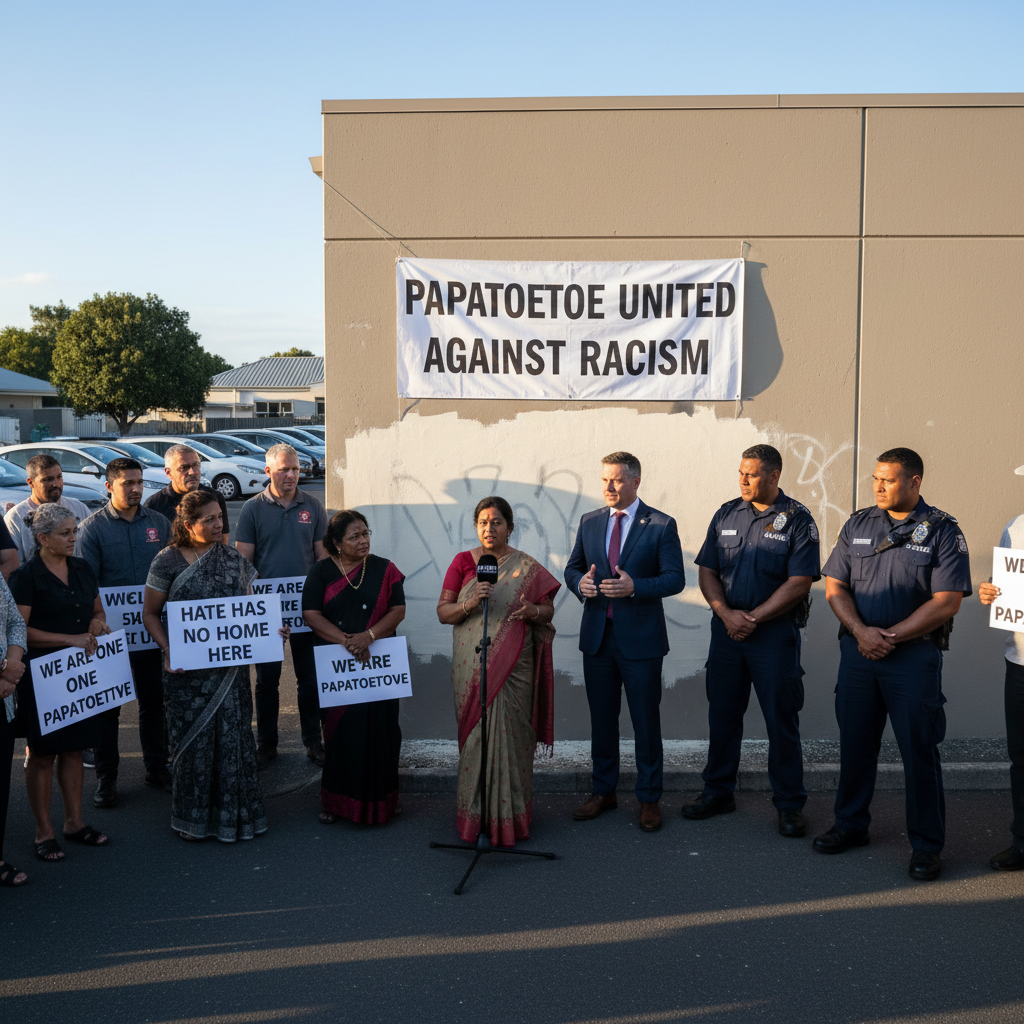
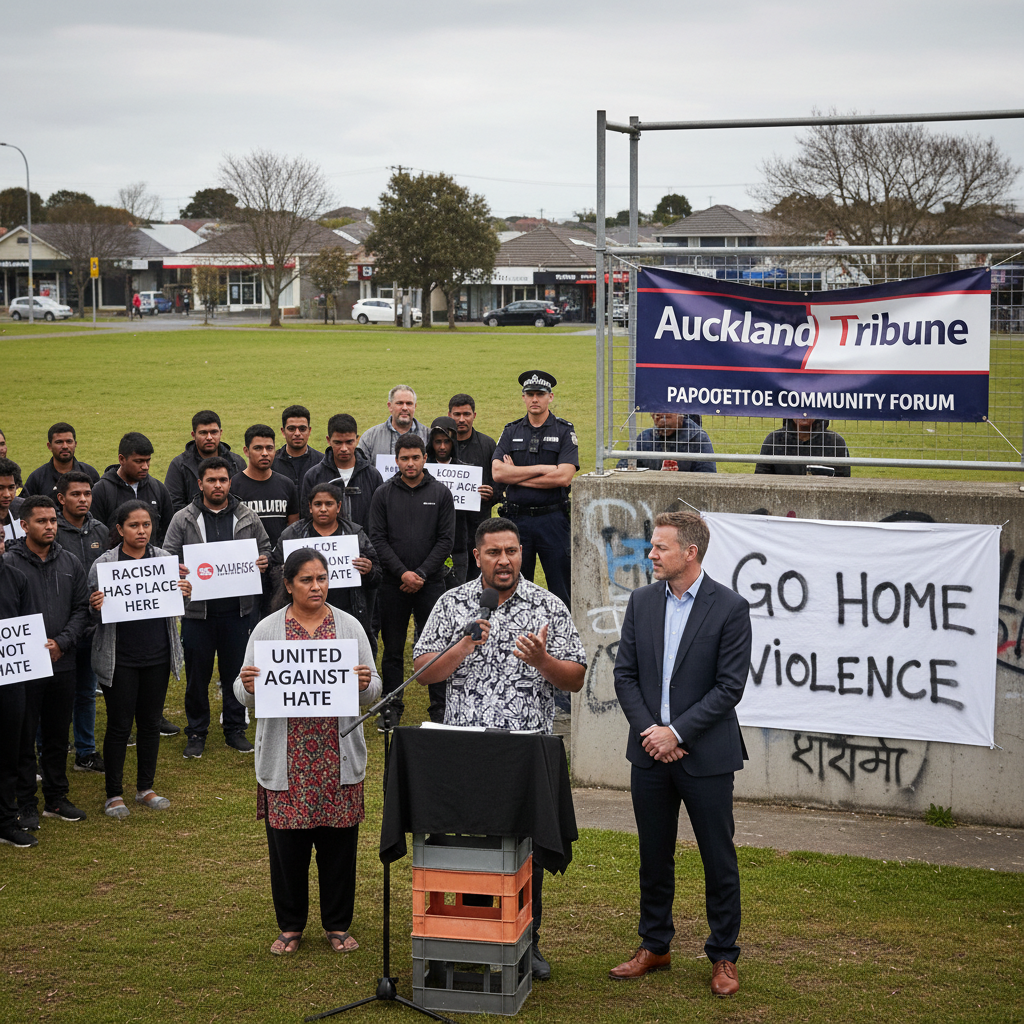
A public meeting at the India Diversity Centre in Papatoetoe on Friday drew about 50 people, including concerned residents, business owners, police, and politicians. The gathering, organised by the Papatoetoe Ōtara Action Team, was a direct response to threatening messages discovered in South Auckland and the nearby suburb of Royal Oak.
The first incident occurred last Saturday, when graffiti inciting violence against Indians was found on a footpath near Papatoetoe Central School. The discovery caused significant alarm in a community which has deep roots in the suburb. Papatoetoe is one of Auckland's most diverse areas, known for its vibrant culture and thriving local businesses run by people of numerous ethnic backgrounds.
Police have since arrested a 61-year-old Papatoetoe man in connection with the graffiti. He appeared in the Manukau District Court facing two charges of intentional damage to a footpath and one charge of behaving offensively in a public place. The case highlights the increasing use of digital tools to access court records as the public follows the proceedings. The man has been released on bail. Shortly after the first discovery, an identical message was found scrawled inside a public toilet on Campbell Road in Royal Oak, amplifying concerns that the sentiment was not an isolated issue.
Some of this feels worse
Feelings of anger, hurt, and fear were palpable at the Friday meeting, as residents shared their personal experiences and demanded meaningful action from authorities. The incident has resurfaced painful memories of past racism for many, but some feel the current climate is more hostile.
Long-time Papatoetoe resident Navtej Randhawa, who has lived in the area for 25 years, said that despite previous challenges with racism, the current atmosphere felt more threatening. He urged the community not to be passive, but to look inwards and become part of the solution by building bridges with wider New Zealand society.
“What are we doing to be part of the solution and help build a better society?” he asked the room. “For me, one word stands out: volunteer. Contribute to the wider good of the community and you will see better outcomes.”
Manurewa Local Board member Marshal Walia echoed the community's anxiety, particularly for younger generations. He spoke of increasing reports of bullying and racism targeting Indians in South Auckland schools. “We have attended many similar meetings, but my question is what are you going to do about these issues, and what are you going to tell those who are nervous about sending their children to school on Monday?” Mr Walia asked officials directly, capturing the immediate fear felt by many parents.
A deeper undercurrent of division
Many speakers suggested the graffiti was not a random act of vandalism, but a symptom of a deeper, more troubling societal problem. They argued it was a reflection of a resistance to New Zealand's growing multiculturalism.
Jaspreet Kandhari, general secretary of the NZ Indian Business Association, said the incident was part of a disturbing trend. “Recently, I attended an event where a study on migrant and ethnic groups and their contribution was launched,” he said. “One alarming trend was that many New Zealanders still do not like to see New Zealand as a diverse, migrant country.” For information on how to report discrimination, New Zealanders can contact the Human Rights Commission.
Naveed Hamid, chair of the Pakistan New Zealand Business Council, called for ethnic communities to present a united front against hate. He highlighted the significant economic contribution of migrant communities, which he estimated to be around $60 billion annually. He argued this contribution should be met with respect, not hostility, and that unity among different ethnic groups was the most powerful response. This comes as many community organisations are seeking financial support, such as the South Auckland sports clubs that recently received an $80k boost.
The role of social media in amplifying division was also raised by resident Narinder Veer Singh, who questioned what plans authorities had to combat the spread of online hate speech that often fuels real-world prejudice. This concern was shared by Kushma Nair, a local board elect for the Papatoetoe subdivision, who questioned why some groups were permitted to spread anti-Indian rhetoric under the protection of free speech.
Officials promise support and action
Officials in attendance sought to reassure the anxious community that their concerns were being taken seriously and that action was already underway. Counties Manukau West area commander Dave Christoffersen described the graffiti as an “appalling act that has no place in our community.”
I feel your hurt and your fear as a result. This was an appalling act that has no place in our community. Police take these matters seriously and we prioritise them, as was the case in this instance.
He confirmed that an investigator was assigned to the case immediately after the report was made, leading to the swift arrest. Furthermore, he promised that police would have a visible presence at Papatoetoe Central School on Monday morning to provide reassurance. “We felt that was the best police response when school returns,” he said. “If parents, staff or students have any questions, they will see officers they are familiar with because they are already part of that school community.” While police address safety concerns, other services continue their work in the community, including the ongoing search for a man missing at Shelly Beach.
The political response was equally strong. Panmure-Ōtāhuhu MP and Labour’s spokesperson for ethnic communities, Jenny Salesa, called the incident an “unacceptable” hate crime. She relayed the worries of Papatoetoe Central School principal Raj Dullabh, pointing out the deeply personal nature of the threat for his students. He noted that pupils of Indian heritage make up 78 percent of the school’s roll.
Finally, ACT MP Parmjeet Parmar concluded with a plea for individuals to take personal responsibility in challenging racism wherever they encounter it. She stressed the importance of speaking out against anti-Indian sentiment rather than remaining silent. “It's very important that people don't decide to stay quiet,” she said. This sentiment echoes a community-wide desire for a more inclusive society, a vision similarly reflected in a plan for a massive indoor bike park in Calgary, designed to bring diverse groups together.