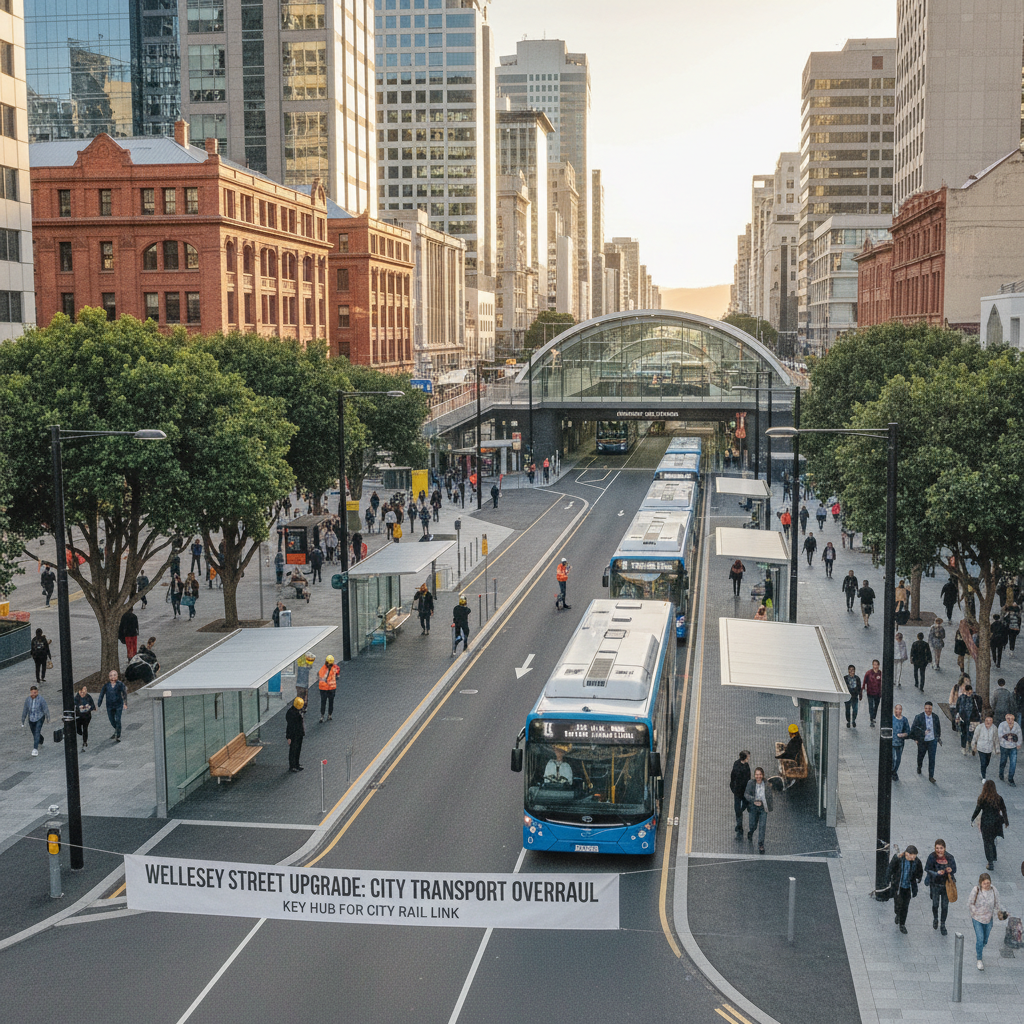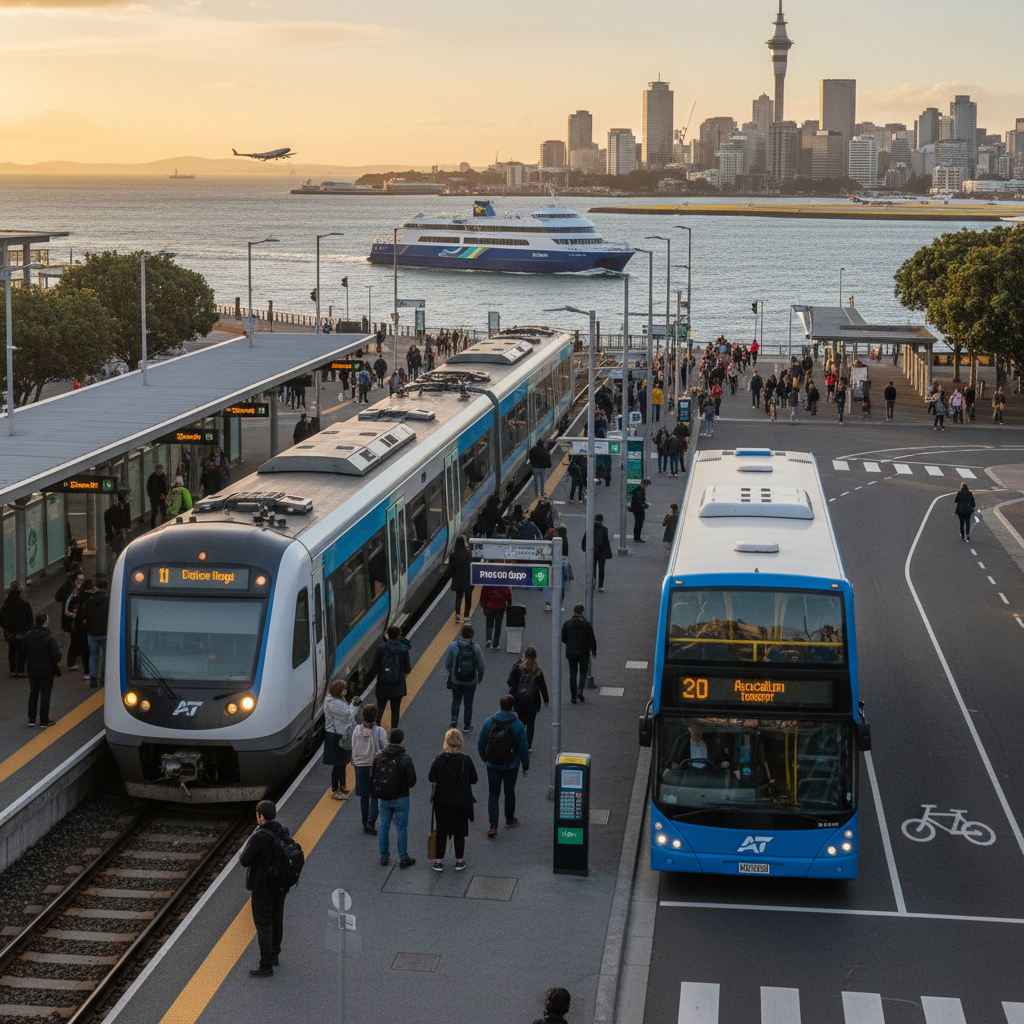
Auckland is easier to navigate when you understand the basics of Auckland Transport (AT): where services go, how fares work, and the simplest ways to pay. Whether you are commuting from the suburbs, heading to a match at Spark Arena, or planning a day trip on the harbour, the same system ties together buses, trains and most ferries.
This local guide breaks down the network in plain language, with practical pointers on route maps, common visitor services (like the CityLink and AirportLink), fare zones and transfers, and what to do if you miss a tag on or tag off. For the official, always up-to-date planning tools, start with AT’s Journey Planner at at.govt.nz and the AT Mobile app.
How Auckland’s public transport network works (and who runs it)
Auckland’s network is coordinated by Auckland Transport, the council-controlled organisation responsible for planning and contracting services across the region. You will see AT branding on stops, stations and vehicles, while services are operated by a mix of companies under contract to AT.
For most everyday trips, the network works as an integrated system. You can transfer between AT buses, trains and ferries using the same payment method, and you are charged based on fare zones rather than a separate ticket for every vehicle. The key is to plan your trip, choose one payment method, then tag on and tag off consistently.
If you are reading local headlines about rapid growth and infrastructure pressure, it is worth remembering how central transport is to shaping neighbourhoods. Council decisions and fast-track planning debates can have ripple effects on congestion and travel patterns, as we have reported in Auckland Council appeals Sunfield fast-track approval over l.
How to plan routes and check live departures in Auckland
The fastest way to understand routes is to use AT’s Journey Planner. It lets you select a leaving time or arriving-by time, compare options (bus vs train vs ferry), and see estimated costs. You can access it on the AT website or in the AT Mobile app, which also supports live departures from stops and stations.
What to use:
- AT Journey Planner: at.govt.nz/bus-train-ferry/journey-planner
- AT Mobile app: download via links on AT Mobile app page
- Live departures: search by stop name or number on the AT site
- Timetables: useful for late nights and weekends, when frequencies drop
Local tip: AT advises arriving early, particularly for buses, because some services can run ahead of schedule. That matters most at quieter stops and during off-peak periods.
When major incidents affect travel, AT posts updates for rail, ferry and service announcements. If you are travelling near the waterfront after an emergency response, keep an eye on alerts and detours, similar to how access can be affected during incidents like our coverage of Search underway for man missing at Shelly Beach.
How to pay in Auckland: AT HOP vs contactless vs paper tickets
Auckland now has three main ways to pay on public transport:
- Contactless debit or credit card, or a smartphone or smart device wallet.
- AT HOP card, a prepaid stored-value card.
- Paper tickets, available only for train and ferry services (not buses).
AT is clear on one point that catches visitors out: cash and EFTPOS are not accepted on buses. For buses, you need AT HOP or a contactless card or device.
Best option for most people: AT HOP, particularly if you will take multiple trips. AT says HOP users get 20% off every trip compared with buying train and ferry tickets before boarding, and it simplifies transfers. See AT’s official guidance on paying with a HOP card here: Paying with an AT HOP card.
Contactless is convenient if you do not want to buy a HOP card. Adult fares are the same on contactless or HOP, and you can still transfer, but you miss the HOP discount on trips compared to paper tickets. If you use contactless, always use the same card or device for the full journey, including transfers.
Paper tickets suit occasional rail or ferry travel, especially if you cannot use contactless and do not want to buy a HOP card. Budget extra time to purchase before boarding.
Fares in Auckland: zones, transfers, and how to avoid default fares
Auckland fares are calculated by zones. The easiest way to check the exact fare for your trip is to enter the trip in Journey Planner, which displays standard adult fares. According to AT, adult fares are the same whether you pay by HOP or contactless.
Transfers: When you use an AT HOP card or contactless payment method, you can transfer between AT buses, trains and ferries and pay just one fare, provided you stay within the transfer rules and use the same payment method.
The number one fare mistake: not tagging off. If you forget to tag on or tag off, AT will charge a default fare, which can cost more than what you would have paid. AT also notes that if a default fare takes your HOP balance below $0, you cannot use that card until you top up.
How tagging works (AT’s essentials):
- Tag on when you board, tag off when you exit.
- Use the same card or device for tag on and tag off.
- Remove your card from your wallet or phone case to avoid scanning the wrong card.
- If you decide not to board, tag off within 20 minutes to avoid being charged.
For refunds or to fix a missing tag, AT provides a process via its HOP help pages. Start from the official HOP support area on at.govt.nz.
Best bus routes for getting around Auckland’s city centre and key suburbs
Buses do the heavy lifting for coverage across Auckland. For visitors and new residents, the easiest entry points are the frequent “Link” services and the Northern Busway routes to the North Shore.
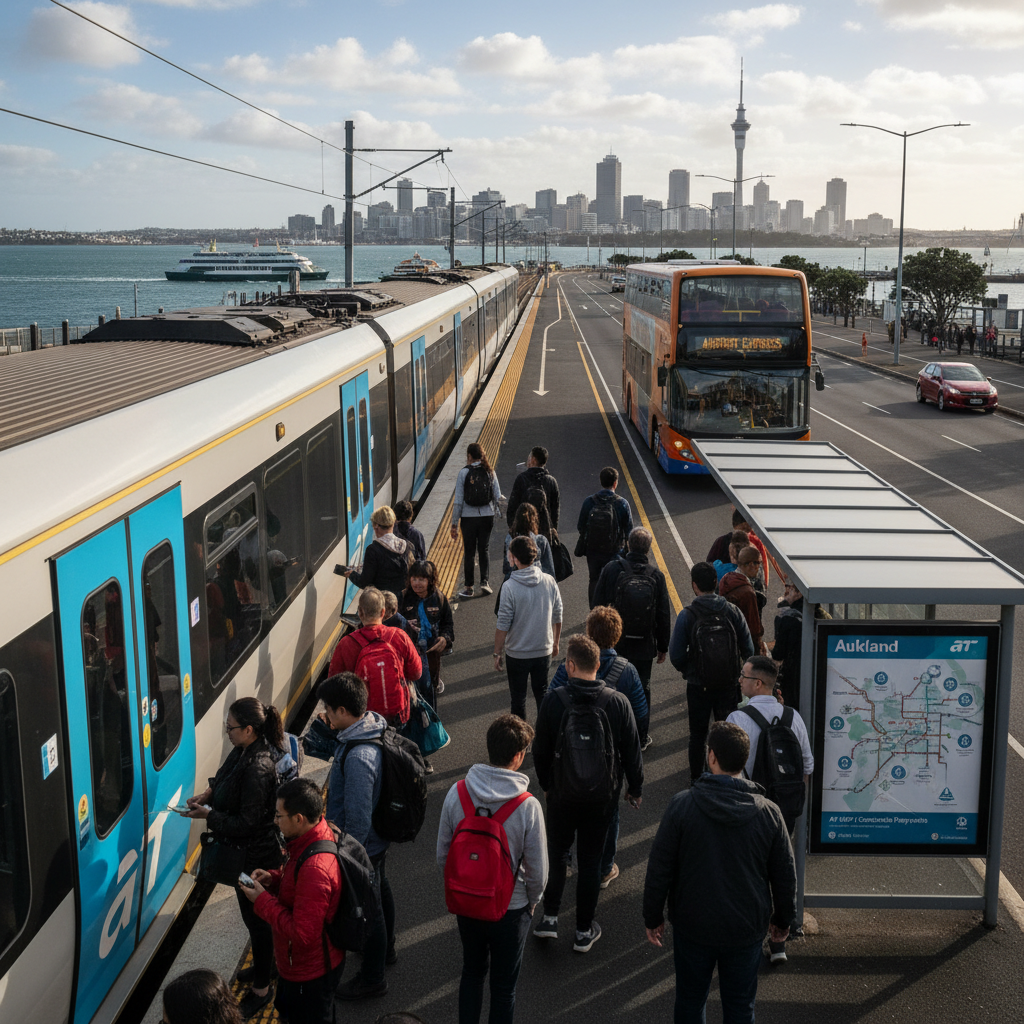
CityLink (red): A central city loop connecting Wynyard Quarter, Britomart, Queen Street, Auckland Town Hall and Karangahape Road, running every 10 to 15 minutes (frequency varies by time of day). It is handy if you are staying in the CBD and want a simple hop-on hop-off style route using standard AT fares.
InnerLink (green) and OuterLink (orange): Circular routes that connect major hubs, attractions and shopping areas. These can be good “orientation” routes while you learn the layout of the isthmus.
TāmakiLink (blue): Runs along Tāmaki Drive from Britomart toward the Eastern Bays, passing Spark Arena, Ōkahu Bay, Mission Bay, Kohimarama and St Heliers, useful on sunny weekends when parking is tight.
NX1 and NX2: Frequent services connecting the city centre with North Shore suburbs via the Northern Busway, often the quickest way across the harbour at peak times.
For an official map of CityLink, InnerLink, OuterLink and TāmakiLink, use AT’s Link bus page: Link bus services.
Neighbourhood travel can be affected by roadworks and closures. AT lists planned road closures weekly, which can influence bus detours, especially around industrial areas such as Penrose, a suburb we recently referenced in Lightning strike suspected in Penrose house fire.
How to use Auckland trains: lines, stations, and the main maps
Auckland’s rail network is the fastest way into the city from many isthmus and south Auckland suburbs. The network’s main hub is Waitematā Station (Britomart), with Newmarket acting as a key interchange for several lines.
Main lines you will see in Journey Planner:
- Western Line: Swanson to Waitematā via Henderson and New Lynn.
- Southern Line: Pukekohe to Waitematā via Manurewa and Newmarket.
- Eastern Line: Manukau to Waitematā via Panmure, Ōtāhuhu and Puhinui.
- Onehunga Line: Onehunga to Newmarket via Penrose and Ellerslie.
AT publishes a train and rapid bus network map, plus route maps by line. Start here: Auckland train network maps. This is also where you can find station layout plans, including where ticket machines and HOP top-up machines are located.
Service status: Before you head to a station, check AT’s train line status page for disruptions and planned works: Train line status.
How to catch Auckland ferries: destinations, terminals, and what’s included
Ferries are both a commuter option and one of Auckland’s great day-trip experiences. The main terminal is Downtown Ferry Terminal on Quay Street, a short walk from Britomart.
AT provides an overview of ferry destinations and service updates, including whether inner-harbour, mid-harbour and outer-harbour routes are running. Check the official status page before you travel, especially in rough weather: Ferry status.
Payment note: AT states that contactless payment excludes Fullers Waiheke commercial ferries, while Island Direct Waiheke ferry services are included. If you are heading to Waiheke, confirm whether your chosen sailing accepts HOP or contactless, or whether you need to buy a separate ticket.
If you are planning a weekend out, ferries can be part of a larger public transport day. Use Journey Planner to connect buses and trains to the terminal and to estimate total cost.
Airport to CBD and beyond: the simplest public transport options
Auckland Airport is not on the rail network, but it is connected via bus to Puhinui Station and to Manukau.
AirportLink (orange): Runs between Auckland Airport, Puhinui Station and Manukau Bus Station. From Puhinui, you can connect to trains on the Southern and Eastern lines. Auckland Unlimited notes you can get from the city centre to the airport using public transport for $6.25 (check Journey Planner for your specific trip and time).
Where to board at the airport: AirportLink departs from Bus stop B at the Domestic terminal and Bus stop A at the International terminal. Look for orange AirportLink signage. Buses have luggage space and use bus priority lanes.
SkyDrive (private service): An express shuttle operated by Ritchies Transport between Auckland Airport and SkyCity in the CBD. Auckland Unlimited lists the first departure from SkyCity at 5.00am, buses every 30 minutes, and the last bus from the domestic terminal at 10.30pm. Tickets are purchased from the driver (card only) or online at skydrive.co.nz. This is not an AT service, so fares and rules differ.
For the official AT overview of airport services, see: AT airport services.
Practical travel tips locals swear by (accessibility, bikes, and etiquette)
Arrive early: AT warns some buses can run ahead of schedule. If you are buying a paper ticket for a train or ferry, allow time for the queue and the machine.
Tag on and off, every time: It is the difference between the correct fare and a default fare. If you are travelling in a group, you can pay for someone else on buses by tagging on, then asking the driver for an additional ticket. For trains and ferries, AT says you can use your HOP card to buy single-trip tickets at a ticket machine or customer service centre.
Keep an eye on service announcements: Big events, maintenance work and emergencies can trigger detours and platform changes. AT’s service announcements page is the one to bookmark: Service announcements.
Accessibility: Most modern buses kneel and many stations have lifts or ramps, but older stops can be uneven. If you are travelling with a pram, wheelchair, or heavy luggage, use Journey Planner’s step-by-step instructions and consider stations with better facilities such as Waitematā and Newmarket.
Bikes: Some services can accommodate bikes, and certain NX buses have bike racks (check the timetable notes and signage). For late-night rides, buses and trains are generally fine, but keep your belongings close and plan your transfer points in well-lit areas.
As Auckland leans harder on digital platforms for everyday services, it is no surprise that transport is increasingly app-led, a shift mirrored across civic systems. For a wider look at public access and digital tools, see our related coverage: Digital Tools Transform Public Access to Court Records.
Cross-site read: If you are comparing neighbourhood mobility and parking pressures, Arch Hill has a useful local overview: Getting around Arch Hill: The ultimate guide to parking, pub.