New Zealand’s biggest sports bodies are “barely off the starting blocks” on climate action.
University of Auckland sociologist Dr Chris McMillan says the lag risks higher costs for clubs and councils, and more disruption to fixtures and facilities as extreme weather hits harder.
Why climate policy is becoming a property problem for sport
McMillan’s critique lands as flood and heat damage increasingly turns into a property bill. Grass pitches, clubrooms, lighting, drainage and access roads are all exposed when storms park over a region.
“Games are frequently disrupted or postponed due to cyclones, heavy rain or extreme heat.”
Local clubs already face higher maintenance and insurance pressures when floods and droughts alternately saturate and crack playing surfaces. For some, the only option is to invest in more resilient assets, or scale back.
How far behind new zealand sport is on global climate commitments
McMillan points to the United Nations Sport for Climate Action Framework, a voluntary commitment that asks sports organisations to halve greenhouse gas emissions by 2030 and reach net zero by 2040.
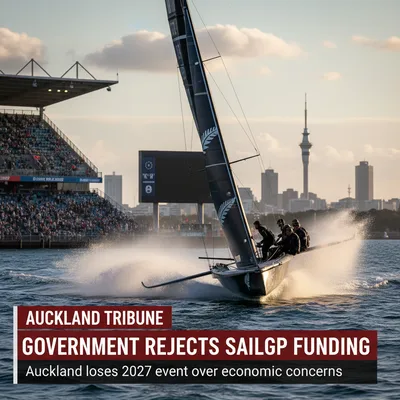
Of the framework’s 278 signatories, only two are from New Zealand, he says. They are the Black Foils Sail GP team and University and Tertiary Sport New Zealand.
“Few New Zealand sporting organisations have developed a formal environmental sustainability plan,” McMillan says.
Sport New Zealand has published reports describing climate change as a major threat to the future of sport in this country. But it has not yet set out a comprehensive sector strategy, McMillan says.
What extreme weather is doing to fields, fixtures and club costs
In Auckland, flooded fields are no longer a once-a-season inconvenience. Saturated grounds can force closures to protect turf, delaying junior competitions and shifting games onto already busy artificial surfaces.
McMillan says sport is one of the places people feel climate change most directly. “Sport is one of those ways in which we meet climate change most directly, like when you want to go skiing, but there's no snow.”
“People often talk about climate deadlock, where we can acknowledge that climate change is getting worse, we can see the effects coming, yet we continue as if we don't. And that's what's happening with sport at the moment.”
People often talk about climate deadlock, where we can acknowledge that climate change is getting worse, we can see the effects coming, yet we continue as if we don't. And that's what's happening with sport at the moment.

Many organisations have concentrated on adaptation, he says. That can mean shifting kick-off times, putting in extra breaks, or building facilities designed to cope with more intense downpours and hotter days.
“Obviously, we need to adapt to the changing climate, but if climate change continues to get worse, then we'll be forever adapting. Yet we seem to be in denial of the need to make transformative changes.”
Flights and new stadium builds ‘take the second highest toll’
McMillan says commercial sport’s biggest emissions sources are familiar ones for the built environment. Flights are typically the largest source of greenhouse gas emissions for major sports, while building new venues takes the second highest environmental toll.
That matters for property decisions, from whether to expand seating to how to power lighting and heat water, and whether to prioritise refurbishing existing buildings over new construction.
For readers tracking venue planning, Auckland Council’s hazard work has begun to reshape how some land is assessed for future development. A separate proposal, Plan Change 120, outlines hazard downzoning concepts that can intersect with where and how sports facilities get built.
Can sport rethink growth models and still keep fans coming
McMillan argues the sector’s business settings make hard choices harder. He says capitalist models of perpetual growth sit at the core of the problem, with major sports operating as businesses reluctant to reduce profits in the short term.
He wants sports leaders and venue owners to question assumptions about constant expansion. “We think what we have now is inevitable, that sport must always continue growing, we must always play more matches, we must always travel.”
He points to history as a reminder that today’s scale was not always normal. “But even 20 or 30 years ago that wasn't the case and being able to rethink what might be possible is a vital step here.”
For the property and facilities side of sport, the implication is blunt. Without a shift that reduces emissions and exposure, clubs and councils risk paying twice, first to repair and harden assets, then again to repeat the cycle.
McMillan’s personal stake in the issue is tied to future access to safe, usable spaces. “I would love my 6-year-old twins to be more involved in sport, but with climate change you wonder what their future is going to be like.”
“Are they going to be able to use sports facilities? Are they going to be able to play outside or are they going to be stuck indoors, playing video games, because it’s too hot to go for a bike ride?”
He says the questions stretch beyond sport and into how communities design and maintain shared assets. “Part of what motivates my work is trying to get us to confront those really difficult questions about what kind of future we will have if we don't radically change the way we think about sport and the way we think about the organisation of our society in general,” he says.
Internationally, the UN framework sets a clear timetable for signatories on emissions cuts and net zero. Its goals are outlined in the UN Sport for Climate Action programme.
In Auckland, the next round of major ground upgrades and renewals will test whether climate resilience and emissions cuts get treated as core infrastructure, not optional extras.
For related reading on climate planning and public systems, see our coverage of the Royal Commission report and what it triggered for long-term risk planning.