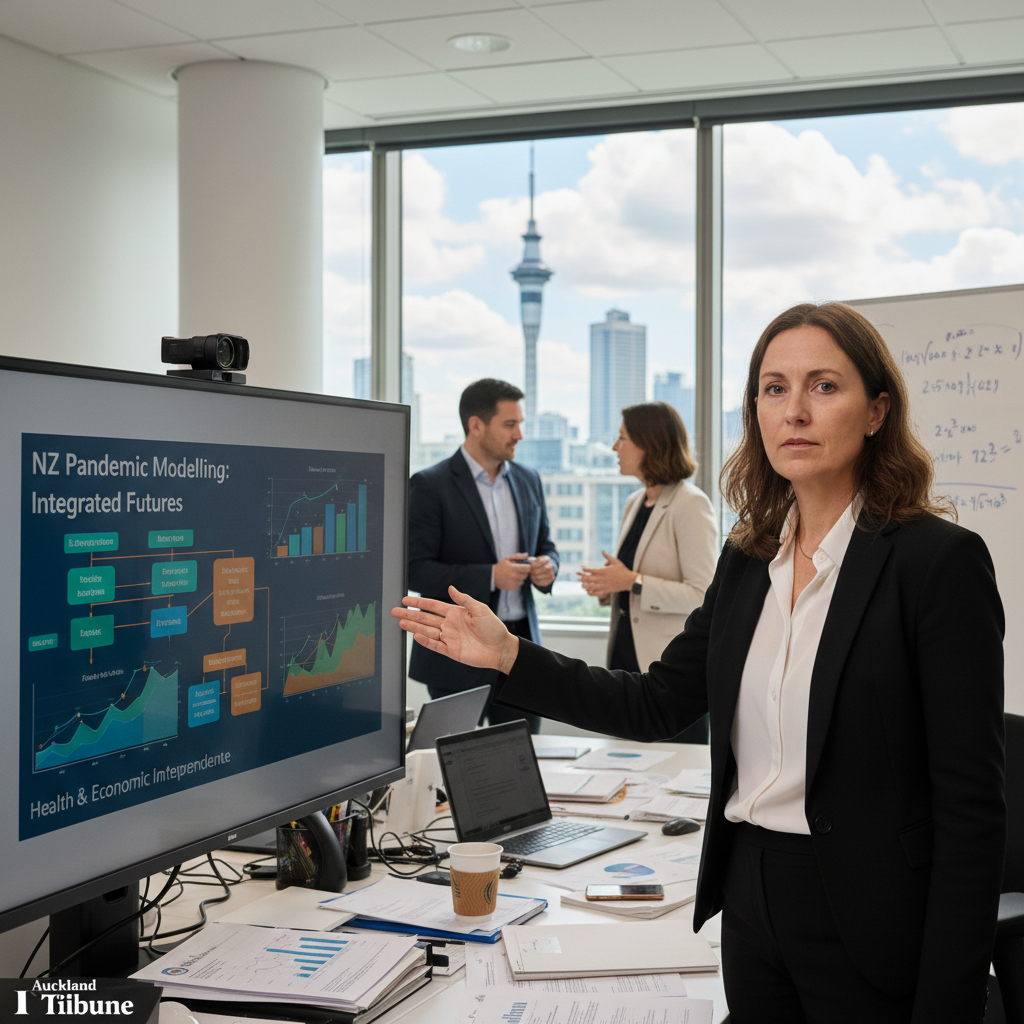
New Zealand should build pandemic models that track jobs and inflation as well as infections. A University of Auckland economist says the next crisis will demand faster calls.
Professor Paula Lorgelly, a health economist at Waipapa Taumata Rau, says COVID-19 modelling helped map spread but missed wider social and economic costs. She points to findings in the Royal Commission on COVID-19 Lessons Learned Phase Two report, which judged the response effective while detailing heavy impacts on trust, cohesion, and livelihoods.
What the royal commission recommends for the next pandemic
The Phase Two report recommended stronger modelling, data and decision frameworks so ministers can weigh society-wide impacts in real time. It also called for a new “strategic function”, based in either the Treasury or the Department of the Prime Minister and Cabinet, to guide New Zealand through a future pandemic.
Lorgelly said placing that function outside the Ministry of Health would reflect the way emergencies spill beyond hospitals and clinics. She argues leaders should not treat the choice as health versus the economy, because pandemics hit both at once.
Government agencies have already started responding to the inquiry. The Ministry of Health said it “is leading the response” to the final report and will advise ministers on how to act on recommendations, in a statement published on the Ministry of Health website.
Why COVID-19 modelling left gaps for ministers
Lorgelly said early COVID-19 projections brought the public into a “complex and somewhat bewildering world of pandemic modelling”. Those tools mapped infections, hospitalisations and deaths under scenarios that sometimes drove alarming headlines.
But she said those models “told us much less about the wider economic and social consequences of the decisions being made in those crisis weeks and months”. The Royal Commission’s Phase Two report also pointed to strains on trust and cohesion as part of the pandemic’s footprint.
The problem, Lorgelly argues, is that epidemiological and economic models typically sit in separate lanes, built by different teams with different assumptions. That can leave decision-makers weighing conflicting advice when time is tight and the stakes are high.
What 'epi-econ' modelling is and how it works
Lorgelly is calling for integrated “epi-econ” models that combine disease spread and economic impacts in one framework. She pointed to work by the UK’s Institute for Government on how combined models can help governments test the consequences of lockdowns, border settings, vaccination programmes and wage subsidies across health and the economy.
Rather than limiting analysis to cost-effectiveness, Lorgelly said the aim is to simulate a wider set of outcomes, including inflation, employment and growth. That would let ministers compare interventions using a shared evidence base.
“All models are wrong, but some are useful”.
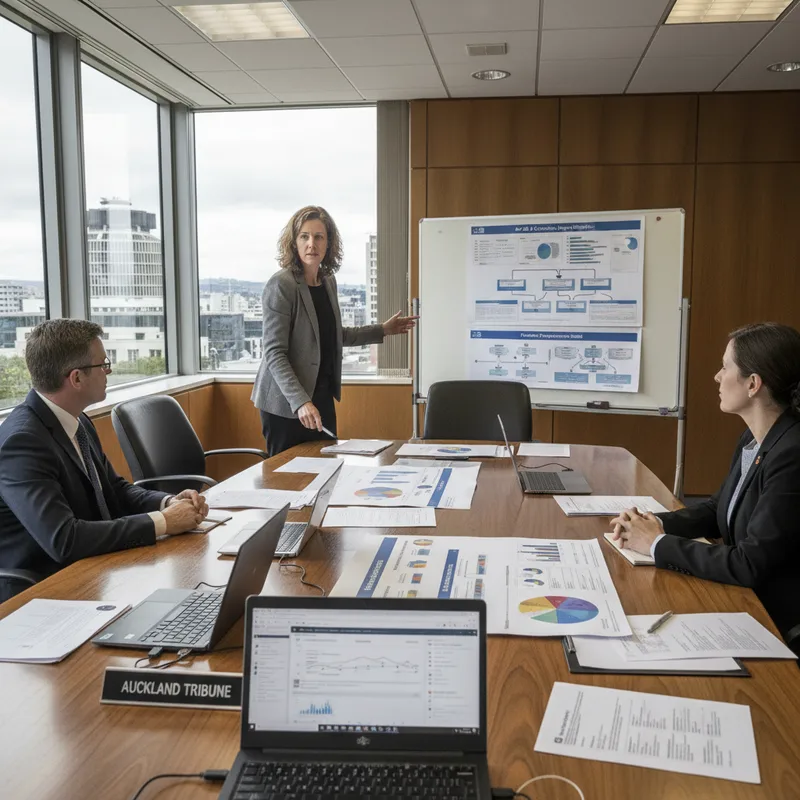
Her argument leans on the idea that models cannot capture every complexity, including hard-to-predict human behaviour. But they can still clarify trade-offs, highlight assumptions, and show where uncertainty sits.
All models are wrong, but some are useful.
How dynamic economic models could change pandemic planning
Lorgelly said a key step would be using dynamic versions of computable general equilibrium (CGE) models, which track how households, firms, government and markets interact over time. New Zealand agencies have used related modelling for non-pandemic risks, including scenarios for fuel supply disruptions.
In a pandemic setting, she said dynamic modelling can capture businesses closing and reopening, illness shrinking the workforce, and fiscal stimulus supporting recovery. It can also surface “non-linear” effects, where small policy shifts trigger big flow-on impacts across supply chains and essential services.
Lorgelly cited overseas lessons where incentives shaped behaviour in unexpected ways. In the UK, a dining subsidy became a case study in how economic signals might unintentionally increase transmission.
Transparency, shared evidence and public trust
The Royal Commission urged greater transparency and clearer communication about the evidence behind decisions. Lorgelly said that matters because integrated models can look authoritative while still carrying risk and uncertainty that must be explained.
She argues combined models should be accessible across ministries so officials are not working from different baselines. That approach, she says, would reduce the chance of siloed advice and make trade-offs explicit before policy is announced.
The push for broader decision tools also lands in a wider debate about how New Zealand builds capability in research and public policy. A recent Auckland Tribune analysis on regional leadership in higher education argued Pacific institutions should shape the coming decades, a theme explored in this column on Pacific universities.
Economic impacts remain central to recovery planning, particularly in sectors exposed to border and mobility changes. A parallel example appears in Australia, where visitor spending in Victoria has been tracked closely as international markets rebound.
What happens next for new zealand’s pandemic readiness
Lorgelly said New Zealand needs stronger collaboration across government, academia and industry so improved tools exist before the next emergency. She also flagged the need for modelling that better reflects differences in impact by ethnicity, aligning with work that emerged during COVID-19 on uneven outcomes.
In Auckland, the policy debate over future shocks has overlapped with how communities organise during disruption, from volunteering to festival logistics. Separate reporting on major events has highlighted the unpaid work behind big gatherings, including the labour that keeps Polyfest running, which became harder to sustain during pandemic years.
The Royal Commission’s COVID-19 Lessons Learned work continues to roll out, and the Ministry of Health is expected to advise government on implementation options. Lorgelly’s challenge to ministers is to have integrated health and economic modelling ready before the next outbreak forces decisions in days.