Sixteen people have been arrested following a three-month investigation that uncovered a significant drug syndicate allegedly recruiting New Zealanders as young as 19 through social media to smuggle methamphetamine into the country.
In a joint operation, New Zealand Customs and Police dismantled a network believed to be responsible for importing 252 kilograms of methamphetamine from Malaysia between October 2025 and January 2026. The drugs were primarily concealed in the checked-in luggage of paid couriers.
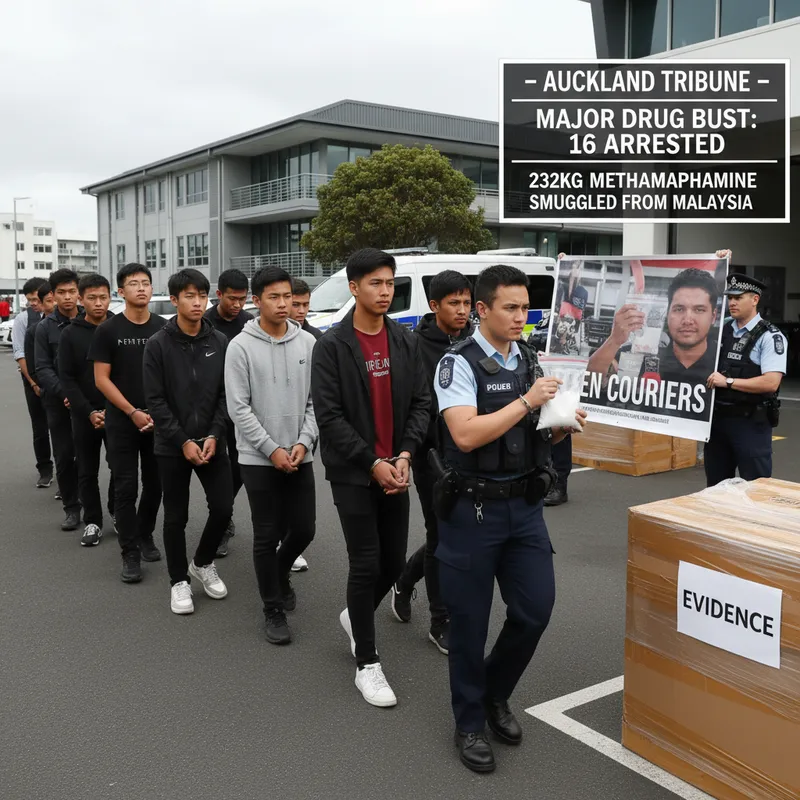
Coordinated search warrants were executed across Auckland, Hamilton, and Rotorua yesterday, resulting in the arrest of 11 people. Those arrested, aged between 19 and 31, are alleged to have acted as couriers, recruiters, and organisers for the syndicate. Five earlier arrests connected to the same operation bring the total to 16.
The sophisticated operation highlights a concerning trend where organised crime groups exploit social media platforms to lure vulnerable young people with promises of fast money and international travel, only to trap them in a dangerous criminal enterprise.
Syndicate lured youth with promise of fast cash
The investigation revealed the syndicate specifically targeted young adults, using social media to advertise for drug couriers. This method of recruitment is a well-known tactic used by international criminal organisations, but its application in New Zealand is a cause for significant alarm among authorities.
Customs Investigations Manager Dominic Adams says the strategy preys on the financial aspirations and desire for travel common among young people. The offer of a free trip overseas and a substantial cash payment can be highly tempting, obscuring the severe risks involved. This case serves as a stark reminder of the deceptive methods used by these networks. The social media approach allows syndicates to cast a wide net and connect with a demographic that may be less aware of the long-term consequences of such activities. The issue of youth involvement in serious crime has been a growing concern in Auckland, with authorities also investigating a recent spate of teen assaults across the city. In a separate but related development, police charged four men over an alleged murder plot.
A global tactic with devastating consequences
The scale of the importation, totalling 252kg, points to a highly organised and profitable operation. Methamphetamine continues to cause widespread harm in New Zealand communities. According to the New Zealand Drug Foundation, the drug is associated with severe health problems, addiction, and a rise in crime. The seizure represents a significant disruption to the supply chain, preventing millions of dollars' worth of methamphetamine from hitting the streets.
Mr Adams noted that while this syndicate has been dismantled, the global nature of organised crime means others are ready to take its place. The connection to Malaysia is also indicative of established international drug routes. Authorities in many Southeast Asian countries, including Malaysia, impose notoriously severe penalties for drug trafficking, including lengthy prison sentences and corporal punishment.
This is a tactic we know is used by organised criminal groups worldwide. They will recruit suitcase couriers through social media to do the legwork for them, offering money in exchange for travelling overseas and bringing back drugs in their luggage.
Authorities issue stern warning
Law enforcement agencies are urging young New Zealanders to be cautious of unsolicited offers online that seem too good to be true. The consequences for those caught acting as drug couriers are life-altering and extend far beyond a prison sentence.
A criminal conviction for drug smuggling creates significant barriers to future employment and bars international travel to many countries for life. The promise of a few thousand dollars and a holiday pales in comparison to a lifetime of missed opportunities and regret.
“We want young New Zealanders to be aware of the consequences,” Mr Adams says. “Customs urges you not to sacrifice future freedoms for the promise of fast money and free travel. Drug couriers will face a long time in prison, as well as jeopardise future employment opportunities and international travel – it is not worth the risk.”
Customs encourages anyone with information about drug smuggling to report it by calling 0800 937 768, or anonymously through Crime Stoppers on 0800 555 111.