An Air New Zealand flight bound for Gisborne was forced to turn back to Auckland on Saturday evening after the crew identified a hydraulic issue, marking the third flight diversion for the airline in a single day due to mechanical problems.
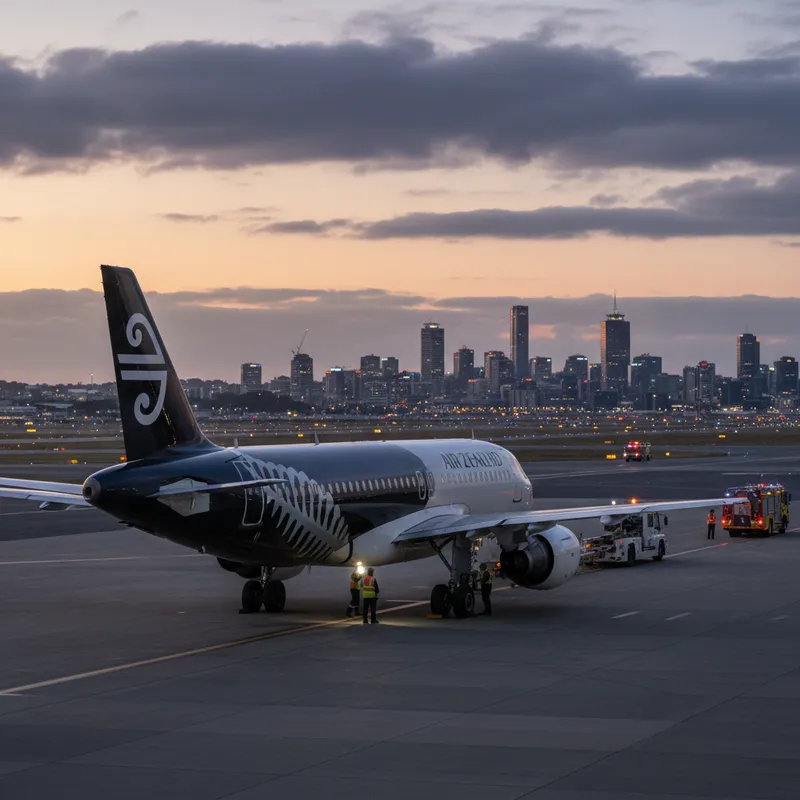
Flight NZ5171 departed Auckland at 5.20 pm, but turned around over the Eastern Bay of Plenty. It landed safely back at Auckland Airport approximately one hour after takeoff. In line with standard procedure for such incidents, emergency services were placed on standby as a precaution.
Air New Zealand Chief Risk and Safety Officer, Nathan McGraw, confirmed the incident was due to a system indication of a 'hydraulic issue'. Photos from the flight tracking service FlightRadar showed the aircraft surrounded by emergency vehicles upon its arrival back on the tarmac.
A string of mechanical faults
The Gisborne-bound flight was not an isolated event. It was the third Air New Zealand service to be disrupted by mechanical faults on Saturday. Earlier in the day, flight NZ637 from Auckland to Queenstown also returned to its departure point shortly after takeoff due to a hydraulic issue. The flight, scheduled to land around 1.30 pm, was rerouted back to the domestic terminal, where it was met by maintenance crews.
Air New Zealand’s head of flight operations, Hugh Pearce, said the aircraft would be thoroughly inspected before re-entering service. “We regret the inconvenience this has caused our customers travelling to Queenstown this afternoon,” he said. “We are working to get them to their destination as quickly as possible.”
Another flight, NZ5077 to Nelson, also turned back after flying as far south as Mt Taranaki. An unspecified 'engineering issue' was cited as the cause. An Auckland Airport spokesperson confirmed emergency services were on standby for the aircraft’s safe landing at about 3.20 pm.
Adding to the day's disruptions, a separate mechanical issue involving a plane's braking system caused delays and diversions at Auckland Airport on Saturday morning. This earlier incident led to several flights being diverted while the aircraft was attended to on the runway.
Understanding hydraulic systems
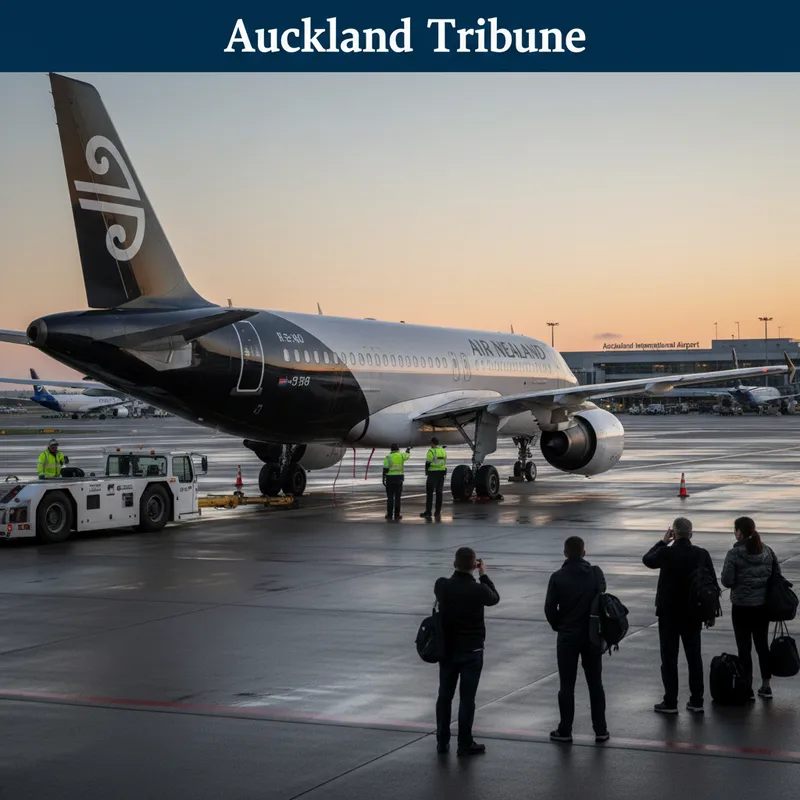
Hydraulic systems are critical to the safe operation of modern aircraft. They power a wide range of components, including landing gear, flaps, flight control surfaces like the rudder and ailerons, and brakes. These systems use pressurised fluid to generate immense force, allowing pilots to manoeuvre a large aircraft and deploy its components with precision. A failure or leak in the hydraulic system can have serious consequences, potentially impairing a pilot's ability to control the aircraft or deploy the landing gear. For this reason, commercial aircraft are designed with multiple redundant hydraulic systems. A warning of a 'hydraulic issue' prompts crews to follow precautionary procedures, which almost always includes returning to the nearest suitable airport for inspection. The marshalling of emergency services on the ground is a standard precaution to ensure a rapid response in the unlikely event of a problem during landing, such as a brake failure or steering issue. In some communities, Maine towns question financial burden of small airports.
While the series of unrelated mechanical issues in a single day is unusual, it highlights the safety-first protocols that govern the aviation industry. Each decision to turn back was made to prevent a more serious situation from developing, prioritising the safety of passengers and crew over schedule adherence.
Airline and airport response
Air New Zealand, the national carrier, has been operating since its origins as Tasman Empire Airways Limited (TEAL) in 1940. The New Zealand Government has held a majority stake in the airline since 2001, following a period of financial difficulty. As the country's flag carrier, its operational performance and safety record are subject to intense public and regulatory scrutiny.
Following Saturday's incidents, the airline has emphasised its commitment to safety and apologised for the significant disruptions to passengers' travel plans. “We apologise for the disruption and are working to get affected customers to their destinations as soon as possible. We thank them for their patience and understanding,” McGraw said in a statement. Engineers are inspecting all affected aircraft before they are cleared to fly again.
We regret the inconvenience this has caused our customers travelling to Queenstown this afternoon. We are working to get them to their destination as quickly as possible. We thank them for their patience and understanding.
An Auckland Airport spokesperson confirmed the incidents did not cause wider disruptions to other flights, with both international and domestic terminals remaining fully operational. The prompt and safe handling of the diversions meant that the impact on the airport's overall schedule was minimal, despite the on-standby emergency responses. For more information on aviation safety protocols, see the Civil Aviation Authority of New Zealand website.
The series of events comes as the airline industry continues to navigate the challenges of a post-pandemic travel surge, placing pressure on maintenance schedules and personnel. Auckland Airport itself has been dealing with its own set of challenges, with the Auckland mayor recently accusing the Government of breaching a city deal over shareholdings. The focus for Air New Zealand now will be on diagnosing the root cause of these mechanical issues and reassuring the public of its fleet's reliability.