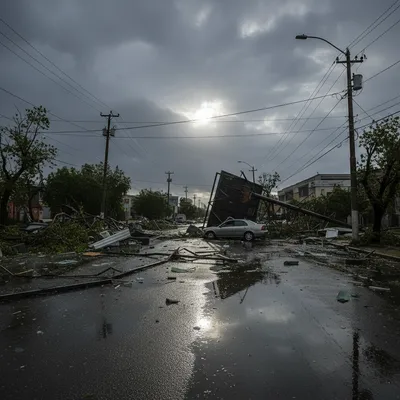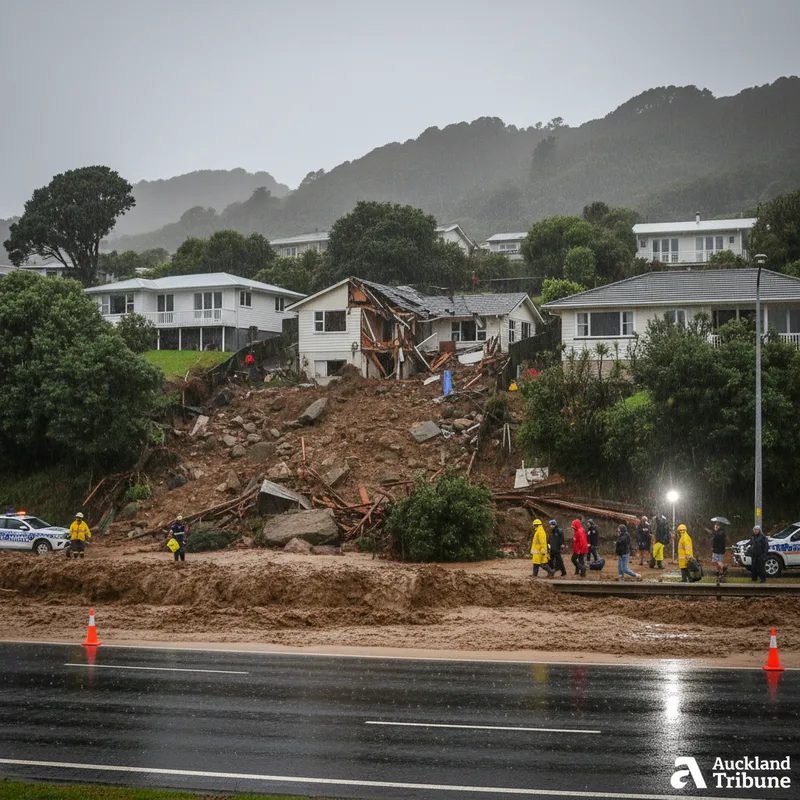
Residents of 18 properties in the seaside community of Waiwera, north of Auckland, were forced to evacuate their homes in the early hours of Friday morning after a large landslide crashed down a hillside, damaging properties and cutting off a major highway.
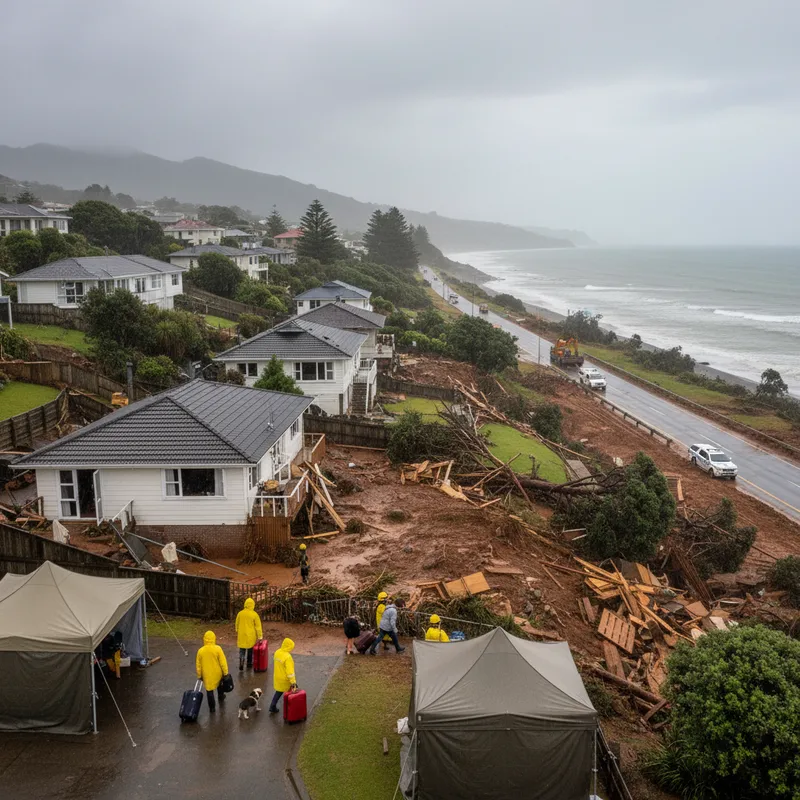
The slip, which occurred just before dawn, sent mud, debris, and mature pine trees cascading into the Waiwera Coach Trail Villas complex and across the Twin Coast Discovery Highway. Emergency services responded quickly, helping to evacuate residents as a deluge of rain continued to batter the region.
One resident narrowly escaped injury when a large tree limb pierced the roof of his villa, landing just metres from his bed. Villa resident Dave Preston said his neighbour, who had moved into the complex only a few weeks ago, was lucky to be alive.
Residents warned council for months
The dramatic landslide has brought questions of accountability to the forefront, with revelations that residents had repeatedly warned Auckland Council about the stability of the hillside. Mr Preston, a member of the Waiwera Community Resilience Group, said they had been petitioning the council for months to have the precarious pine trees removed.
“We were asked to identify hazards on the tsunami evacuation route that runs alongside the apartments and we found the pine trees on both sides of the road were cause for concern,” Mr Preston said. “We’ve been calling the council for months trying to get the trees taken down, and now they’ve come down by themselves.”
The community group had formally identified the trees as a significant hazard, particularly given their location along a critical emergency route. The incident now raises serious questions about the council's risk assessment processes and response to community safety concerns. Auckland Council is expected to face intense scrutiny over why no action was taken despite the explicit warnings from locals.
Landslides are a known hazard in many parts of the Auckland region, particularly in coastal areas with steep terrain. Information from Auckland Emergency Management advises residents to watch for warning signs like cracks appearing in the ground, tilting trees, or unusual water seepages, especially during and after heavy rainfall.
Major travel disruption ahead of long weekend
The landslide has caused significant transport disruption by completely closing the Hibiscus Coast Highway at Waiwera. This key arterial route connects the Whangaparāoa Peninsula and Ōrewa with the wider northern region, and its closure creates a major bottleneck for commuters and local traffic.
The timing has compounded the travel chaos, falling on the Friday of the Anzac Day long weekend, one of the busiest periods for travel on New Zealand's roads. Thousands of Aucklanders heading north for the holiday will now need to find alternative routes, placing extra pressure on the surrounding road network. Transport authorities are urging motorists to delay their travel if possible and to expect significant delays.
The situation is further complicated by an ongoing strike action affecting some emergency services, with warnings of potential delays in response times across the region. The closure of such a critical piece of infrastructure highlights the vulnerability of the city's transport network, an issue previously brought into focus by projects like the Wellesley Street upgrade, which aims to improve transport resilience in the central city.
Wild weather lashes upper North Island
The landslide was triggered by a severe weather system currently sweeping across the upper North Island. MetService has issued heavy rain warnings for both Auckland and Northland, with sustained downpours saturating the ground and increasing the risk of further slips and flooding. Similar weather events have impacted other regions, with Calgary facing heavy snow and plunging temperatures.
The region has a history of being impacted by extreme weather, which has previously led to closures and damage in natural areas, such as the lengthy restoration required before the Fairy Falls track could partially reopen. The current weather event is a stark reminder of the power of nature and the importance of infrastructure that can withstand its force.
For the evacuated residents of Waiwera, the future is uncertain. They are currently being housed in temporary accommodation, awaiting clearance from geological assessors to confirm when, or if, they can safely return to their homes. Engineers will conduct a thorough assessment of the hillside to determine the ongoing risk of further slips before the highway can be cleared and reopened. For now, a community is displaced, and a major holiday weekend has started with chaos and concern.