Overview
Auckland Transport (AT) is the council-controlled organisation (CCO) responsible for managing and operating the transport network for the entire Auckland Region.
Established on 1 November 2010 to coincide with the inauguration of Auckland Council, AT consolidates the transport functions of the previous eight local and regional councils into a single, integrated entity.
Its core purpose is to deliver a safe, efficient, and sustainable transport system that serves the needs of Auckland's residents and visitors.
Operating under the ownership of Auckland Council, AT's mandate is extensive.
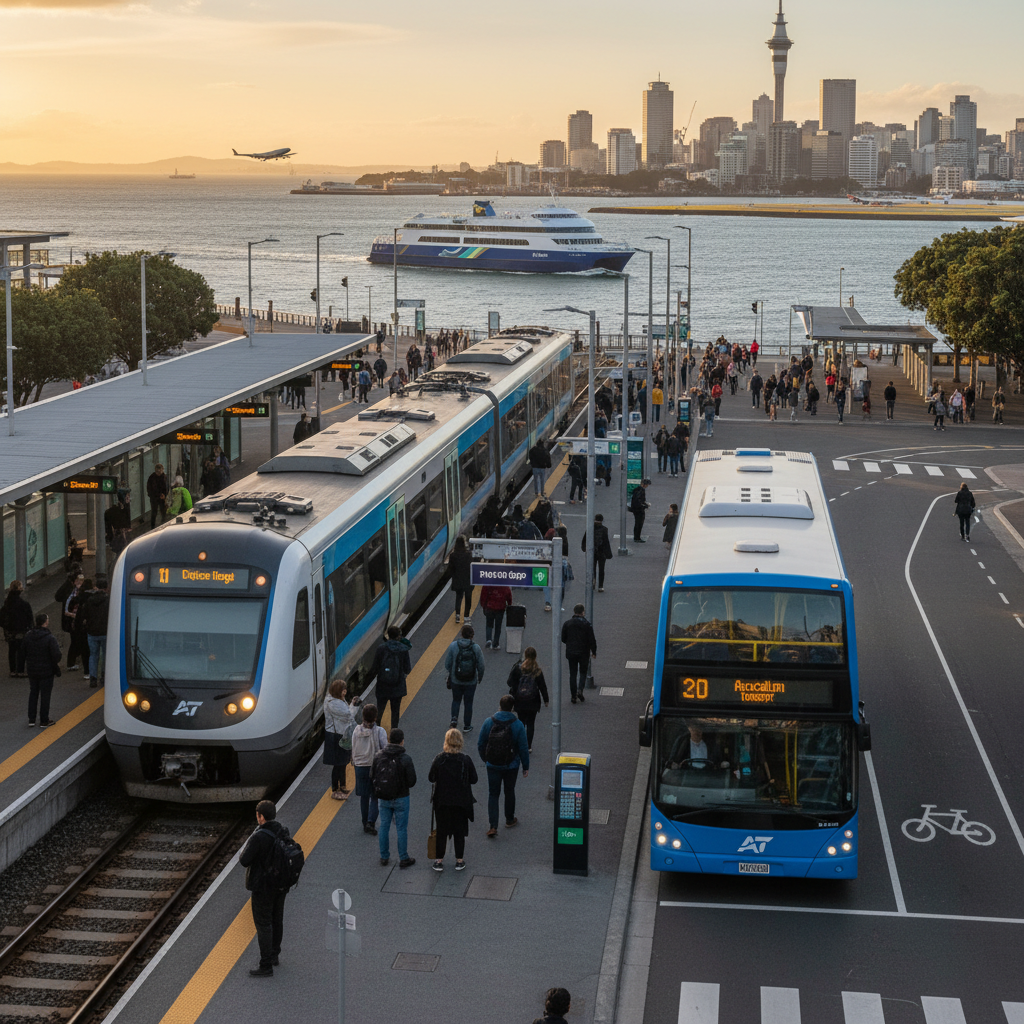
It covers everything from local roads, public transport services including buses, trains, and ferries, to the development of cycleways, walkways, and management of public parking.
The organisation plays a crucial role in shaping Auckland's growth by planning and implementing major transport infrastructure projects designed to meet the demands of a rapidly expanding population.
Services & Programs
Auckland Transport provides a wide array of services essential for navigating the city. These services are designed to offer convenient and accessible travel options for everyone, supported by a range of digital tools and customer support systems.
- Public Transport Network: AT oversees Auckland's comprehensive network of buses, trains, and ferries, connecting communities across the region. It is responsible for timetabling, route planning, and service quality.
- AT HOP Card: The AT HOP card is a reusable prepaid smart card used for fares across the entire public transport network, providing a convenient and often cheaper alternative to cash fares. Users can top up their cards online, at customer service centres, or at various retailers.
- Journey Planning Tools: To help commuters plan their travel, AT provides a powerful online Journey Planner, real-time departure information, and the AT Mobile app. These tools allow users to find the best routes, view timetables, and receive live service updates.
- Infrastructure Management: The organisation is responsible for the operation, maintenance, and construction of Auckland's transport infrastructure. This includes thousands of kilometres of roads, footpaths, cycleways, ferry wharves, and train stations.
- Parking Services: AT manages public parking spaces across Auckland, including on-street parking, car park buildings, and permit schemes, to ensure fair access and availability.
- Major Projects: AT leads significant infrastructure projects aimed at future-proofing the city's transport network. A key project is the City Rail Link (CRL), set to provide faster and more frequent train services through new central city stations upon its completion.
Getting Involved
While Auckland Transport is a public service provider rather than a membership club, there are several ways for the community to engage with its services and planning processes.
The primary way to get involved is by utilising the public transport network. Purchasing and registering an AT HOP card is the first step for any regular user, allowing access to fare concessions and online account management.
Community feedback is vital for service improvement. Aucklanders can report problems, provide feedback on services, or inquire about projects through the official AT website's contact forms.
For major projects and regional transport plans, AT often holds public consultation periods where residents can submit their opinions and help shape the future of transport in their local area.
Leadership & Key People
Auckland Transport is governed by a board and led by an executive team responsible for the strategic direction and day-to-day operations of the organisation. According to public records, the key leadership positions are held by:
- Richard Leggat - Chair
- Dean Kimpton - Chief Executive Officer
This leadership team oversees more than 1,700 staff members who work to deliver transport services and projects across Auckland.
Events & Meetings
Auckland Transport does not hold regular public meetings in the style of a community club. Instead, its "events" are centred around service announcements, project updates, and planned disruptions to the network. The organisation provides continuous, real-time information regarding:
- Service Announcements: Updates on detours, stop closures, or timetable changes for bus, train, and ferry services due to projects or public events.
- Travel Updates: Live status information for all train lines and ferry routes, helping passengers stay informed about disruptions or cancellations.
- Road Closures: A weekly schedule of planned road closures required for maintenance, construction, or community events throughout Auckland.
All of this information is readily available on the Auckland Transport website, ensuring the public has access to the latest updates that may affect their journey.
Getting There
Auckland Transport operates numerous customer service centres across the region for in-person assistance. One of the most central and accessible locations is the Downtown Ferry Terminal Customer Service Centre.
- Address: Pier 1, 99 Quay Street, Auckland city centre.
- Public Transport: This location is a major transport hub, directly serviced by numerous ferry routes. It is also a short walk from the Waitematā Station (Britomart) for train services and multiple major bus interchanges.
- Parking: As it is located in the central city, parking is limited and paid. Several commercial parking buildings are available nearby. Using public transport to reach the centre is highly recommended.
- Accessibility: The customer service centre and surrounding transport hubs are wheelchair accessible. Most of AT's bus, train, and ferry services are designed to accommodate passengers with mobility needs.
Other key customer service centres are located at Waitematā Station (Britomart), Newmarket Station, and Manukau Bus Station.
Community Impact
Since its formation in 2010, Auckland Transport has had a profound impact on the city's development.
By unifying the fragmented transport responsibilities of the legacy councils, AT has been able to implement a more cohesive and strategic approach to transport planning for the entire Auckland Region.
Its work is fundamental to the city's economic vitality and the daily lives of its residents.
The introduction and continuous improvement of the AT HOP card system have streamlined fare payment and made public transport more user-friendly.
Major infrastructure projects, such as the development of the Northern Busway, the electrification of the rail network, and the ongoing construction of the City Rail Link, represent significant investments in a more connected and less congested future for Auckland.
The expansion of dedicated cycleways and shared paths also demonstrates a commitment to providing safer, more sustainable travel choices for the community.