A multi-million dollar repair programme on a 17-level Grafton apartment tower has been completed, ending years of uncertainty for owners and residents of the leaky building.
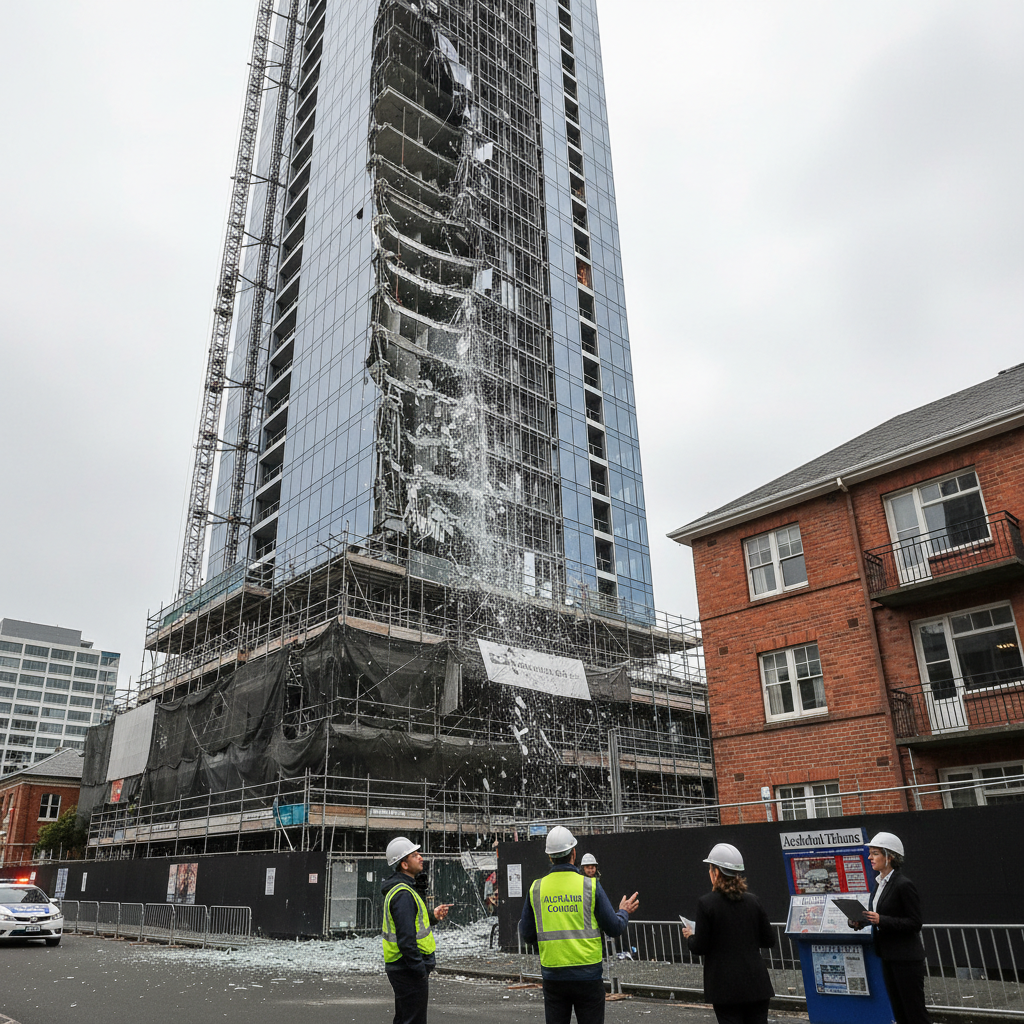
The Cintra apartments, a 129-unit complex at 13 Whitaker Place, had been shrouded in white protective wrap for months as building specialist Brosnan undertook a major remediation. The project involved removing the faulty exterior cladding and replacing it with a new glass curtain wall, upgrading shared spaces and overhauling building services to address extensive water damage and structural defects.
Holly Bryant-Simpson, Brosnan's chief marketing officer, confirmed the significant refurbishment was complete, saying the works were designed to enhance the building’s longevity, functionality, and appearance. "The project was delivered with a strong focus on safety and public space management, given its central city location," Bryant-Simpson says. "It was a time-critical project, so we worked in the off-season to ensure the client had full occupancy during peak season.”
The final cost of the complex project has not been disclosed.
Details of the defects
The building, which overlooks the Grafton Gully motorway network, was developed in 1997, placing it squarely in the era that spawned New Zealand’s infamous leaky building crisis. Its problems were so extensive that in 2021, the body corporate sought and won a High Court judgment to enable the comprehensive repair scheme to proceed.
An affidavit from Mark Callander, a senior partner at Resolution Architecture, detailed a litany of failures. His report noted that lightweight steel framing on exterior and inter-tenancy walls was "severely corroded in places", while the fibre cement cladding was so affected by moisture that its structural integrity was "compromised in many areas".
The inspection also found corroded steel framing in the balustrades, evidence of water ingress at junctions between aluminium joinery and walls, and a number of other leaks. “In summary, the building suffers from defects spanning both common property, unit property, and unit boundaries,” Justice Geoffrey Venning’s decision stated. “Extensive repairs are required to significant parts of the building.”
The remediation required the removal of all balcony handrails, aluminium joinery, and the old fibre cement cladding. The building's main roof, metal roofing, and internal gutter membranes also had to be replaced, along with requiring significant passive fire and stopping work to meet modern safety standards.

A legacy of leaky buildings
The issues at Cintra are a familiar story in Auckland, a city still grappling with the fallout from a systemic failure in building standards and practices from the late 1980s to the mid-2000s. A combination of new building codes, the popularity of Mediterranean-style monolithic cladding, and the use of untreated timber framing created a perfect storm for water ingress and rot, leading to what is now estimated to be a multi-billion dollar problem for property owners. Thousands of homeowners have been caught in a nightmare of spiralling repair bills, legal battles, and emotional distress. The New Zealand government has established official channels like the Weathertight Homes Resolution Service to help owners, but the scale of the crisis means the financial and emotional toll continues to mount. In other sectors, NZ manufacturing expands despite growing concern over war, illustrating the deep financial entanglement these projects cause.
While the Cintra repairs signal a positive outcome, other building owners are still at the beginning of their remediation journey. Cladding issues remain a contentious topic, with some owners being forced into legal disputes over dangerous materials, further complicating Auckland’s high-density housing landscape. The long-term planning for the city, as outlined in initiatives like the Auckland City Deal, must contend with not only building new infrastructure but also rectifying the mistakes of the past.
Specialists in remediation
The scale of the leaky homes crisis has created a specialised industry of builders who focus on complex remediation projects. Brosnan, the firm behind the Cintra fix, has a long history of tackling some of New Zealand’s most challenging leaky buildings.
Last year, the company completed a difficult recladding of the five-star Hilton Auckland on Princes Wharf, carrying out the work while the hotel remained fully operational. The firm also repaired Takapuna’s landmark Spencer on Byron apartment hotel, a $37 million project that required a specialised doughnut-shaped platform to move up and down the tower.
Perhaps the most staggering example of the potential costs involved is the Oaks Queenstown Shores Resort. Brosnan was recognised with multiple awards for its work on the luxury complex, where repair costs soared to $160 million. The eye-watering sum equated to an average of $993,000 per apartment, with work so extensive it involved stripping the buildings back to their concrete structures and replacing everything from roofs and walls to kitchens and internal linings.
The company also took over repairs at the Hobson Gardens apartments in Auckland’s CBD after the original contractor, Mainzeal, collapsed partway through the job, highlighting another layer of risk for property owners. These large-scale works demonstrate a recurring theme: what appears to be a solid investment can quickly become a financial black hole for owners, a story echoed in large public infrastructure projects like the newly opened seawall in Eastbourne.
For the owners at Cintra, the completion of the remediation marks the end of a long and costly chapter. It stands as a renewed, functional building in the central city, but also as a monument to a crisis that continues to cast a long shadow over New Zealand’s property sector.