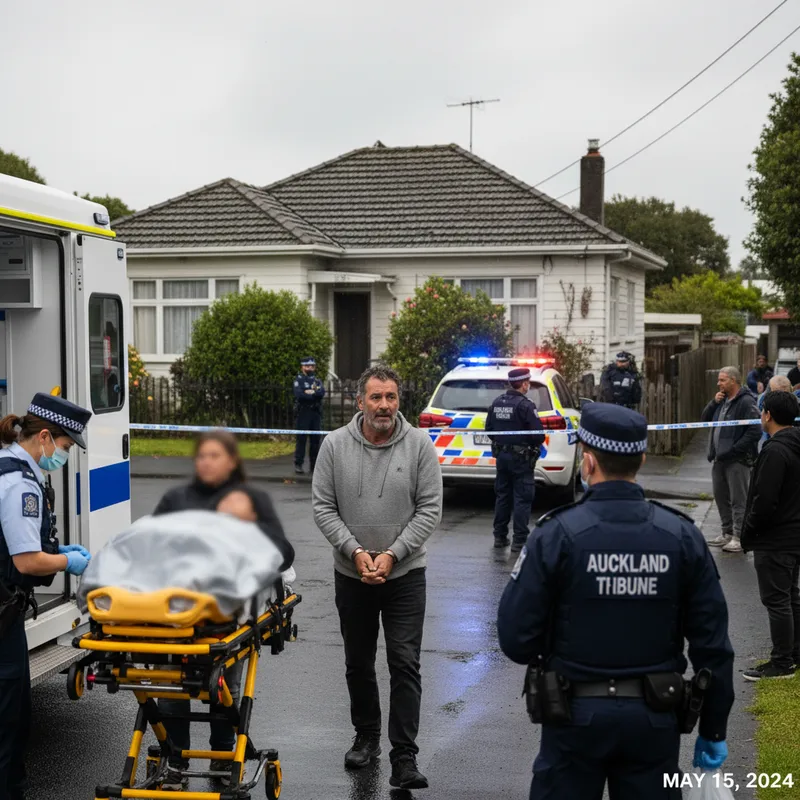
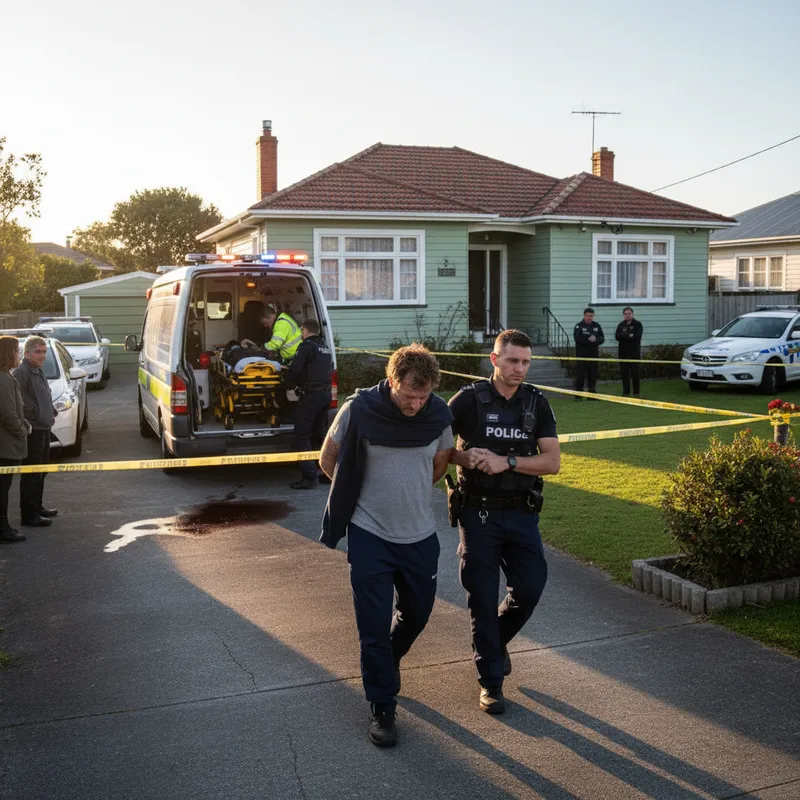
A person is in a critical condition and an arrest has been made after emergency services responded to a serious incident at a house in the West Auckland suburb of Rānui on Saturday evening.
Police and ambulance crews were dispatched to the residential property at approximately 7pm. Upon arrival, they discovered one person with critical injuries. Hato Hone St John paramedics provided immediate medical assistance at the scene before transporting the injured individual to hospital for urgent care.
In a statement, police confirmed that one person has been taken into custody in connection with the incident. Authorities have indicated that the people involved in the altercation appear to be known to each other, suggesting the incident was not a random act of violence.
The investigation is in its early stages, and a police presence is expected to remain in the area as enquiries continue. The nature of the injuries and the circumstances leading up to the incident have not yet been released.
Police investigation underway
When an incident of this severity occurs, a formal and detailed police investigation is immediately launched. This typically involves securing the perimeter of the property to preserve any potential evidence. A forensic examination of the scene is conducted by specialist officers, who collect physical evidence such as fingerprints, DNA samples, and any items that may have been used as a weapon. This meticulous process is crucial for piecing together the events that transpired.
Detectives will also begin canvassing the neighbourhood, speaking to residents who may have seen or heard anything unusual around the time of the incident. Witness statements are a vital component of any investigation, often providing critical context or leads for investigators to follow. The police have not yet asked for public assistance, but they often do in complex cases.
With authorities stating the individuals were known to each other, the investigation will likely focus on establishing the nature of their relationship and any history of disputes. This could involve interviews with friends, family, and associates of both the victim and the person in custody. The goal is to build a comprehensive timeline and motive for the incident, which will be essential for the legal proceedings that follow.
A busy day for Auckland police
The Rānui call-out capped off a busy day for law enforcement across Auckland. Earlier in the afternoon, armed police units were deployed to Upper Queen Street in the central city following a report of a person possibly carrying a firearm. The call, received just before 4pm, prompted an immediate and significant response.
However, after a thorough search and investigation in the area, police could not substantiate the presence of a firearm. In a demonstration of modern policing techniques, skilled camera operators from a central monitoring unit were able to locate and track the individual who was the subject of the report. The man was seen walking on nearby Vincent Street a short time later.
Police units on the ground moved in quickly and took the man into custody without incident. While no firearm was found, officers did seize a samurai sword that the man had been carrying, wrapped inside a jacket. Police stated that there was no information to suggest the sword was presented at any member of the public.
This man is now in Police custody and will face charges relating to possessing an offensive weapon.
The incident highlights the seriousness with which police treat any reports involving potential firearms, and the resources available, including advanced surveillance technology, to ensure public safety.
The legal process explained
Following an arrest in New Zealand, a specific legal process begins. The person taken into custody is typically transported to a police station for processing. This includes being formally advised of their rights and the reason for their arrest. Depending on the severity of the alleged offence, charges will be laid. For an incident resulting in critical injury, charges could range from wounding with intent to cause grievous bodily harm to attempted murder, depending on the evidence gathered. Similar issues have surfaced in Sydney, where Man arrested after booing mars Sydney Anzac Day service.
Once charged, the individual will be held in custody to appear before a court, usually within 24 to 48 hours. Information about a person's criminal and traffic convictions are held by the Ministry of Justice and can be accessed through a criminal record check. This history, known formally as a Criminal Conviction History, is a factor in bail hearings and sentencing. It is important to note that charges that have not yet gone to court or ended in a conviction are not part of this public-facing record.
New Zealand's legal framework also includes provisions like the Clean Slate scheme. This allows individuals who have committed less serious offences to have their criminal records concealed after remaining offence-free for seven consecutive years. However, the scheme does not apply to more serious convictions, particularly those that resulted in a prison sentence, meaning convictions from serious violent crimes will remain on an individual's record permanently.
These developing criminal cases come amidst a backdrop of ongoing concerns about crime in the city. Recently, a major police operation resulted in sixteen arrests in a drug bust targeting teen couriers, highlighting the diverse challenges faced by law enforcement. A similar operation across the Pacific saw officers seize millions in methamphetamine, showing the global nature of crime networks.
As the Rānui investigation moves forward, police will continue to gather evidence and conduct interviews. The individual who was arrested is expected to appear in the Waitākere District Court in the coming days to face formal charges.