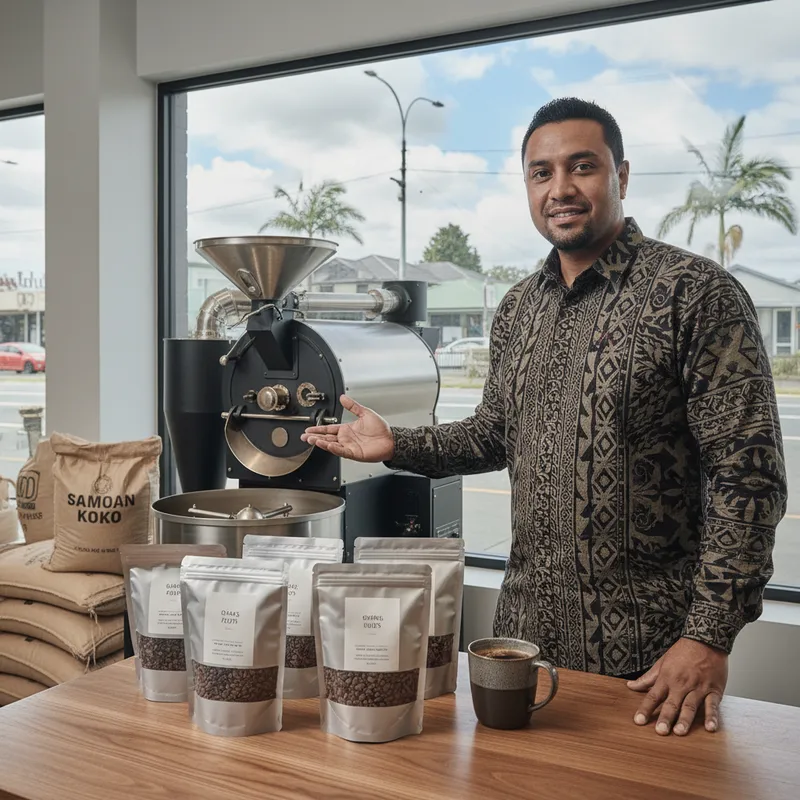
In a small roastery in Glen Eden, held together by determination and smelling of earthy, raw cacao, a quiet revolution is brewing. Here in West Auckland, Marlon Rivers is crafting Samoa's national drink, koko, for a new audience, challenging palates and redefining the meaning of authentic culinary travel.
This is not a polished tourist experience. It is found by driving to a suburb the guidebooks have yet to discover, into a room filled with a scent that is at once ancient and immediate. This is the smell of Koko Samoa, a world away from the sweet, mass-produced chocolate familiar to most. It is raw, smoky, and serious, representing generations of Pacific tradition.
For Mr Rivers, this tradition is deeply personal and is the driving force behind his brand, Aunty Tommy's. He is bringing the taste of his homeland to the world, one block of 100% cacao at a time.
The taste of home
Mr Rivers grew up in Samoa, where the ritual of drinking koko was woven into the fabric of daily life. His mornings involved two bus journeys to school, with a cherished stop in between at the old Savalalo market.
“I would stop for a cup of freshly made koko and panikeke fai. round banana pancakes. before jumping on the second bus,” he says. “I would eat my pancakes and drink my koko then vibe out to the bus music.” He recalls the buses having nightclub-loud sound systems, almost always playing UB40's 'Labour of Love' albums.
Beyond the daily commute, koko was the centrepiece of hospitality. It was a gesture of welcome, a symbol of home. “Koko is a physical embodiment of home," Mr Rivers says. "Drinking it evokes a collection of shared memories. When you visit a Samoan home, you are welcomed with a cup of koko.”
This deep-seated connection to his heritage inspired him and his cousin, Alec Macdonald, to found Aunty Tommy's in 2021. The business is named for Mr Rivers' grandmother, Saui’a Flora Constance Burr, fondly known as Tommy. She was a matriarch known for her hospitality and her insistence on making everything from scratch. “I wanted a no-compromise approach to our products," Mr Rivers says. "For me, the koko has to be made start to finish by us, just like ma used to insist on. Bean to block.”
A solo journey of perseverance
Aunty Tommy’s produces dense blocks of 100% cacao paste, sourcing beans from across the Pacific, including Samoa, Vanuatu, Papua New Guinea and the Solomon Islands. The beans are roasted in small batches in the Glen Eden facility and ground down. The resulting drink, brewed by crumbling the block into hot water, is uncompromisingly bitter, complex, and gritty, a testament to its handmade origins.
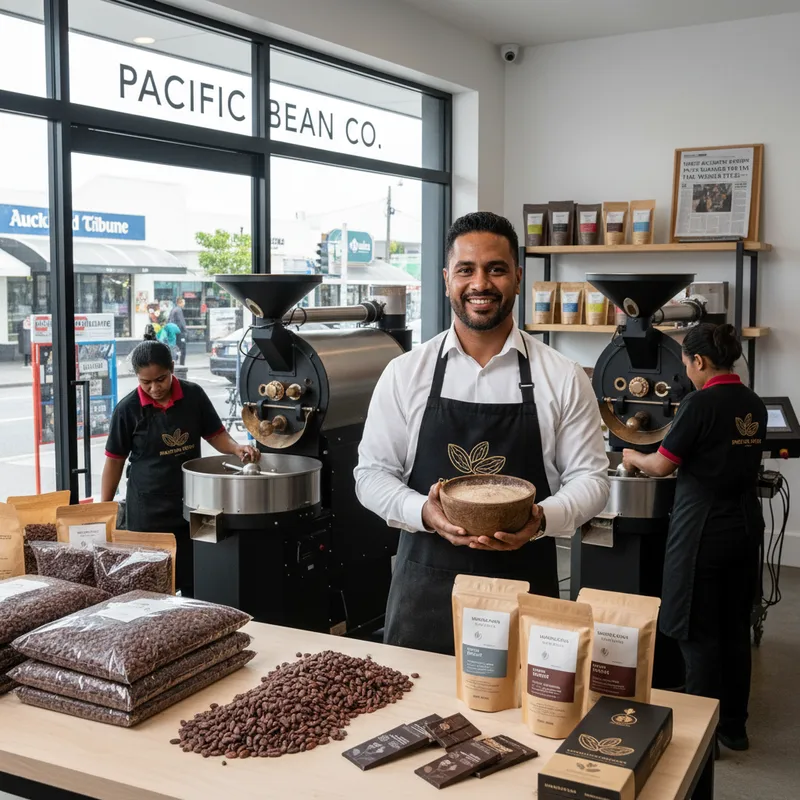
The path to success has not been easy. Mr Macdonald left the business in 2022, leaving Mr Rivers to face dwindling funds, a barely functional website, and a local community that was yet to be convinced. “He kept working his university day job and going to the roastery at night after dinner, sometimes until morning. “I would go early to wait for my daughter to finish school,” he says, “set my alarm and sleep in the car for 90 minutes till the bell rang. Rinse and repeat, six or seven days a week.”
Financial institutions dismissed his idea, and a competitor even tried to force him out of business. That competitor folded last year. Mr Rivers credits his perseverance to the memory of his late father, a jazz musician who taught him a crucial lesson: “Son, if you can’t do it by feel, don’t bother, because it won’t have any soul.” This principle became the guiding force behind Aunty Tommy’s, where every batch is crafted by feel and a healthy dose of fear – fear of failure, and of misrepresenting his culture.
Cultural affirmation in a cup
Aunty Tommy's is more than just a business for Mr Rivers; it's a tribute to his father and an affirmation of his culture. He believes his father would be proud of the brand's role in promoting Pacific identity within New Zealand.
I think he would look at how we've pushed for inclusion, and the fact that every time we put an Aunty Tommy's product on a menu or a shelf somewhere in New Zealand, it's an act of cultural affirmation. It says to Samoan and Pacific families that our food, our heritage, and our identity belong here too.
Auckland is widely recognised as the world's largest Polynesian city. According to data from Stats NZ, the city is home to a significant portion of the country's 213,000-plus people of Samoan ethnicity. Yet, before Aunty Tommy’s, no one had successfully created a modern, compliant brand for koko that reflected the pride of the community. Mr Rivers attributes this to a historical lack of confidence and the assumption that it was only a niche community product. “The contents are already awesome,” he says. “The packaging should match and exceed that.” In a city with a vibrant food scene, it was surprising that a modern koko brand was one of the few gaps, but now, Auckland guide reveals city's best budget lunches.
From Glen Eden to the world's greatest places
The brand's bold, contemporary visual identity speaks to the 'third-culture' generation of Pacific people who are proudly both Samoan and New Zealander. This approach has paid off, with Aunty Tommy's gaining recognition from some of New Zealand’s most lauded establishments. The brand is now featured at Tala, the contemporary Samoan restaurant in Auckland's CBD, and Flockhill Lodge, a luxury retreat in the Southern Alps. In a remarkable achievement, both venues were the only New Zealand entries on TIME Magazine's World's Greatest Places 2026 list.
The recognition is something Mr Rivers still finds hard to absorb, especially given the humble, do-it-yourself nature of his operation. “When Tala and Flockhill call because they heard we make beautifully crafted koko and want to use it,” he says, “I never directly asked them why, out of fear of what the answer might be.” He jokes that his machines are “hobbled together and kept running with duct tape and prayers.”
The success of Aunty Tommy's offers a powerful counter-narrative to the often-hollow concept of 'authentic experiences' sold by the global travel industry. It proves that true cultural connection doesn't come from a curated tour, but from genuine products born from heritage and passion. It is an act of cultural preservation dressed as commerce, a successful Auckland business with deep roots.
Looking ahead, Mr Rivers hopes Aunty Tommy’s will become a legacy brand for Samoa, akin to Vailima beer. He understands that growth brings challenges and potential compromise, but for now, he remains focused on his craft. From a small roastery in a suburb most have never heard of, he continues to make koko by feel, producing a drink that offers a true taste of home.