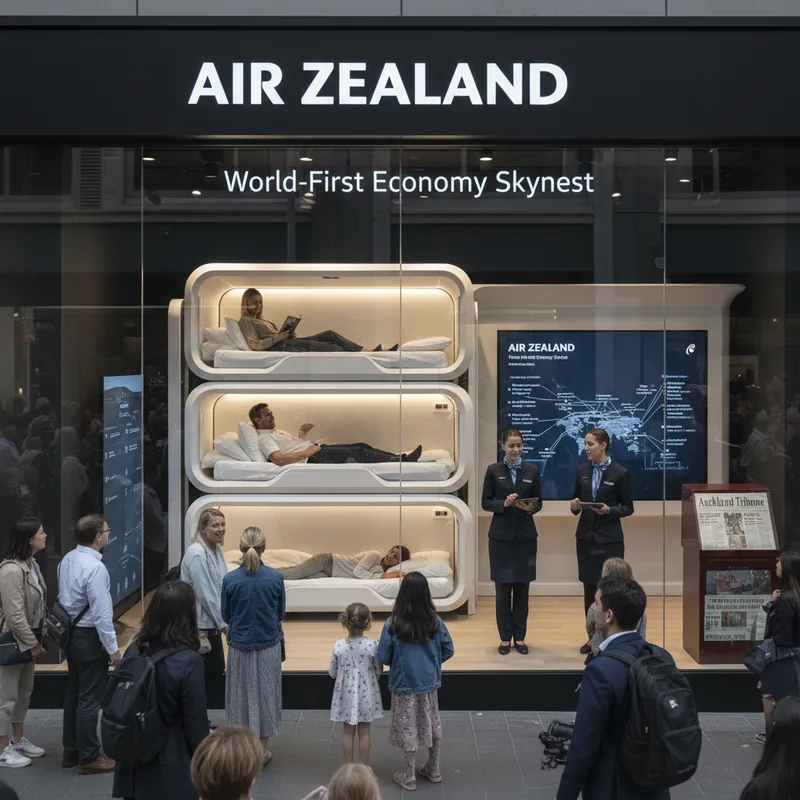
Air New Zealand is set to redefine economy long-haul travel by introducing lie-flat bunk beds, a world-first that promises respite for weary passengers on marathon flights. The ‘Skynest’ sleep pods, first announced in 2020, will finally become bookable on the airline's new Boeing 787-9 Dreamliner aircraft from November.
The innovation will initially service the Auckland to New York route, one of the world's longest commercial flights, which can see travellers in economy seats for up to 18 hours. For an additional fee starting from $291, passengers can book a four-hour session in one of the six sleeping pods, a welcome alternative to the upright seated position for the duration of the flight. This development comes as the city continues to see major new projects take shape, similar to the significant property acquisition for the Auckland busway project.
The national carrier’s move signals a growing trend in the aviation industry to offer more customised and comfortable options for passengers outside of the premium cabins. While lie-flat beds have long been the standard in Business and First Class, the Skynest makes this comfort accessible to economy and premium economy flyers for the first time.
A closer look at the Skynest
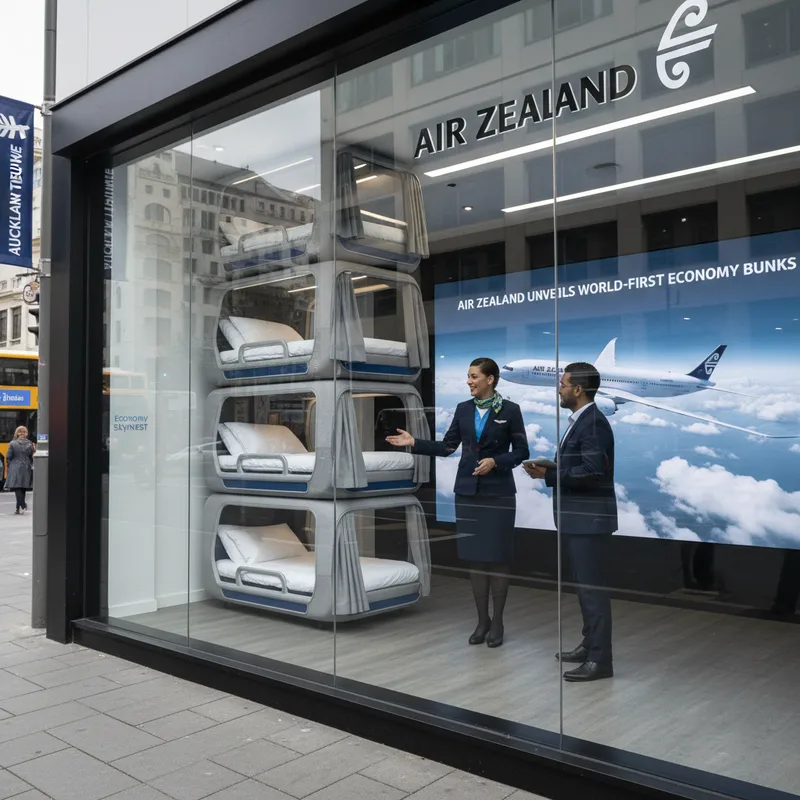
The Skynest consists of six pods arranged in a triple-bunk configuration, nestled between the premium economy and economy cabins. Each curtained berth is approximately 203cm (80 inches) long and 63cm (25 inches) wide at the shoulder, tapering towards the feet, providing enough room to lie flat but not to sit up.
Passengers wanting to use the pods will need to be mobile, as accessing the berths requires bending, kneeling, or climbing. Once inside, they will find pillows, blankets, and sheets, which the airline assures are refreshed after each four-hour nap. A seatbelt must be fastened over the blankets for safety.
To ensure a pleasant environment for all users in the close-quarters arrangement, Air New Zealand has established a clear set of rules. Snacking in the pods is forbidden, and passengers are asked to refrain from wearing strong perfumes. Each pod is for single occupancy only, with the airline’s website cheekily noting, “solo snoozes only please, no musical nests or tag-teaming”.
At the conclusion of the booked session, a gentle change in lighting will signal it's time to vacate. Should a passenger sleep through this, a flight attendant will provide a wake-up call to ensure the next traveller can use the pod. The airline even provides earplugs, acknowledging with candid humour that on any given flight, “statistically, someone’s going to do it. It might be you.”
A new class of comfort
The Skynest is the latest in a series of innovations by Air New Zealand aimed at enhancing the economy travel experience. It follows the introduction of the Economy Skycouch, which allows a row of three economy seats to be turned into a flexible space to relax and spread out. These offerings bridge the significant gap between a standard economy seat and the luxurious Business Premier cabin.
In Business Premier, passengers receive a leather seat that converts into a fully lie-flat bed with a memory foam mattress, full-size pillows, and a duvet. This premium experience includes menus designed by world-renowned Kiwi chefs, premium New Zealand wines, lounge access, priority check-in, and generous baggage allowances. While the Skynest doesn't offer this level of luxury, it provides the single most requested feature for long-haul flyers: the ability to lie down and sleep.
This strategy of unbundling services and offering paid upgrades allows airlines to generate crucial ancillary revenue, an economic model that has become vital for profitability. According to the International Air Transport Association (IATA), ancillary fees are a significant and growing contributor to airlines' bottom lines globally. This new product allows Air New Zealand to capture extra revenue from customers who desire more comfort but are not prepared to pay for a full business class ticket, a concept being watched with interest in other major hubs, with some comparing it to cultural developments like Sydney's new waterfront arts cavern in its ambition.
Innovation amid economic headwinds
The launch comes at a challenging time for the airline industry. Air New Zealand, which has a history tracing back to 1940 as Tasman Empire Airways Limited (TEAL) before becoming the national carrier, has recently faced significant economic pressures. The airline has had to increase some fares and cut domestic flights in response to soaring jet fuel costs exacerbated by global instability, with some in the region comparing the ambition to the upcoming Ruapuna Supercars weekend.
In March, the company suspended its earnings outlook, citing fuel price volatility and warning that further adjustments to its flight schedule could be necessary. The introduction of the Skynest can be seen as a strategic move to bolster revenue streams and differentiate its service on highly competitive, ultra-long-haul routes.
By investing in unique passenger experiences, the airline aims to attract customers and command a degree of pricing power, even in economy class. These amenities, like the recently opened temporary library in Point Chevalier, add value to the community they serve, albeit a mobile, airborne one.
As bookings for the Skynest are set to open for flights commencing in November, the travelling public will soon decide if the promise of a few hours of horizontal sleep is worth the additional cost. For many facing the prospect of an 18-hour flight, the answer will likely be a resounding yes, even if it comes with a chorus of snores from a neighbouring pod.