
Auckland’s school choice starts with one question, are you in zone for the school you want.
In 2026, the smartest move is to check the enrolment scheme first, then compare programmes, support, and real-world fit.
Families often begin with decile ratings, but New Zealand no longer uses deciles to fund schools. The Ministry of Education replaced deciles with the Equity Index, and schools can still publish older decile information in historic material.
This guide explains zones, ballots, what replaced deciles, and a practical Auckland checklist. It also lists concrete starting points, including where to find official data and who to ring.
How do school zones work in auckland in 2026?
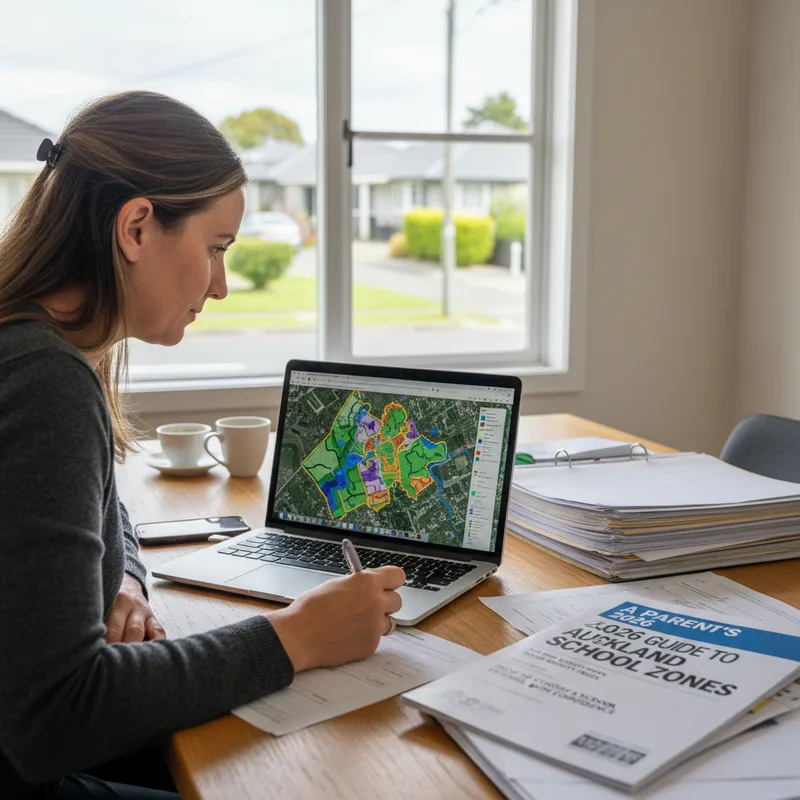
Many Auckland state schools run an enrolment scheme, also called a school zone. The Ministry says the point is to prevent overcrowding and guarantee a place for local children.
If you live inside the home zone, your child “automatically qualifies to enrol”, according to the Ministry of Education’s zone guidance. Start with the government explainer on school zones and enrolment schemes.
Not every school has a zone. A non-zoned state school can usually enrol students from anywhere, but it can still have limits if it reaches capacity.
- Home zone, guaranteed entry if you live inside it.
- Out of zone, you may need to enter a ballot.
- No zone, open enrolment, until the roll is full.
For a starting list of schools by area, use Education Counts’ Auckland Region school finder, then click through to your local board area. It is not glamorous, but it is current.
If you want to view zone boundaries on a map, the Ministry’s zone layer is available via an ArcGIS dataset. Eagle Technology hosts the authoritative NZ School Enrolment Zones feature layer, which is useful for cross-checking addresses.
How do out-of-zone ballots work, and when should you apply?
Out-of-zone enrolments go through a ballot when a school has more applicants than places. Each school sets its own deadlines, and many Auckland schools run ballots for entry points such as Year 7 and Year 9.
The Ministry publishes general information on ballot dates, but schools and boards control their own calendars. Ring the school office and ask for the “enrolment scheme and ballot timeline” in writing.
Auckland parents trip up on address evidence. Schools can and do ask for proof you live where you say you live, such as tenancy agreements, rates bills, or power accounts.
- Ask what documents the school will accept for zone proof.
- Apply early, even if you are still house-hunting.
- Keep a dated paper trail, especially for shared-care arrangements.
If you are moving, the rule that matters is simple. If you move out of zone after enrolling, your child can usually stay, the Ministry confirms this in its “moving zones” section.
Rapid growth areas can tighten capacity fast. East Auckland has seen significant building pressure, and the Government has recently funded expansions to cope with roll growth. Read our coverage of an East Auckland school expansion if you are buying or renting with zoning in mind.
What replaced school deciles, and what should parents use instead?
Deciles once described the socio-economic mix of a school’s community, and they influenced resourcing. They also became a proxy for “good” and “bad”, which never matched what happens classroom by classroom.
Schools are no longer funded through deciles. The Ministry replaced that approach with the Equity Index, which uses a broader set of indicators to target resourcing.
Parents still see decile numbers on old PDFs and media tables, like historic NCEA lists. Treat those as a snapshot from another era, not a reason to cross a school off your list.
- Look for subject options and pathways, not a single rating.
- Check learning support, ESOL, and extension programmes.
- Ask how the school measures progress in literacy and maths.
When you compare schools, use official data where you can. Start with Education Counts’ school profiles and roll information via the Find your nearest school portal, then confirm details directly with the school.
How do you compare auckland schools beyond zones and rankings?
“Best school” depends on your child, your commute, and what your family values. A high-achieving school can still be a poor fit for a student who needs smaller classes, learning support, or a strong arts pathway.
Begin with three filters, day-to-day logistics, learning support, and co-curricular depth. A 45-minute trip each way changes a teenager’s week, especially during winter sport.
Visit on an ordinary day if you can. Open evenings show polish, but a normal morning shows behaviour expectations, pastoral care, and how the front office treats whānau.
- Commute, check bus routes and pickup safety.
- Pastoral care, deans, counselling, and attendance follow-up.
- Pathways, NCEA, Cambridge, IB, trades, or performing arts.
Also check culture and community, especially if your child wants language, kapa haka, or Pacific performance pathways. Auckland’s major school events, including ASB Polyfest, can be a clue to a school’s commitment and networks.
If your child thrives in public performance and multicultural spaces, look at how a school engages with Auckland’s festival calendar. Events such as the Lantern Festival and World of Cultures often link back to school cultural groups and community partnerships.
Which auckland schools should you shortlist first, by area?
Auckland has more than one “good school belt”. A practical shortlist starts with your address, then looks at local options you can actually access.
Use the Education Counts district links for your local board, such as Albert-Eden, Devonport-Takapuna, Howick, or Henderson-Massey, then build a shortlist of three to five schools.
Here are example starting points Auckland parents commonly research. Always confirm enrolment zones and intake years with the school office.
- Auckland Grammar School, Mountain Road, Epsom, Auckland 1023. Website: ags.school.nz.
- Epsom Girls Grammar School, Silver Road, Epsom, Auckland 1023. Website: eggs.school.nz.
- Western Springs College, 150 Motions Road, Western Springs, Auckland 1022. Website: westernsprings.school.nz.
- Avondale College, Victor Street, Avondale, Auckland 1026. Website: avcol.school.nz.
- Botany Downs Secondary College, 575 Chapel Road, Botany Downs, Auckland 2010. Website: bdsc.school.nz.
Private and integrated schools sit outside many state zone rules, but they still have enrolment processes and fees. If you are comparing independent options, treat marketing rankings with care and ask for what is measured.
Some international-style rankings focus on university admissions outcomes rather than broad student wellbeing. One example is the Crimson-style “top schools” list circulating online, which you can find via a third-party PDF, but it reflects a specific definition of success.
If you want that lens, cross-check it with your child’s goals and your budget. For a broad conversation about league tables, read external coverage cautiously, including the way tutoring sites summarise “top schools” lists.
What does a good school visit checklist look like for auckland parents?
School tours can blur together after the third or fourth visit. Go in with a checklist and insist on practical answers, not slogans.
Start at the front office. Ask how the school handles lateness, bullying reports, and learning support referrals, and how quickly whānau hear back.
Then drill into curriculum and pastoral care. At secondary level, ask how subject choice works at Year 10, and how the school supports NCEA literacy and numeracy requirements.
- Ask for the latest subject handbook, in PDF if possible.
- Check device requirements and BYOD costs.
- Ask about donations and “optional” course fees.
- Confirm sports fees and weekend travel expectations.
Primary parents should ask about reading support, maths grouping, and how the school communicates progress. You want specifics, such as how many teacher aide hours support learning needs, and what intervention programmes run in Terms 2 and 3.
If you are deciding between two zoned options, do a trial week of the commute at school peak times. Auckland traffic makes a mockery of Google Maps at 8.15am.
How much does schooling cost in auckland, even at state schools?
State education is free, but school costs are real. In Auckland, families typically pay for stationery, uniforms, devices, camps, and co-curricular activities.
Ask for a written breakdown before you enrol. Secondary schools often have course-related costs, especially in technology, art, and outdoor education.
Budget lines parents forget include transport, after-school care, and exam-related fees for extra qualifications. These can swing a decision more than a glossy prospectus.
- Uniform, ask whether the school uses a single supplier.
- BYOD, ask minimum specs and whether loan devices exist.
- Donations, ask what is truly voluntary.
- Trips, ask frequency and approximate cost per year group.
If costs feel tight, ask about support. Some schools have hardship funds for camps and uniforms, and some community groups help with devices.
Transport matters too. If you rely on public transport, check bus and train reliability in winter and during rail works, and plan a backup pickup option.
Where can you get reliable official data on auckland schools?
Start with government sources, then confirm with the school. Education Counts provides profiles, roll data, and links to school information that can ground your shortlist.
The Ministry’s main parent page on zones remains the clearest explanation of who gets priority and why. Use it alongside the map-based zone layer if you sit near a boundary line.
For community context, read school board minutes and annual reports when available. They show what the school is spending on property, staffing, and learning support, and they often flag behaviour or attendance initiatives.
- Education Counts school finder, district lists for Auckland.
- Ministry of Education zone guidance, enrolment and ballot rules.
- ArcGIS zone boundaries, useful for address cross-checking.
Local government decisions can also affect school life, especially transport, libraries, and recreation. If you are weighing a move, it is worth tracking council spending debates. Our report on Annual Plan feedback explains how to have your say on services that shape family routines.
For a lighter way to test a school’s community links, watch who turns up to local events. A school’s cultural groups often perform at festivals and community days, and that can tell you who the school partners with.
For example, families in and around Arch Hill often start by learning the neighbourhood, then filtering schools by access and values. This cross-site local read on things to do in Arch Hill gives a sense of what sits within a short after-school radius.
The takeaway for 2026 is simple. Use zoning as your starting gate, but choose based on fit, support, and the week your child will actually live.
If you are close to a zone boundary, get your address evidence sorted now. It is the easiest win you will get in this process.