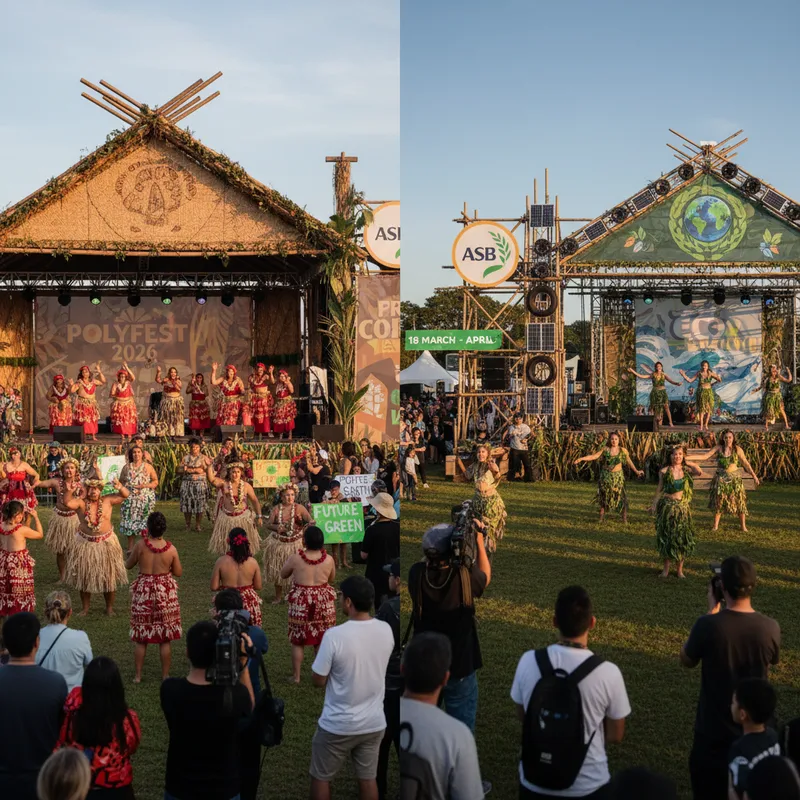
ASB Polyfest 2026 will expand to a multi-week format this March to accommodate growing student numbers and a new environmental theme. The secondary school cultural festival is scheduled to run from 18 March to 2 April across two separate South Auckland venues. Organisers confirmed the changes this week as they prepare for the event’s 51st year. The first stage of the festival takes place at the Manukau Sports Bowl from 18 to 21 March and features the Cook Islands, Niue, Samoa, Tonga, and Diversity stages. Following a brief hiatus, the Māori Stage will then hold its competition at the Due Drop Events Centre from 30 March to 2 April. This staggered scheduled marks a departure from the traditional singular venue week. More than 80,000 visitors are expected to attend the event which has grown into the largest of its kind in Australasia. Students from across Auckland will participate in speech competitions and traditional dance performances. The festival remains a key fixture on the Auckland calendar alongside other major gatherings like the Auckland Rainbow Parade in the central city.
Environmental focus for students
This year organisers have chosen the theme “Ko au ko te Taiao! Ko te Taiao ko au!”, which translates to “The environment lives in me, as I live in it”. The focus aims to encourage students to act as Pacific Youth Eco-Warriors for future generations. It aligns with a broader regional trend of incorporating ecological awareness into large-scale public events. The festival will feature over 100 stalls selling food, traditional arts, and crafts from across the Pacific and Aotearoa. Visitors usually attend to see specific school performances but stay for the delicacies and artisan goods. Organisers have advised the public that online tickets are required to manage the expected crowds and reduce entry wait times. Safety protocols remain strict for 2026. The entire event is designated as a vape-free, smoke-free, and alcohol-free zone to ensure a professional environment for the teenage competitors and their families. This reflects similar standards seen at local sporting events like those hosted at the Toronto Pan Am Sports Centre which also promote youth health.
Venue split and ticketing details
Moving the Māori Stage to the Due Drop Events Centre provides an indoor setting for those specific performances. This site is located separately from the outdoor fields of the Manukau Sports Bowl where the Pacific stages will reside. The split allows each cultural group more space and dedicated facilities for their specific performance requirements. Online tickets for the Pacific and Diversity stages are currently priced at $10. Prices for the full festival range up to $35 plus booking fees depending on the sessions selected. Children aged five and younger can attend free of charge. Organisers noted that tickets are non-refundable and should be purchased through the official ASB Polyfest website to avoid third-party scams. The festival is one of several cultural events taking place this autumn. It follows the Auckland Wooden Boat Festival and sits alongside the Southeast Asia Festival in the regional line-up. Such events continue to draw significant numbers to Manukau and the surrounding suburbs.
Logistics for the 51st year
Transport planning is underway as local authorities prepare for heavy traffic around Boundary Road in Clover Park. The Manukau Sports Bowl is a known high-traffic area during the festival season. Police and council staff will be managing parking and pedestrian safety during the initial four-day peak in mid-March. Local businesses in Manukau are preparing for the influx of visitors. Motels and apartment complexes near the Due Drop Events Centre often see high occupancy during the festival weeks. Many families travel from outside the Auckland region to support students competing on the six cultural stages. The 2026 event continues a tradition that began in 1976. Since then it has evolved from a small competition between schools into a massive production requiring months of rehearsals and logistical planning. Schools often begin their preparations nearly a year in advance to perfect their routines and costumes. The official season concludes on 2 April with the final Māori Stage performances. Following the festival, judges will announce the winners for each category and competition level. Full results and live stream links will be made available through the official festival channels.