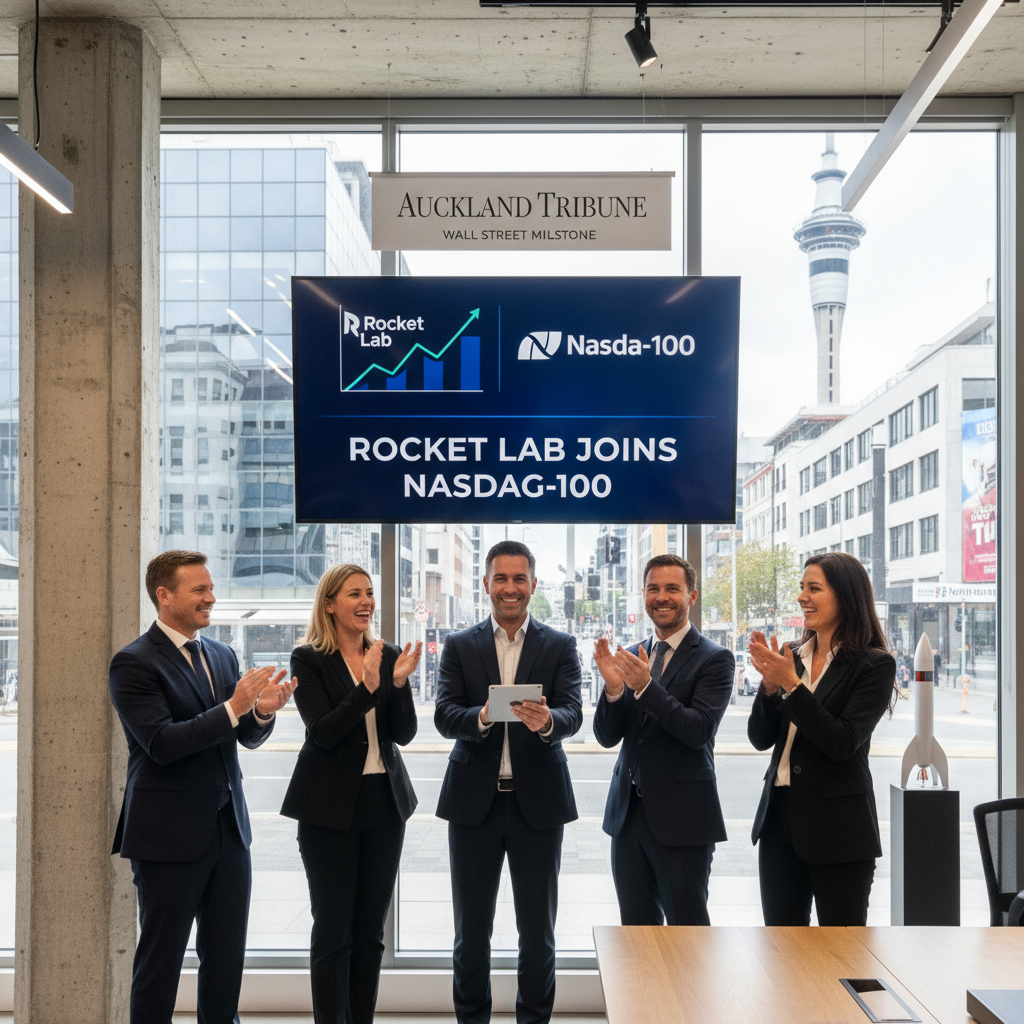
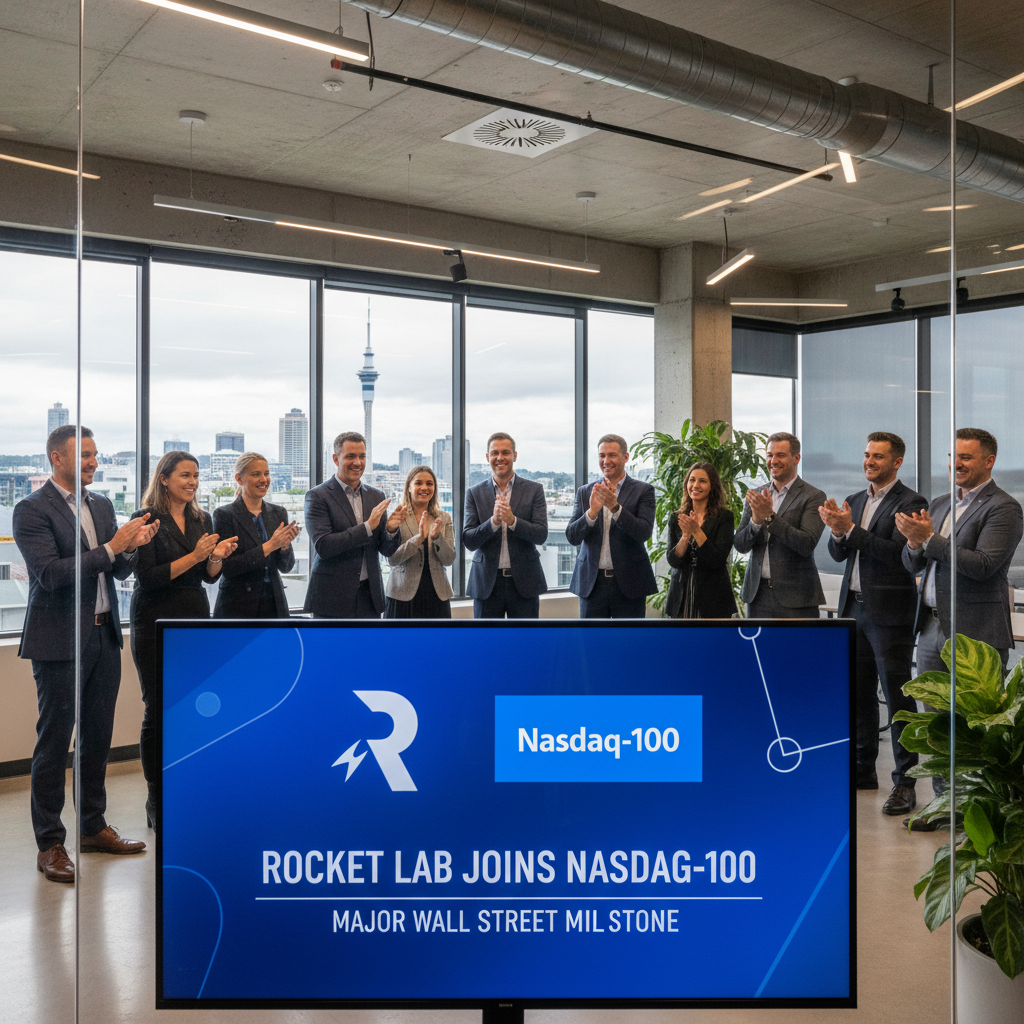
Rocket Lab, the aerospace company founded in an Auckland workshop two decades ago, has secured a coveted spot on one of the world’s most prestigious stock market indices. The company will be added to the Nasdaq-100 before markets open on Monday 22 June, a landmark achievement that places it in the company of the largest and most influential non-financial businesses on the exchange.
The inclusion is a powerful symbol of the company's staggering growth and its establishment as a major force in the global space industry. The Nasdaq-100 is a benchmark for the technology sector, featuring titans like Apple, Microsoft, and Amazon. It serves as the foundation for more than 200 investment products with a combined value exceeding US$800 billion, according to the index operator.
For a company that began with a determined engineer teaching himself rocketry, joining this exclusive club marks a significant chapter in its story. Founder and chief executive Sir Peter Beck called the news a defining moment for the business.
From Auckland workshop to Wall Street elite
Sir Peter Beck’s journey is central to the Rocket Lab story. He began his career as an apprentice toolmaker at Fisher and Paykel, nurturing a passion for rocketry in his spare time. He founded Rocket Lab in Auckland in 2006, driven by the ambition to make space more accessible. That ambition has since propelled the company from a small New Zealand startup to a global leader in launch services and space systems.
the extraordinary journey our team has been on, from a small company with big ambitions to a global space leader
This latest milestone is more than just symbolic. Gaining entry to the Nasdaq-100 has tangible financial implications. Investment funds that track the index, known as index trackers or exchange-traded funds (ETFs), are now obligated to purchase Rocket Lab shares to ensure their portfolios accurately reflect the index's composition. This creates a new and consistent source of demand for the company's stock, ticker RKLB, providing a layer of stability regardless of daily market fluctuations.
It is a remarkable validation for a company that only went public on the Nasdaq in 2021. The firm’s shares have experienced a dramatic rise, recently hitting an all-time high of approximately US$105. This surge has pushed Rocket Lab’s market capitalisation to just over US$60 billion, or nearly NZ$100 billion. The announcement day saw the stock dip over 10 per cent from its peak, a stark reminder of the volatility inherent in high-growth technology stocks.
The company's ascent has also dramatically lifted the fortunes of its founder. Forbes magazine now estimates Sir Peter Beck’s net worth at around US$5 billion, with the vast majority of his wealth tied to his substantial holding in Rocket Lab. Demonstrating his commitment to the company’s future, Beck famously cut his salary to just one US dollar to divert resources towards the development of Neutron, Rocket Lab’s new, much larger rocket designed for heavier payloads.
Thousands of Kiwis share in the success
While Rocket Lab's headquarters are now officially in Long Beach, California, its New Zealand roots run deep and its operational footprint remains a critical part of its success. The company operates the world’s first private orbital launch complex, with two launchpads on the Mahia Peninsula. This Hawke's Bay site continues to be the primary launch location for the company's workhorse Electron rocket.
Furthermore, the design, manufacturing and testing of the Electron rocket and the company's advanced satellite systems still take place in Auckland. A specialised facility in Warkworth, north of Auckland, was responsible for producing the composite nose cone for the next-generation Neutron rocket, showcasing the high-skilled manufacturing that remains in New Zealand. This commitment to local operations underpins a unique level of local investment in the global company.
According to the New Zealand Herald, more than 32,000 New Zealanders hold shares in Rocket Lab, an unusually high number of retail investors for a company not listed on the local exchange. It reflects a national pride and belief in a home-grown success story that has reached the highest echelons of global business. Rocket Lab's journey is a beacon for local innovation, showing that New Zealand enterprises can compete on the world stage, a path also being forged by ventures in southern Ontario, where the Federal government announced support for the sport-tech sector.
A bright spot in a mixed economic climate
Rocket Lab’s financial performance underscores its rapid expansion. In the first quarter of 2026, the company reported revenue of US$201.3 million, a 63 per cent increase from the same period in the previous year. Its backlog of future orders more than doubled to a staggering US$2.2 billion. While the company is not yet profitable, posting a net loss of US$45 million for the quarter, this is largely due to its heavy investment in the Neutron program. A healthy cash reserve of about US$1.5 billion is funding this crucial development work.
The Electron rocket remains the most frequently launched small orbital rocket in the world. To date, the company has completed over 80 launches, successfully deploying more than 250 satellites for a diverse range of clients spanning commercial, government, and national security sectors.
The company’s induction into the Nasdaq-100 comes as a welcome piece of good news against a more cautious domestic economic background. The New Zealand sharemarket has been trading nervously, while analysts at interest.co.nz predict rising fuel prices could push headline inflation towards 4 per cent. Recent civic news has included the appointment of a new chief executive for Dunedin City Council as local bodies navigate economic pressures.
In this climate, the story of a company born in New Zealand breaking into an elite group of global innovators is a significant morale boost. For the tens of thousands of Kiwi shareholders and all who have followed its journey, Rocket Lab’s arrival on the Nasdaq-100 is a powerful testament to two decades of ambition, innovation, and relentless execution. The formal inclusion on Monday will solidify its place among the giants of modern industry.