Overview
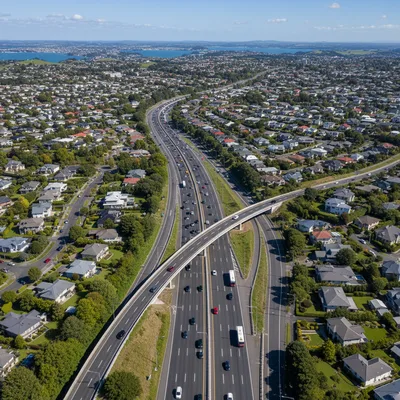
The Auckland Southern Motorway, a key section of New Zealand's State Highway 1 (SH1), is the primary arterial route connecting central Auckland with the southern suburbs, Auckland Airport, and the Waikato region beyond.
Stretching approximately 46 kilometres from the Central Motorway Junction ("Spaghetti Junction") to the Bombay Hills, this vital piece of infrastructure is the country's busiest road, carrying a massive volume of commuter, commercial, and freight traffic daily.
Originally conceived in the 1940s to handle the city's burgeoning post-war growth, the motorway has been progressively built and upgraded over many decades.
It serves as a critical lifeline for hundreds of thousands of Aucklanders, providing access to major commercial hubs like Penrose and Manukau, as well as connecting the city to the rest of the North Island.
For travellers, it's the main path south towards Hamilton, Tauranga, and Wellington.
Key Route Highlights & Interchanges
While primarily a transport corridor, the Southern Motorway journey includes several notable landmarks and crucial connection points. Drivers will experience a varied landscape, from the dense urban environment of the city centre to the rolling green hills of the Franklin district.
Key highlights along the route include:
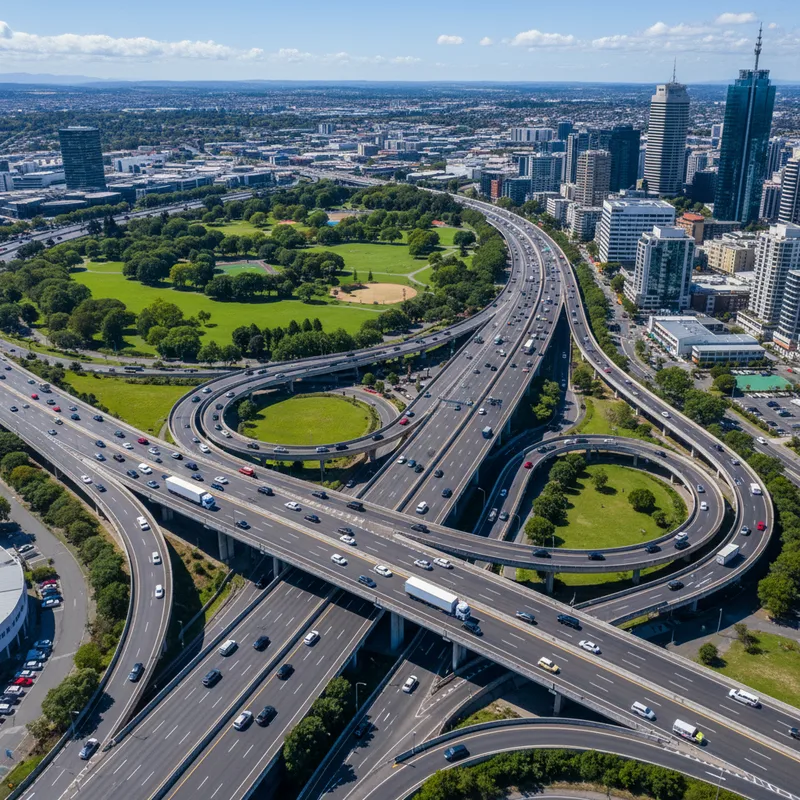
- Central Motorway Junction (CMJ): Often called "Spaghetti Junction," this complex interchange is where the Southern, Northern, and Northwestern motorways converge. It's an impressive feat of civil engineering.
- Newmarket Viaduct: This elevated section carries the motorway over the suburb of Newmarket. The modern, award-winning replacement viaduct offers brief but expansive views across the eastern suburbs towards the Waitematā Harbour.
- Mount Wellington: The volcanic cone of Maungarei / Mount Wellington is a prominent landmark visible to the east of the motorway around the Penrose and Mt Wellington exits.
- Manukau Harbour Crossing: The motorway crosses the Tāmaki River, an arm of the Manukau Harbour, via the Takanini Bridge, offering views out over the water.
- SH20 Interchange: Located at Manukau, this major interchange is the primary connection for travellers heading to Auckland Airport.
- Bombay Hills: The southern terminus of the motorway is marked by a steep climb over the Bombay Hills, which separate the Auckland and Waikato regions. The summit provides panoramic views of the Waikato plains to the south.
Facilities & Amenities
Unlike many international motorways, there are no official service areas directly on the Auckland Southern Motorway itself. However, facilities are concentrated at its southern end.
The Bombay Service Centre is located at the top of the Bombay Hills, accessible from the Bombay interchange. It serves as a major rest stop for travellers and includes:
- Multiple petrol stations (BP, Z Energy)
- Fast-food restaurants (McDonald's, KFC) and cafes
- Public toilets and changing facilities
- Convenience stores
- A large car and truck park
For minor needs, most off-ramps lead directly into suburban areas with their own local petrol stations, supermarkets, and cafes within a few minutes' drive.
Getting There
The Auckland Southern Motorway (SH1) is the main south-bound route from the city centre.
- Address: The motorway runs from the Central Motorway Junction (Symonds Street, Auckland CBD) to the Waikato Expressway interchange at the Bombay Hills.
- Access Points: Numerous on-ramps provide access along its length, including Khyber Pass Road, Gillies Avenue, Greenlane, Ellerslie-Panmure Highway, SEART, Highbrook Drive, East Tāmaki Road, Manukau, Takanini, Papakura, and Drury.
- Parking: This is a major transport route; roadside parking is strictly prohibited. Parking is available at the Bombay Service Centre.
- Public Transport: Many regional and intercity bus services (e.g., InterCity) use the Southern Motorway. Additionally, the Southern Line train runs parallel to the motorway for much of its length, offering an alternative for commuters.
Best Time to Travel
Choosing your travel time wisely can dramatically affect your journey on the Southern Motorway.
- Peak Hours: The motorway is heavily congested during weekday peak commuter times. Southbound traffic is heaviest from 4:00 PM to 7:00 PM, while northbound (city-bound) traffic is heaviest from 6:30 AM to 9:30 AM.
- Off-Peak: For the quickest journey, travel during off-peak hours (9:30 AM to 3:00 PM on weekdays) or later in the evening.
- Weekends: Traffic can be heavy on weekends, especially on Saturday mornings and Sunday afternoons. Holiday weekends see significant congestion as Aucklanders leave and return to the city; it's best to travel very early in the morning or late at night during these periods.
- Weather: Heavy rain can lead to surface flooding and reduced visibility, significantly slowing traffic. Check the weather forecast and allow extra travel time in adverse conditions.
History & Significance
The Auckland Southern Motorway is a landmark of New Zealand civil engineering with a rich history. Its development reflects Auckland's massive urban expansion throughout the 20th and 21st centuries.
Construction began in the early 1950s, with the first section between Ellerslie and Redoubt Road opening on 16 July 1953.
The motorway was built in stages over the next three decades, with the final piece of the original plan, the connection to the central city, completed in 1978.
It has been continuously upgraded since, with major projects including the replacement of the Newmarket Viaduct (2012) and the widening of various sections to accommodate increasing traffic volumes.
The motorway is managed by Waka Kotahi NZ Transport Agency and is recognised by Engineering New Zealand as a significant piece of the country's engineering heritage.
Its design and construction have overcome numerous challenges, from navigating the city's volcanic terrain to building complex interchanges that serve millions of vehicle movements each year.
Route Segments & Travel Times
The 46km route can be broken down into three main segments. Travel times below are estimates for off-peak, free-flowing traffic conditions and can be significantly longer during peak hours.
- City Centre to Manukau (Approx. 18 km): This is the busiest and most complex section, passing through dense residential and commercial areas. It features the CMJ and Newmarket Viaduct. (Off-peak travel time: 15-20 minutes)
- Manukau to Papakura (Approx. 13 km): The motorway widens in this section, serving the rapidly growing suburbs of South Auckland. This segment connects to SH20 for the airport. (Off-peak travel time: 10-12 minutes)
- Papakura to Bombay (Approx. 15 km): The landscape becomes more rural as the motorway passes Drury and heads towards the Bombay Hills, the gateway to the Waikato. (Off-peak travel time: 10-15 minutes)
Visitor & Driving Tips
Navigating the Southern Motorway can be daunting for first-time drivers. Following these tips will help ensure a safe and smooth journey.
- Know Your Exit: Plan your route in advance and know the name and number of the off-ramp you need. Signage can come up quickly, especially in the multi-lane city sections.
- Ramp Signals: During busy periods, traffic lights (ramp signals) on the on-ramps regulate the flow of vehicles entering the motorway. Wait for the green light before merging. This system is proven to reduce congestion and accidents.
- Lane Discipline: Keep left unless overtaking. This is a legal requirement and helps maintain traffic flow.
- Check Traffic Before You Go: Use the Waka Kotahi Journey Planner website or Google Maps for real-time traffic information, congestion updates, and information on any accidents or road closures.
- breakdowns: If your vehicle breaks down, pull over to the left shoulder as far as possible. Turn on your hazard lights, stay in your vehicle with your seatbelt on, and call 111 for assistance. It is not safe to exit your vehicle on the motorway.
- Variable Speed Limits: Pay close attention to the overhead electronic signs. Speed limits can be automatically reduced from the standard 100 km/h to manage traffic flow or respond to an incident ahead.